The Southland App
The Southland App
Advocate Communications
Get it on the Apple StoreGet it on the Google Play Store
Shop LocalNotices | JobsContactAdvertise
The Southland App

News


New website to improve Southlanders' access to health information

08 June 2022, 2:38 AM

A new digital tool launched by Southern Health will give the public, clinicians, and researchers access to important healthcare information for the region. The new website, Tō Tātou Pūkete, captures health data of the region’s communities and families, with the aim to better understand what people need most from their health care services.The tool focuses on four key areas: Demography - Who lives in Southern?; Health Drivers – What keeps us healthy?; Health Status – How well are we?; and Health Services – Where and how do we get healthcare? The Tō Tātou Pūkete team say they have worked with multiple stakeholders including the University of Otago, WellSouth Primary Health Network, Māori Health Directorate, Rūnaka, Community Health Council and others to bring this project to fruition. Dr Susan Jack, Medical Officer of Health, says Tō Tātou Pūkete moves away from traditional methods of publishing public health data and provides easy access to important health information for a wide audience. “The Tō Tātou Pūkete datasets enhance planning not only for the health service, but for the wider community – councils, non-government organisations, and primary care.”  “Tō Tātou Pūkete is a big part of the Southern DHB’s support for Aotearoa/New Zealand’s digital transformation, health reforms, and transition to Hauora Aotearoa/Health NZ.”  Members of the public are also invited to explore Tō Tātou Pūkete to increase their awareness of what is happening in health in their region and to equip communities to identify and develop new health related initiatives.The datasets look at a wide range of information; from characteristics of a population (e.g. numbers of people, births and deaths) to specific questions like rates of breastfeeding, smoking and bowel screening.  Jack says the new website will allow people to participate in public health. “Importantly, Tō Tātou Pūkete offers an opportunity to empower the communities of Southern to participate in health and lead change. It is readily available to anyone with web access,” she says. 

Farmers set out proposal to reduce emissions, costing millions more

08 June 2022, 12:30 AM

Farmers have released a plan to price their climate emissions which they say when combined with expected cuts from existing policies, meets reduction targets.The agriculture sector's proposal is a bid to avoid being forced into the emissions trading scheme in 2025 - joining all other industries.It formed He Waka Eke Noa (HWEN) which is a partnership between farmers, agricultural sector industry bodies and Māori - with input from Primary Industries and Environment ministries.Its proposal, out this morning, recommends letting farmers count their emissions and get a discounted levy for making reductions or planting trees.The group wants methane to be priced differently from carbon and nitrous oxide, because although it is particularly damaging the effect is relatively short-lived.The group says its plan, along with additional incentives to farmers to use new technologies and practices, would lead to methane reduction of between 4 and 5.5 percent.It says this, combined with expected reductions from other policies and from the waste sector, will hit the target of slashing methane emissions 10 percent by 2030.The average cost to farmers is about $750 to transition to the new system and then between $1200 to $1600 in additional time a year.In general, deer, sheep and beef farmers will face the greatest impact on their bottom line than dairy operations - and the most severe modelling scenario shows a significant number of farms would exit meat production.Modelling estimates that it will result in a 1.4 percent fall in milk production, and a 0.1 percent drop in meat.Money collected will pay for the cost of running the scheme, and will be invested back into making emissions reductions in the sector.It is expected to cost $114 million to $144m to set up, and then $27m annually - although as much as $47m a year to run in the first few years.It appears the annual cost to run the programme over its first few years is tens of millions of dollars more than the expected revenue gathered. However, it gets into the black as time goes on and the price of gases increases.The group says its approach is robust and credible, delivers on farmer feedback and meets the government's environmental outcomes.The government has until the end of the year to decide whether to adopt the plan, and it will get advice from the Climate Change Commission.HWEN says plan will see sector paying its fair share on climateHe Waka Eke Noa group chair Michael Ahie said its recommendations enabled sustainable food and fibre production while "playing a fair part in meeting our country's climate commitments"."Our recommended approach would enhance New Zealand's reputation as world leaders in low-emission food production and keep us ahead of our competitors."He said modelling showed their plan would be more effective in reducing emissions than being forced into the ETS, and would also have less impact on profit and output.Farmers Weekly reports that 99 percent of farmers did not want to be forced into the emissions trading scheme.There has been considerable pushback from farmers and the group Groundswell to the whole idea.If the cross sector group did not come up with a credible plan, agriculture would be forced into the emissions trading scheme like every other sector - although at a massively discounted rate.Ahie said the recommended approach achieved the necessary emissions reductions at the least possible cost."This is the best option to help farmers and growers transition to lower-emissions food production while maintaining viable businesses."What will farmers have to do?Farmers who have more than 550 cattle, sheep, deer or goats; 50 dairy cattle; use at least 40 tonnes of synthetic fertiliser; have 700 swine, 50,000 poultry, must take part in the scheme.This equates to about 23,000 farms - about 96 percent of all agricultural greenhouse gas emissions.They will have to:Report their emissions numbers.Have a greenhouse gas management plan.Pay for methane and long-lived gas emissions.Modelling estimates that it will result in a 1.4 percent fall in milk production, and a 0.1 percent drop in meat.During consultation farmers sent a strong message they are anxious about the impact of extra costs on their businesses, as well new environmental legislation and regulations.The average cost to farmers is about $750 to transition to the new system and then between $1200 to $1600 in additional time a year.Deer, sheep and beef hardest hitIn general, deer, sheep and beef farmers will face the greatest impact on their bottom line than dairy operations.Analysis of 300 actual farms indicates that at the extreme end of the modelling a significant number of farms would exit meat production - which could lead to much higher methane reductions as a result of land-use change than modelled.Emissions reductions modelled in the sheep and beef sector result almost exclusively from the uptake of mitigation technologies.Incentives and offsetsThere will be incentives for using tech and practices that make reductions such as methane inhibitors - although there are none approved for use yet.Farmers will be eligible for a financial offset that recognises the amount of carbon absorbed by agreed types of vegetation.These include existing or new natives, riparian planting and some exotics - for example, shelter belts - but exotics eligible for the ETS such as pine are excluded.There will be a separate fund to support the specific needs of Maori landowners.The plan would allow regeneration and planting done between 1990 and 2008 to be taken into account.About 10 percent of farms will face a desktop-based audit annually, but farm audits will also be done.The plan says only a few farmers will be sequestering more than they emit - and those that do will get a payment or credit.How much will the whole thing cost?The HWEN scheme is expected to cost between $114m and $144m to be set it up.Legislation will be written that will set the levy rates and prices.Modelling on a range of price options after removing the $27m in annual admin cost and sequestration and incentives show:In 2025, at a price of 11c /kg methane and 4.25$/tonne CO2e, total levies would raise $66m.In 2030, at a price of 17c/kg methane and $13.90/tonne CO2e, total levies would raise $113m.In 2030, at a price of 35c/kg methane and $13.90/tonne CO2e, total levies would raise $304m.But the report says that if you add in interest and capital payments for the IT system, the total annual operating cost from 2027 to 2030 will be up $47m to administer it, and $37m in additional time spent by farmers on data and reporting.The group wants a price ceiling set so the levy rate is no more than if agriculture was put into the ETS at the massively discounted (95 percent) rate - with only a 1 percentage point increase in exposure each year.It also wants a maximum price for methane of no greater than $0.11/kg for the first three years of pricing (till 2028).Essentially, it wants its plan to be no more onerous than the backstop settings.A simplified version of a farm-level levy starts in 2025, transitioning to a full farm-level levy in 2027 - with the more basic version not expected to lead to lower emissions reductions.For the simple method, measuring and recording data is estimated to take an average of five hours for all farm types.For the detailed method, recording data is estimated to initially take five hours for a cropping farm, 10 hours for a dairy farm and 25 to 75 hours for a sheep, beef, or deer farm.There is potential for this to decline over time as familiarity with the system increases.For nitrous oxide, the plan would see cuts of between 2.9 and 3.2 percent - adding existing policies the total cuts would be about 6 percent by 2030.Hamish Cardwell, Climate reporterRepublished by Arrangement

UPDATED: Dunedin Hospital full, surgeries deferred

07 June 2022, 4:12 PM

UPDATE: Dunedin Hospital remains under ongoing pressure but planned surgeries have resumed today (9 Jun).Southern DHB Chief Operating Officer Hamish Brown says, “As always, our team has prioritised patient safety while also managing patient flow and focusing on discharging patients who were well enough to leave the hospital yesterday. This means that today, we have been able to resume some, but not all of our planned surgeries for patients.”We understand deferring surgery will have been upsetting for our patients and we are committed to ensuring these surgeries are re-booked quickly, he said.Acute and emergency surgery continued at Dundein Hospital during yesterdays crisis.***Dunedin Hospital is over capacity today (8 Jun) prompting a halt to all planned surgeries.The souths largest hospital blamed the situation on the sustained pressure on the health care system, together with high numbers of emergency department presentations, COVID-19, staff fatigue and illness. Southern DHB (SDHB) Chief Operating Officer Hamish Brown says: “We are doing our very best to meet the demand. We understand deferring surgery will be upsetting for our patients and we are committed to ensuring these surgeries are re-booked quickly. Our team are focussing on making sure patient flow, including admissions and discharges are timely, and that patient safety is our priority. We appreciate our community supporting our health care team so we can care for you.”A SDHB statement said that COVID-19 and Influenza were still circulating in our community with the seven-day rolling average of COVID-19 cases is steady in the Southern region.SDHB said being up to date with COVID-19 vaccinations remains one of the best defences against COVID-19. Staying at home if you’re unwell, getting a tested if you’re symptomatic, washing and drying your hands, covering coughs and sneezes, and wearing a mask in indoor public settings were all recommended, they said. The SDHB was encouraging the community to check in with Healthline or their GP for any non-urgent concerns as the emergency department was under pressure and there is a wait for non-urgent presentations. The Emergency Department was for emergencies only. However if you need urgent medical help, please call 111 or present to the Emergency Department, they said.

Robbie's hunt for Southland's memorials continues

07 June 2022, 4:26 AM

One of New Zealand's newest Queens Service Medal recipients, Ann Robbie, didn't let last weekends honours announcement slow down her quest to find, preserve and ensure every last Southland memorial was back on public display.On Sunday (5 June) Robbie and her team were busy hanging their latest rescues, three memorial boards from the Balfour Presbyterian Church, in the Fiordland Military Museum (FMM).All had been carefully restored and polished at the Robbie's Ryal Bush woodworking workshop.Ann Robbie QSM and Fiordland Military Museum owner Duncan McGregor. Photo: Tina McGregor PhotographyRobbie said the military museum was the right context for the memorials when they didn't have a home elsewhere.The boards would be on permanent loan, however should their original home get up and running again and the community wanted them back, then they would go back, Robbie said.In the meantime the museum is a safe place where they would be loved and respected and where members of the public could go and see them, she said.FMM owner Duncan McGregor said the museum was currently displaying seven memorial boards on a special wall of significance."It's all about remembrance and even the vehicles are too, just a different sort of memorial," he said.Robbie said many local churches, schools and lodges had boards, plaques, commemorative stones and even bells, but as these places closed, were renovated or renamed, their memorials risked being lost to the public.It was far better to have these community memorials restored and on public display where their importance would not be forgotten, she said.Robbie said she had now successfully located 424 of Southland's memorials but suspected there was still many more out there."When you think about memorials, it's not just about the ones with the plinths on them, or the boards or the granite ones that you actually physically see. What about the Garston's School Pool, what about the avenue of trees at Lumsden or the trees at Winton that have just been cut down. There's just so many different things out there that were memorials," Robbie said.Can you help?The search is on to locate a granite plaque that was erected at the Army Drill Hall (now demolished) in Invercargill in memory of Sergeant Marjorie Stout, W.A.A.C.Stout was killed after colliding with a train in her army truck on 7 April, 1943.Stout was one of the first young women to volunteer for service in the W.A.A.C. after the outbreak of war.The plaque reads "Erected by the Area Commander and staff of Area No. 12 in memory of Sergeant Marjorie Stout, W.A.A.C., accidently killed, April 7, 1943."CLICK HERE to email Ann Robbie if you have any information.

SBS Bank's full year net profit up 9% to $44.9 million

07 June 2022, 3:12 AM

The Southland-based SBS Bank has lifted its full year profit, as its margins increased from rising interest rates and increased lending.Its net profit for the year ended March rose 9 percent to $44.9 million, lending was up 9 percent to $4.4 billion and its operating surplus was up 10 percent to $61.3m.SBS Bank chief executive Mark McLean said first home lending made up more than a third of its total new home lending, and many were earmarked for Kāinga Ora related lending.The bank is one of eight lenders participating in Kāinga Ora's First Home Loan scheme.McLean said mortgage enquiries had not slowed even as the housing market cooled, but they were making sure borrowers could afford rising rates."Our test rate is just below 7 percent and we had been at those levels even when we were in a low interest rate environment. We have strong buffers built in to our interest rates to ensure that when we do lend money, our borrowers have the ability to repay that and continue to manage their day-to-day living expenses."Going forward, SBS Bank expected softening property values, which meant first home buyers had more choice, McLean said.He said the bank had been heavily focused on development and innovation through the year."We were excited to launch our SBS FirstHome Combo package in August 2021, combining product offerings from the whole SBS Group including a highly competitive first home buyer's home loan which is currently 3.49 percent," McLean said.SBS Bank also announced a new 12 month term deposit rate of 4 percent, which the company said was the first time since 2015 that a term deposit rate hit 4 percent."Our strong result ensures we are able to pass on additional financial benefits to our members through market-leading interest rates and product innovation, which includes assisting our members through digital inclusion programmes to ensure all members feel more confident with accessing both our network of physical branches as well as our digital channels," McLean said.Republished by Arrangement

Edendale firefighter receives community award

07 June 2022, 2:36 AM

Long-serving Edendale Volunteer Fire Brigade officer Scott Cameron received a Community Service Award at a presentation ceremony on Friday night (3 June).The award, from Southland District Council and the Waihopai Toetoe Community Board, was recognition of Mr Cameron’s nearly 29 years of service to the community since he joined the brigade in 1993 while still a schoolboy.Southland District Mayor Gray Tong presented the award to Mr Cameron, following speeches by current chief fire officer Brent Shepherd, Fire and Emergency New Zealand group manager Scott Lindsay, and Waihopai Toetoe ward councillor Paul Duffy.Southland District Mayor Gary Tong presents a community service award to Mr Cameron and flowers to his wife Lisa. Photo: SuppliedMr Cameron served as the chief fire officer of the Edendale brigade for nearly 10 years before being appointed recently to a fulltime role with Fire and Emergency New Zealand as a fire risk management officer, based in Invercargill.He was station officer and deputy chief before being promoted to chief fire officer in 2012, at the same time holding various positions on the brigade committee.Mr Cameron is a fully trained medical first responder and an experienced member of the Edendale fire brigade’s medical first response team. The team provides emergency medical support to Edendale, Wyndham and surrounding districts.Mr Cameron’s citation reads: “As chief fire officer, Scott has voluntarily given many hours of his time not only in supporting our community in times of need, but in organising, preparedness, and tactical planning to ensure Edendale and surrounding communities are protected by a first-rate volunteer fire brigade, which also protects industries such as Fonterra Edendale and Blue Sky Pastures.”The Edendale brigade attends an annual average of 175 emergency callouts, approximately 80% of which are medical and accident related.Mr Cameron thanked his wife Lisa and children Tyler, Liam and Myah, for their support during his long tenure as a volunteer firefighter.

Lumsden railway carriage receives national award

07 June 2022, 2:19 AM

A Lumsden railway carriage has received top honours at the Best Carriage and Guards Van Restoration Award at the Federation of Rail Organisations of New Zealand (FRONZ) conference in Invercargill during Queens’ Birthday weekend.The A class passenger carriage A199 has been restored by the Lumsden Heritage Trust (LHT).LHT chairman John Titter said he was “absolutely stoked” that the project to restore the historic carriage had received the honour. “To win the award and then have the public opening today it couldn’t have worked out better,” Titter said. A view of the interior of A199 with its information panels, including one about a possible passenger in this very carriage, Minnie Dean. Photo: SuppliedThe fully restored carriage was officially opened by Southland MP Joseph Mooney on Monday 6 June, with a busload of FRONZ delegates in attendance. The red carriage has been repurposed as an information kiosk for the unique heritage rail display the trust is working on. The pre-1900s rail display will feature the 1880 D class steam locomotive D6, with carriages ranging from 1877 (C100) to 1883 (A199) to 1896 (A525) behind. Both D6 and C100 are currently being restored.The restoration of A199 was paid for using money left over from the recovery of two V Class locomotives from the mud at Mararoa Junction near Lumsden in early 2020, along with further funding from Lotteries Grants.The rail carriage A199 opened on Monday was recovered from a farm at Wairio on 8 September 2020 and gifted to the trust by the property owners, the Montgomery family. It was painstakingly restored by Lumsden carpenter Gordon Lawrence and a team of dedicated volunteers. The passenger car was built by New Zealand Railways at Addington, Christchurch, in 1883. The 43-foot wooden car was a composite – half first class, half second class. It was sold to the Ohai Railway Board in 1941 and remained in use there until 1952, when it was transported to the farm now owned by the Montgomerys. Mooney said the carriage looked “absolutely beautiful”.

Seven Southlanders receive Queen's Birthday Honours

05 June 2022, 5:08 PM

Four Southlanders have been named Members of the New Zealand Order of Merit and three awarded with the Queen’s Service Medal in this years Queen’s Birthday Honours. The 2022 Honours hold special significance, as they coincide with the Queen’s Platinum Jubilee, marking 70 years on the throne. New members of the New Zealand Order of Merit include Christopher Chilton of Invercargill, honoured for his services to music and journalism.  Chilton was a journalist for 35 years, using his platform to bring wider interest to the arts and community issues in the Southland region. He has made also significant contributions to music and entertainment in his own right, which resulted in him being inducted into the Southland Music Hall of Fame in 2016 and being made a Life Member of the Southland Musicians’ ClubChilton says he is overwhelmed and humbled to have been considered for the Queen’s Birthday Honours.“It was completely unexpected. No one gets up in the morning expecting to receive something like this.”“I thought the person who first called to tell me was winding me up . I thought it was a joke call, but they were quite persistent, and I realised that it was real.”He says the honour is not just for him, but for the entire arts and music scene.“It means even more because it’s not just an award for me, it’s something for the people I’ve been working with and promoting all these years.”“I’ve done it because I love it. I have a huge respect for the quality and the incredibly talent we have here in Southland,” he says. Bluff resident Estelle Pera-Leask has also been named a Member of the New Zealand Order of Merit, for her services to conservation and Māori. Estelle Pera-Leask (R) has been named a Member of the New Zealand Order of Merit, for her services to conservation and Māori.Pictured with Chris Rance of the Southland Community Nursery. Photo: SuppliedPera-Leask is a member Te Rūnanga o Awarua in Bluff and a Senior Environmental Advisor for Te Rūnanga o Ngāi Tahu.Since 2008, she has been Chairperson, Volunteer Coordinator and Te Korowai Whakahou Native Plant Nursery Coordinator for the Bluff Hill Motupōhue Environment Trust, and has led and supported on many other significant conservation projects throughout the region. “When I was first informed of it, I was extremely humbled and actually a wee bit nervous, I didn’t know whether I should accept it,” she says. “In the end I couldn’t say no, though. It’s not just about me, it’s about all the people that support me, my husband, and the whānau.”Pera-Leask says her passion for conservation has stemmed from her upbringing in Bluff, and identity as Ngāi Tahu.It was a obtaining a degree in Environmental Management that first set her up for a life dedicated to kaitiakitanga and conservation. “Being from Bluff, being Māori in the 1980s, I didn’t have much ambition other than to work in the fish factory. I also had a child and was a single parent very young, it was a struggle.”“But went back to school, and Te Rūnanga o Ngāi Tahu took me on straight out of it.” “My passion is kaitiakitanga, it’s what makes me happy, what makes me get up in the morning.” Pera-Leask says she is proud of the conservation project that she has championed at Motupōhue (Bluff Hill).“We were seeing a silent forest because of predation, and now we have brought back the birdsong. We’ve really created an amazing mainland sanctuary. When people come, they are blown away.” “It takes a whole team, and I also need to acknowledge the amazing volunteers who have worked tirelessly.”She is also thankful for the support she has received throughout her time working in conservation. “This acknowledgement is not just for me, it’s for all the people who enable be to do what I do. To my husband and to my whānau.”“There are a lot of Ngāi Tahu who feel kaitiakitanga but can’t get involved because of their circumstances, so I don’t take it for granted.”Mark Sutton of Te Anau has likewise been named a Member of the New Zealand Order of Merit for his services to conservation.Mark Sutton of Te Anau has been named a Member of the New Zealand Order of Merit for his services to conservation.Sutton has been at the forefront of fisheries and wildlife habitat enhancement in Southland, particularly the Waiau Catchment, since 1977, working with organisations including Southland Fish & Game, the Waiau Fisheries & Wildlife Trust and the QE II National Trust.Sutton has championed the importance of environmental protection throughout his career, as well as the need to work collaboratively with landowners. “If we want healthy rivers, lakes and streams then we need diverse landscapes. That includes wetland habitats for all fish and wildlife species to thrive. We also need productive farms. That’s the basis of our economy. That means working with, not against, landowners to get the best out of the land.”Sutton says he is humbled to receive the Queen’s Birthday Honour. “I’m very humbled, when I received the email first, I couldn’t believe it.”“I don’t know why they’ve chosen me. To me, I’ve just been doing what I do. The last 25 years of my career have been an amazing opportunity.”  He says he has received ongoing support from his family and colleagues. “I have had great support from my wife Ann and our children Hollie and Steven, and my wider family members.”“I have received lots of support and encouragement from many good people associated with the above organisations, Trustees and co-workers in particular.”“Creating trusting friendships with many land owners and land managers along the way has been fantastic.”Sandra Borland of Invercargill has also been named a Member of the New Zealand Order of Merit, for her services to nursing and the Pacific community.Mrs Sandy Borland has served the Pacific community in Southland through health for more than 30 years.Mrs Borland has been a voluntary key leader for Miharo Murihiku Trust since 2009, an organisation focussed on arts, culture, education and youth, taking charge of catering at large-scale events at the annual Murihiku Poly-festival, subsequently becoming a mentor for young people.She is heavily involved in the PACIFICA Invercargill organisation, holding several roles including as President between 2010 and 2011, Vice Secretary between 2011 and 2014 and currently as Vice President since 2014.Through PACIFICA, she led a drive to support Samoa through the measles outbreak in 2019, communicating with nurses in Samoa to gather baby products, baby baths, Vaseline, disposable items and liaising with a local freight company for delivery.She helped establish a Pacific Health Clinic in Murihiku which provides health services to the community in a culturally responsive manner.Through the clinic, she supplies items to Pacific families in need including bedding, furniture, food parcels and home cooked meals.She has been a member of several advisory boards including those relating to sexual health, asthma and vaccination.Mrs Borland has been part of the Pacific Island Case Management Team of Southern District Health Board since 2004.Her other awards include the Kiwibank, Local Hero Award, 2019 and a Nursing Excellence Award, 2010Neil McDermott of Invercargill received the Queen's Service Medal for services to music promotion and the community,Mr Neil McDermott has contributed to the Southland community, particularly through promotion of musicians and events for 50 years.McDermott began managing a band at age 18, which was the supporting act for the Southland Cycling Association John Farnham Show. He was entertainment convenor of the Makarewa Country Club from 1985 to 1989.In the 1990s he began a campaign to have Southland artists who achieved national or international success to be publicly recognised in Invercargill, resulting in the City Council establishing a Walk of Fame outside the Civic Theatre in 2004.His 2003 initiative to celebrate Southland musician Dave Kennedy resulted in the formation of the Southland Rock N Roll Hall of Fame, with this event occurring annually until 2017.He was the convenor and driving force behind the event, spending countless voluntary hours on organisation, promotion and negotiation.He helped research the 2006 book ‘45 South: In Concert’ on Southland musicians, sourced funding and arranged a printing deal. He has also volunteered with Rugby Southland over 15 years, as match day staff, team/game liaison worker. He co-wrote articles in the 1970s on Southland Rugby.Mr McDermott has supported the Invercargill Public Library with book donations and more recently helping transition the library to a community hub, where he has organised events.He also was awarded the Southland Entertainment Awards, Special Achievement Award in both 2006 & 2013Ann Robbie received a Queen's Service Medal for service to historical research.Ann Robbie of Ryal Bush has for the last 30 years played a leading role in locating, recording, and in the preservation and restoration of war memorials from the First and Second World Wars across the Southland region.She has identified and catalogued over 400 memorials, ranging from large public cenotaphs and gates to small memorial boards around the district.The location of these war memorials has been compiled into Southland’s Kia Mate Toa database, an initiative to enable Southlanders to understand the service and sacrifice of Southland’s soldiers.Mrs Robbie has provided her services as a bagpiper at ANZAC Day services and funerals in Southland for more than 45 years.She has also tutored young pipers in the City of Invercargill Highland Pipe Band and played with the Winton and Districts and Waimatuku Pipe Bands..Winifred Solomon of Riverton received the Queen's Service Medal for services to Māori culture and heritage.Mrs Wini Solomon (Te Arawa) has taught the art of raranga or flax weaving for more than 40 years, passing her knowledge through generations. Raranga is a plaiting technique using your fingers, brought to New Zealand by the first Pacific settlers and was used to make practical items for survival such as rope, fishing nets and baskets.Mrs Solomon has been using this technique to create korowai (cloaks), piupiu (skirts), kete (baskets) and patterned wall panels called tukutuku, for the local marae.To help with her raranga, she grows her own flax and is aware of the different varieties and which are better suited to each piece of work. She was a Tutor of Raranga with Te Wananga o Aotearoa, based at the Southland Institute of Technology for ten years. She has taught students at local marae, community centres, schools, and with children’s holiday programmes.Alongside teaching raranga, she teaches the protocols of tikanga Māori practices associated with gathering, using and disposing of leftover flax and appropriate karakia and waiata.With her husband, they set up retail shops to sell the Māori art to visiting tourists and New Zealanders and she taught anyone who took particular interest. Mrs Solomon received the Kaitiaki Tohu Pai Guardian Award at the Southland Community Environment awards in 2018 for raranga.CLICK HERE to view the full list of Queen's Birthday Honours 2022.


Splice Construction Magic defeat Ascot Park Hotel Southern Steel

05 June 2022, 1:00 AM

-Image copyright Michael Bradley Photography - Hauling themselves off the bottom of the table, Splice Construction Magic ended their season in style after completing an end-to-end 54-43 win over Ascot Park Hotel Southern Steel in Hamilton on Saturday. Needing to post 45 goals and then win by more than three, the Magic responded in the best possible fashion, the 11-goal winning margin pushing them above the Trident Homes Tactix at season’s end. In the rescheduled Round 7 match and final game of an extended regular season, both teams were intent on finishing their campaigns on a high note with pride the defining motivator. In an injury and illness-affected season, the Magic showed what could have been with a determined final fling, enjoying the weight of possession which translated into handing them the edge throughout. Extending her national league appearance record, evergreen defender Leana de Bruin lined up in her 229th match alongside centurion Erena Mikaere in the Magic’s starting seven.The Steel welcomed Renee Savai’inaea back to the mix, the influential wing defence spending recent rounds side-lined by injury while Saviour Tui got the nod at goal attack.The early impetus was with the Magic, the experienced midcourt duo of Claire Kersten and Sam Winders providing a solid wall of defence to stifle the Steel’s attacking momentum.The Steel replied with their own defensive grind, Shannon Saunders and Kate Heffernan helping the visitors get back on level terms in an ever-building battle between two well-credentialled midcourts.With Bailey Mes, showing fine form with her positional play and accuracy at the shooing end, and Mikaere proving a defensive menace at the other, the Magic finished with a flourish to take a 13-8 lead into the first break.Showing plenty of energy and more hunger, the Magic continued to hold the upper-hand on the resumption. With the budding combination of Mes and Ameliaranne Ekenasio to the fore in the goal circle, the home side were efficient and effective on attack.The Steel were not without their moments and could never be counted out but their efforts were often stalled by soft turnovers in a disjointed challenge.The defensive work of Mikaere and de Bruin caused plenty of strife for the Steel shooters while Kersten and Winders provided the punch in the middle, both on attack and defensively, as the Magic built to a 26-20 lead at the main break.Getting more ball into the hands of reliable shooter George Fisher’s hands proved fruitful in the opening stages of the third stanza as the Steel staged a brief comeback. That prompted a decisive response from the home side who put their foot down with a withering burst.Mes featured in much of the Magic’s fine turn of form, gathering turnover ball on defence while converting a flurry of shots when turning and shooting from range. A run of five straight goals pushed the home side into a position of comfort, leaving the hapless southerners with few answers.The experienced Kersten continued to be a strong presence in the midcourt with the ability to snaffle turnover opportunities while also being a key link, in tandem with Simmon Wilbore, to the shooters as the Magic rolled into three-quarter time with a comfortable 41-30 lead. Shooting Stats - Magic: Bailey Mes 28/33 (85%) Ameliaranne Ekenasio 25/30 (83%) Ivana Rowland 1/2 (50%) Eseta Autagavaia 0/1 (0%) Shooting Stats - Steel: George Fisher 24/26 (92%) Saviour Tui 13/13 (100%) Georgia Heffernan 6/9 (67%) MVP: Bailey Mes (Magic) 

Winton woman part of Queen's Platinum Jubilee pageant

04 June 2022, 4:13 AM

Forty-five years ago, former Winton child Denise Kingi (nee Rabbitte) was sitting in her pram in Invercargill while her grandmother shook the hand of Her Majesty Queen Elizabeth II. “We didn’t believe Nana until we saw the photo years later in a royal magazine,” Kingi said.  “The Queen shook my Nana’s hand during her whirlwind visit to Queens Park in 1977 and I was there in the pram with my parents.” Now, with a distinguished 31-year Royal New Zealand Navy career behind her, the Winton-born Chief Petty Officer will again brush shoulders with Her Majesty when, as part of a New Zealand Defence Force contingent, she marches down London’s The Mall as part of the Queen’s Platinum Jubilee Pageant on 5 June, celebrating 70 years on the throne. The Queen is head of New Zealand’s Armed Forces and holds colonelcies in a number of units. Chief Petty Officer Kingi has had her naval uniform tailored to look her sharpest and learned the NZDF haka for the occasion. Last-minute rehearsals are taking place at a British Army camp in Surrey. Around 2000 military personnel from Commonwealth countries are taking part in front of an expected London crowd of one million and a television audience of one billion. “The sheer size of this parade and jubilee celebration and being fortunate enough to be an active part of the parade. Having 600 horses in the parade is something I would never see or experience in a parade in New Zealand.” Kingi has just come off long stints taking part on Operation Protect, the NZDF’s support to the Government’s COVID-19 response. This included coordinating Managed Isolation and Security roles. She admits the work and additional hours has put pressure on her family time and the Jubilee march is something of a reward and she is keen to represent New Zealand at a milestone event for the longest-reigning monarch in history. “Serving in the military is a unique privilege representing self, family, service, NZDF and country. The biggest sacrifice we make the day we attest is the willingness to put your life at the fore front.  “I am fortunate that our Defence Force has not been subjected to the large-scale raw reality of war during my service, however, acknowledge daily those that have done so before us. I am proud to serve my country, it has shaped me as a person,” Kingi said.Kingi's parents, who still live in Southland, are extremely proud of their daughter.Joan Rabbitte (Kingi's mother) said they felt quite humbled that their daughter had been chosen to represent New Zealand and that it was absolutely fantastic."When we look back, when we took her to see the Queen back in 1977 when she was in a pushchair, little did we know that all these years later she would be representing New Zealand over there," Rabbitte said.Rabbitte said her daughter had been overseas a number of times with the Navy but had never been involved in a pageant.

Slow Cooker Crackers: Jan Bilton Recipes

03 June 2022, 7:30 PM

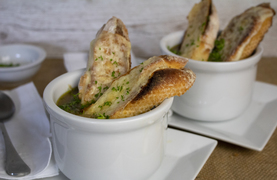
Mmm. Yum!Just love the aroma of French onion soup simmering away in the slow cooker.The long low-heat cooking brings out the flavours and there’s more than enough to feed the hungry gang when they come in from the cold.Served with crusty bread, this wholesome warming soup will banish any thoughts of takeaways which are more expensive and less nutritious. Getting to know your slow cooker is important.They vary in size therefore the cooking time for a particular recipe may vary.Using the low setting, most foods will cook in about six to eight hours.On high they will take about four to six hours.One hour in a 180 degree Celsius oven is equivalent to about four hours on high in a slow cooker. Tips:• For easy clean-up, rub the inside of your cooker with a little oil before use. Once the food is removed from the cooker rinse it to ensure bits don’t stick to the sides.• Always thaw meat before placing it in the slow cooker.• Because liquids do not evaporate, in most cases you can reduce liquids by one-third to a half when converting a traditional recipe for a slow cooker.• Keep the lid on as removing it slows the cooking time.  SLOW-COOKED FRENCH ONION SOUP Great to cook for the gang or freeze in meal-lot quantities. Soup: 2 tablespoons olive oil50g butter1kg brown onions, thinly sliced2 tablespoons brown sugar1/4 cup brandy4 cloves garlic, crushed4 tablespoons plain flour1 cup chardonnay6 cups good beef stock1 bouquet garnifreshly ground salt and black pepper to tasteTopping: 12-16 slices French bread12-16 slices gruyère cheese or similar  Heat the oil and butter in a large frying pan, until the butter stops foaming. Add the onions and brown sugar. Stir well. Cover and cook the onions on very low heat until transparent and soft, about 20 minutes. Stir occasionally. Do not brown. Add the brandy and flame. Add the garlic. Place in a slow cooker. Sprinkle in the flour, stir well, then add the chardonnay. Stir well. Pour in the stock and add the bouquet garni. Cover and cook on low for about 5 hours. Season. Discard the bouquet garni. Meanwhile, toast the sliced French bread. Top with the cheese. Grill until the cheese is bubbly. Place the slices on the soup on an angle. Serve immediately. Serves 6-8.  SLOW-COOKER PORK, PRUNES & APPLE It isn’t necessary to brown the pork but the flavour is improved if you do. The kumara could be cooked separately but if added to the meat it will help thicken the liquid. 3 rashers rindless middle bacon, choppedsalt and pepper to taste1kg boned pork shoulder, cut into 3cm pieces1 tablespoon olive oil1 large onion, diced3 cloves garlic, crushed1 cup each: orange juice, chicken stock2 red-skinned apples, cored and thickly sliced12 pitted prunes1 large kumara, peeled and cubed Pan-fry the bacon until crisp. Place in the slow cooker. Season the pork. Brown in the oil in the pan in batches and place in the slow cooker. Sauté the onion in the oil until soft then add the garlic. Add to the meat. Pour the orange juice and water into the frying pan and boil for a minute scraping any tasty pieces from the base of the pan. Add to the slow cooker together with the apples and prunes. Mix well. Cover and cook on low for 4 1/2 hours. Add the kumara and continue cooking for 30 minutes or until the kumara is cooked. Serves 6.  IRISH LAMB CHOP STEW A stew any husband can cook. The potatoes do not need to be peeled but the carrots do as they will discolour. A sliced leek could also be added. Thicken with a little flour and water paste, if preferred. 1 tablespoon canola oil2 onions, diced500g washed potatoes, cut into 3cm cubes4 medium carrots, peeled and slicedsalt and pepper to taste6-8 lamb shoulder chops, trimmed1 bouquet garni11/2 cups beef or chicken stock Heat the oil in a frying pan. Sauté the onions until soft. Place in the slow cooker. Top with the potatoes and carrots. Season the chops. Pan-fry both sides until browned. Place in the slow cooker. Top with the bouquet garni. Pour the stock over. Cover and cook on low for about 6 hours until the lamb is very tender. Serves 6.   SLOW-COOKER TERIYAKI CHICKEN Choose a good selection of colourful veg. 400g frozen mixed veg1kg skinned and boned chicken, cubed1/2 cup chicken stock2 tablespoons each: teriyaki sauce, orange marmalade1/4 cup orange juice1 tablespoon each: brown sugar, grated root gingerchopped parsley to garnish Place the vegetables in the slow cooker. Top with the chicken. Combine the remaining ingredients — except the parsley — and pour over the chicken. Cover and cook on low for 4-5 hours. If preferred, the juices may be thickened with a paste of 2 tablespoons each of cornflour and water. Garnish with parsley. Serves 4-5. 

Sir Alan Mark to turn 90

03 June 2022, 5:00 AM

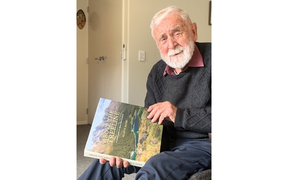
Professor Emeritus, Sir Alan Mark, one of New Zealand’s leading plant ecologists, a botanist, environmentalist, scholar and New Zealand’s first recipient of knighthood for services to conservation, is about to celebrate his 90th birthday. Fiordland and Southland have a lot to be grateful for to this man.Not only was he instrumental in saving Lakes Manapouri and Te Anau from serious environmental destruction, but also negotiated protection of 1500 hectares of red tussock land on Gorge Hill from being ploughed up for farming.A patron and supporter of many environmental campaigns, he is still using his scientific knowledge and experience to ensure that our unique natural assets remain protected for future generations.Born Alan Francis Mark in 1932 in Dunedin, he was the first person in his family to go to university.He studied botany at Otago and completed his PhD at Duke University in North Carolina, USA. On his return he was employed as the ecologist in the Botany Department at Otago University.In 1955, soon after the Homer Tunnel was opened, 23-year-old Alan and a fellow botany student went to Milford on motorbikes, a visit that made a big impression on young Alan. Little did he know that 14 years later he would be embroiled in the campaign against a government proposal of raising the level of lakes Manapouri and Te Anau to build a hydroelectric power station. In 1969 the government asked Mark to conduct a study to assess the likely environmental impact of a lake rise.“At that time I was researching the snow tussock grasslands in high country, so this request came completely out of the blue, but we went for it,” he said.This was his introduction to conservation issues.It was largely Prof Mark’s and his research student, Peter Johnson’s, environmental impact report that saved Manapouri from obliteration when the government of the time planned to raise the level of Lake Manapouri by 24 metres to that of Lake Te Anau.What followed was the 4-year period (1969-1972) of ecological studies, public meetings and political lobbying.The Save Manapouri campaign was a significant 1972 election issue which resulted in the change of the government from National to Labour.The original 1972 Guardians of the Lakes with Alan Mark in the centre. Photo: SuppliedThe new government promised to leave the lake levels unaltered and appointed the Guardians of the Lakes to monitor the use of the lakes by the Manapouri power station.Sir Alan was the Guardians’ first chairman, a position he held for 26 years.He is a Forest & Bird Conservation Ambassador and was its president between 1987 and 1990. He was made a fellow of the Royal Society of New Zealand in 1987 and was a member of National Parks and Reserves Authority and later the NZ Conservation Authority. In Te Anau Sir Alan is a member of Leslie Hutchins Conservation Foundation and a patron of the Pomona Island Restoration Trust.In 2013-2014 he acted as a patron for the Save Fiordland campaign against the proposals of building of the Milford Dart tunnel and the Fiordland Link monorail through the Snowdon Forest classified as a World Heritage Area.Another of his causes was the Mid-Dome Wilding Trees Charitable Trust which had led wilding tree control over thousands of hectares in Southland, making huge inroads to the problem. “Otago University gave me an Honorary Doctorate of Science, which I cherish. It’s indicative of the continuous support by the University for my efforts,” he said.A lifetime patron and supporter of many environmental campaigns, he is still using his scientific knowledge and experience to ensure that our unique natural assets remain protected for future generations.In 2009 he was the first New Zealander to be knighted for his services to conservation.The book cover of Prof Sir Alan Mark’s autobiography published in 2015. Photo: SuppliedIn his autobiography published in 2015 and titled Standing My Ground: A voice for nature conservation, Sir Alan gives an account of his life and work – a career that has spanned over five decades with his two main fields of research being snow-tussock grasslands and lakeshore ecology.Sir Alan’s biography documents important conservation battles and tells the story of a genuinely humble man who is one of the most outstanding New Zealanders in his field.He was a chair of the Wise Response group, and although he stood down from the role in 2021, he remains the group’s patron alongside Sir Geoffrey Palmer. Since then, he has dedicated his time to tenure review, which has ended on 18 May 2022, when the Crown Pastoral Land Reform Act came into effect.He had also been busy reviewing his book on alpine plants Above the Treeline: A nature guide to alpine New Zealand, first published in 2012. The revised, expanded version came out in October 2021 and to date sold more than 1000 copies.Sir Alan is pleased to see the increased appreciation by New Zealand public of the environmental issues and their willingness to fight for it.He believes that the secret to his longevity and maintaining a sharp mind lies in keeping active, both physically and mentally.“I’ve been lucky to have good health and the grey matter working reasonably well. I’ve done a lot of work in the field, sometimes quite strenuous, like walking in high mountains. I’ve also been busy mentally, writing books, papers, submissions and giving speeches,” he said.These days Sir Alan seldom visits Fiordland. He has passed his Manapouri holiday home over to the next generation. At nearly 90, with four children, nine grandchildren, and three great-grandchildren, Sir Alan has no plans to give up his passion for conservation.He still has a room at Otago University Department of Botany, where he can work on his projects.He will celebrate his 90th birthday on 19 June at the Otago University Staff Club, with over 60 invited guests.

Southern DBH to open new mental health facility

03 June 2022, 3:32 AM

A new mental health crisis facility will open in Dunedin this September, through a partnership between the Southern District Health Board (Southern DHB) and community service provider Pact. The five-bed home will cater to adults experiencing acute mental distress and will provide with 24-hour in-home support.The facility is placed a residential environment less than 10 minutes from Dunedin Hospital.   The Pact-owned, well-established property will be furnished in comfortable, spacious, home-like surroundings and support with an emphasis on privacy, dignity, wellbeing, comfort, safety, and easy access to a tranquil garden setting. Families, who are essential to a service user’s recovery, will also have a space to see their loved ones privately or even stay overnight on site if they wish to do so.   The home will be run by Pact, which specialises in helping people recovering from mental illness through supported 24/7 accommodation, planned respite care and community support. Pact already manages a similar home in Lower Hutt.   Toni Gutschlag, Executive Director of Mental Health, Addictions and Intellectual Disabilities for the Southern DHB, says the new partnership will provide people in crisis with professional clinically led community-based support rather than hospitalisation, enabling them to remain closer to home.  “Dunedin has historically had a one-bed unit available for emergency respite care, so this capacity expansion is addressing a long-standing service gap.” “Having a dedicated team of trained mental health support workers and a larger facility with comfortable, home-like surroundings will allow us to provide earlier intervention and more focused care for people in the Dunedin region. We anticipate that this will reduce hospital admissions and hope it leads to an improved experience for users and their whānau.”  The new facility will increase current capacity from 365 bed nights to 1,825 bed nights per year, freeing up hospital beds and staff.  Pact General Manager Thomas Cardy. Photo: Supplied.  Inpatient hospital services will continue to be available for those who need them. Pact General Manager Thomas Cardy says Pact is delighted to provide the much-needed respite service for the community and says its team will accommodate clients who are referred by the EPS (the emergency mental health crisis service provided by SDHB) or community mental health teams.   “As we already do in other areas, we will be working closely with the Southern DHB’s crisis/community teams and inpatient services to ensure tangata whaiora – a person seeking health and wellbeing – receives the support they when they need it.”“The service will be staffed by a mix of highly skilled clinicians and support workers who have knowledge and experience working with people experiencing a mental health crisis.”  Work is also getting underway to set up a crisis support service in the Queenstown Lakes District. More details on this will be released once available.  

Three waters: LGNZ admits poor communications strained council relations

02 June 2022, 11:47 PM

Local Government New Zealand admits it failed to effectively explain its strategy over three waters to its members, which strained relationships and led one council to quit.But the councils' advocacy group says it won't apologise for being at the negotiating table, which ensured significant wins for the sector and communities - and it has not been silenced.LGNZ chief executive Susan Freeman-Greene said the group's leadership board - its national council - decided early in the three waters reform process it needed to work with, rather than against, the government."We made that decision a couple of years ago, to shift our strategy from being oppositional to being in the tent early and not opposing from the sidelines, but to make sure that we were challenging, testing, pushing, critiquing, every step of the way," she said.This was because the government was sending "very clear signals" it was determined to proceed with the reforms, and "had a view that unless everyone was in, that it wasn't going to be workable", she said."Being at the negotiating table is not something that national council apologises for. What we do acknowledge though is that we haven't taken the sector with us, and we haven't done a very good job of that at all."That's created some strained relationships with some of our councils who are opposed to the reform, and haven't been happy with our approach. That hasn't been helped by the fact that we haven't actually been able to travel and see our councils, and actually connect and deeply understand what's going on for them."The collaborative approach was what led LGNZ and the government to arrive at an agreement in July last year. Among other things, LGNZ said it would not directly oppose making the reforms mandatory - for example, through a campaign - if that's what the government chose to do.Councils individually could still oppose such a move however, and LGNZ could also express disappointment the government considered the mandatory approach necessary.Freeman-Greene said LGNZ would not have been able to achieve what it did without the collaborative approach."The Heads of Agreement was the first time that the sector's actually been at the table influencing decisions that directly impact them, and through that process, through those negotiations, we got a number of things."This included securing $2.5 billion in central government funding under the "no worse off" and "better off" funding; guaranteeing further consultation with councils after the mandatory approach was confirmed; cementing LGNZ and local authorities as a credible collaborator; and carving out a focus on governance, representation and accountability to be tackled by a working group of mayors and Māori.She said the recommendations of that group, which the government largely accepted, had significantly improved the proposed model.Councils had been largely opposed to the reforms, which would see them hand responsibility for management of water services to four independent entities. Some formed an opposition group - Communities 4 Local Democracy, or C4LD - which Freeman-Greene said was appropriate and entirely within their rights.This opposition was for a range or reasons, some of which may have been at least partly resolved by the working group's changes.But Freeman-Greene said misconceptions over a non-disclosure agreement which meant the group could not share details of its negotiations with the government were partly to blame for councils' frustration with LGNZ."The sector felt they were in the dark because we had to negotiate behind closed doors and we could have done a much better job of explaining what the heads of agreement meant for them," she said.This frustration prompted Timaru District Council to pull its membership. Timaru and two other councils are taking a case to the High Court, seeking a declaration over property rights relating to the reforms.Other councils also publicly expressed dissatisfaction with LGNZ, but as yet no others have quit."Only one council isn't a member at the moment. We are in the process of a fee round, if you like, and a number of councils that belong to that group (C4LD) have absolutely agreed to stay members with us," Freeman-Greene said.She said the non-disclosure agreement only applied to the negotiations, and rejected the suggestion LGNZ had been silenced."We have not been silenced. We are loud and noisy, and sometimes a complete thorn in the side of this government," she said."We are anything but silent. We are pushing and prodding and loud and noisy and what's more we have been at the table, we have a direct way - a direct clear path - to raise those concerns immediately, and influence the decision-makers.""I have no doubt that there are probably times in this government wishes that they hadn't agreed to some of the things we fought."In fact, she said the group had learned from the process, which had only highlighted the need for councils to work together.With Covid-19 restrictions lifting, she said face-to-face meetings were returning and proving useful for planning - including on three waters submissions at the select committee stage, and the government's other major projects in resource management reform and the future of local government."Councils recognise that with all this reform that is happening and everything else ... your business as usual, to Covid, to elections coming up, to these weather events and this swathe of reforms, we are much stronger together."The first of two bills setting out the three waters system was introduced to Parliament yesterday.Russell Palmer, Digital Political JournalistRepublished by Arrangement

Robinhood Stars defeat Ascot Park Hotel Southern Steel

02 June 2022, 9:57 PM

-Image copyright Michael Bradley PhotographyThe Robinhood Stars will host the Elimination Final on Wednesday 8 June after a clinical 68-49 win over the Ascot Park Hotel Southern Steel in Auckland on Thursday. The Stars extended their advantage at each of the breaks in a confidence-boosting preparation ahead of meeting either the MG Mystics or Te Wānanga o Raukawa Pulse next week for a place in the Grand Final. Needing extra time to complete a two-goal win over the Steel just five days ago, the Stars were a class above their opponents on this occasion. All areas of their court played a part for a rampant Stars in crafting a season-defining performance. It was a tough day at the office for the Steel who never got going, lacking their usual drive and resilience in failing to make an impression against an ever-improving Stars outfit. The rescheduled Round 4 match was the last of the regular season for the Stars, who were back on court after playing just 24 hours earlier. Missing their last outing with an ankle injury, goal defence Elle Temu returned to the Stars starting seven in an otherwise unchanged line-up. For the Steel, training partner Kate Hartley again assumed the wing defence role in the continued absence of an injured Renee Savai’inaea. Showing their blueprint for the upcoming Finals Series, the home side were all over the Steel in the opening stanza. Midcourter Gina Crampton and shooter Maia Wilson showed their growing form of recent weeks with sharp starts. At the other end, the Stars defensive unit of Holly Fowler, Temu and Anna Harrison had their opponents on the back foot early on, time and again forcing errors and leaving the Steel high and dry in terms of scoring opportunities. Five unanswered goals while leaving the Steel scoreless for almost seven minutes pushed the Stars into a position of comfort, prompting the introduction of shooter Saviour Tui and defender Sarahpheinna Woulf for the visitors. The changes paid off, a strong finish by the Steel helping reduce the margin to a 13-9 advantage to the Stars at the first break. With more ball getting into the hands of prolific shooter George Fisher, the Steel made the perfect start on the resumption. Three goals on the trot pulled the visitors’ back to within two but simple errors continued to plague the Steel. The Stars needed no second invitation, Harrison and Temu gobbling up turnover ball while the Crampton/Wilson connection continued to flourish as the home side put their foot down. With the momentum going their way, the Stars skipped out to a healthy 31-22 lead at the main break leaving the Steel with plenty to ponder. The Steel continued to make personnel changes, the visitors constructing a much more competitive third quarter but making inroads against the well-drilled Stars proved difficult. The home side continued to impress on attack with goal attack Jamie Hume chipping in to complement Crampton with the slick service to Wilson. Stars captain, Wilson, retained her stellar form with a dominant showing, her movement and accuracy being key features. The Stars showed few chinks in their armour, ball security being top of the list and leaving the Steel few opportunities to pocket any gains. The Steel struggled to break the Stars hold on the game, finding little flow or rhythm, the floodgates opening in the final few minutes of the spell as the home side rocketed into a 48-36 lead at the last turn. Shooting Stats - Stars: Maia Wilson 51/55 (93%) Jamie Hume 15/17 (88%) Amorangi Malesala 2/4 (50%) Shooting Stats - Steel: George Fisher 33/35 (94%) Saviour Tui 9/13 (69%) Georgia Heffernan 7/9 (78%) MVP: Maia Wilson (Stars) 

Motivated Steel ready to finish strong

01 June 2022, 10:49 PM

Hopes of making the ANZ Premiership playoffs have been dashed but the Ascot Park Hotel Southern Steel won’t be lacking motivation. Captain Shannon Saunders is adamant her team has plenty left to fight for when taking on the Robinhood Stars in Auckland tonight. For starters, it’s the same team whose extra-time victory just four days ago ended any hope of the Southerners extending its season into finals territory. “It’s a bit weird knowing we don’t have elimination finals to play for and that loss took a bit to process to be honest,” Saunders said. “It was really disappointing and just so frustrating because we were in it for the whole time and it could have been our game. “It was just that decision making at crucial times which let us down. It’s a good learning going forward but that doesn’t take away the hurt at the moment.” With a third encounter against both the Stars and the Spice Construction Magic, to be played in Hamilton on Saturday, to finish the season, it feels like familiar territory. “We kind of know what we’re going to come up against. It’s just about standing up in those pressure situations if we find ourselves in them again. Hopefully the situation will be different because we would have learned and it will show out there on court,” she said. “The last few games we’ve lost when we’ve been put under pressure so that’s something that we really want to improve on. “There’s still plenty to play for and we want to finish on a good positive note. Sunday’s game was probably one of our most consistent performances for 60 minutes. It was just those little things that let us down. We’re playing some really good netball, we just to keep doing that consistently.’ Selection for international duties added another element to the mix for several players in the ranks. “We’ve talked about that and it’s a good opportunity to make sure we put some good performances out there for all the girls that are seeking selection coming up and just trying to put our best foot forward for all of them. That’s a good motivation to try and step up for our teammates.” 

CLASS ACTION: Wallacetown School

01 June 2022, 9:35 PM

-March, April & May 2022It was an interesting few weeks late in term 1 on the Covid front at Wallacetown School.Managing the Covid case numbers had been relatively simple.With numbers we had away isolating it has been very quiet out and about on duty and in the playground.Seeing children greeting each other and their excitement at being back at school after isolation was heart-warming.Nixie, Lara, and Miss Brady went to drop off a card and some treats to Dave as a thank you for staining our Friendship seat.We all got to have a look around his very impressive workshop and see how huge the logs of wood are, before he cuts it them down.Best of all, he then needed some ‘girl power’ to move his little ponies and the sheep, Nixie and Lara were in their element!Check out the pictures of the girls with Dave, Silvey and Jules. Easter Craft Day!We had planned a day with lots of different craft activities.The classes completed them in rotations with each of the teachers.Whaea Nish made bookmarks with her groups, Ms McKenzie painted, and decorated Easter trays and Mrs Pasco made stained glass Easter eggs.We had lots of awesome entries for our colouring in competition (which was for adults too!!).Isobel, Frank, Charlee, and Serena won Easter Treats for their efforts.We ended our day with an Easter Egg Hunt with each class looking for a series of clues around the school! Zane showing us Colouring inEaster CraftingTreasure huntersPlayground and Break time fun in the SunTerm 2 started off with a few more Covid cases, but despite that, it was great to see everyone’s smiling faces in the morning as they came through the gate and catching up with how their holidays have been.We welcomed Georgia and her family to Wallacetown School, Georgia is in Room 2.GeorgiaAnzac Day was also celebrated, again these celebrations were on a much smaller scale around Southland and the rest of the country.The Wallacetown Memorial is none other than the main entrance to our school!Our gates were very colourful with the wreaths that were laid by the community groups and the other wee treasures left.Ko Taku Reo – ‘Hub Day’We are really excited to be able to welcome Ko Taku Reo back to Wallacetown School in Term 2.Ko Taku Reo are the education provider for Deaf and Hard of Hearing students and one day a week (a Thursday this year) they hold a ‘hub school day’ where Deaf or Hard of Hearing students who are enrolled at schools across Southland come to work and learn together using Room 1 as their classroom.  Friday the 13 May was our first whole School Assembly in what felt like for ages.... and looking back in the calendar we worked out it had been ages!The last time we had been altogether was on Friday 6th of August 2021.It was really nice having an audience and being able to welcome and have parents/family member join us, we have missed this!It seems since March 2020 the phrases ‘back to normal’ and the ‘new normal’ sum up just how much of a change we have all experienced and how much Covid has impacted on what we would say are the simple things.As well as being a long weekend, Queen’s Birthday weekend is also a celebration of the Queen’s Platinum Jubilee, with her having served 70 years as being Queen.Back in February we wrote letters to congratulate the Queen on her achievement and wished her all the best for her big celebrations, and this week the classes got a reply to their letters!Exciting!We want to help her celebrate so have decided to have our very own ‘Platinum Jubilee Morning Tea’– Wednesday 1st June at 10:30am will be an opportunity to dress up in an outift ‘fit for the Queen’ and enjoy a good old fashioned cup of tea and some treats!Letters from the Queen!! Letters to the Queen                       Class work with Room 3 Making some Mother’s day Crafts and presenting a play!In Week 3 we held another ‘item’ mufti day.Students wore what they liked and brought an item that went towards care packages for families who were at home isolating.We are so grateful for our generous families, as these packages have been well received by everyone. In week 3 We also welcomed a new classmate to room 2! Welcome Lottie!  Cross Country –Wednesday 25 May we headed off to Browns for Cross Country.Although some of the photos showed sunshine, it definitely didn’t stay sunny the whole time so well done to our older students who ran in mostly wet and sideway rain conditions.Lots of lovely feedback from the other teachers who commented on how supportive and encouraging our students were of each other.Well done to the following students (21 J) who will represent Wallacetown School at the Central Cross Country on Friday 10th of June – Levi, Kage, Jackson, Ella, Jade, Rachel, Lara, Ritchie, Flynn, Zaria, Charlee, Jack B, Anton, Arthur, Rocco, Jack W, Grace, Myla, Lottie, Jimmy and Travis.We wish them the best of luck. AssemblyFor the last two weeks Room 3 and Room 2 have hosted assembly, it’s been great to see how they’ve taken this challenge on and they’ve done a great job!Friday (3rd of June) we are having a whole school assembly and this will be at the Community Centre starting at 2:20pm.Our Year 6 Leaders will lead this, feel free to join us online or in person – plenty of parking!Please remember to bring a mask to wear when indoors.  Golden time is every Second Friday – and the Children get to choose what activities they like to do.We had swimming, mindfulness, Kahoot!, circle city drawings, garden crafts and baking with Mrs McKerchar.Wallacetown School kindly supported by Wallacetown Motors                         

3181-3200 of 6472
The Southland App
The Southland App
Advocate Communications

Get it on the Apple StoreGet it on the Google Play Store