The Southland App
The Southland App
Advocate Communications
Get it on the Apple StoreGet it on the Google Play Store
Shop LocalNotices | JobsContactAdvertise
The Southland App

Southland's Local Legends


Local legal legend: Kevin Phillips - the boy from Gore

15 December 2025, 8:18 PM

As a young Gore lawyer he tried the patience of legendary Southland judge Joe Anderson with his colourful criminal defences and courthouse antics, but retired southern District Court judge Kevin Phillips, 76, scored some amazing victories during his 50-plus-year legal career.As for the ones he lost, well, they made for some great media headlines and had the desired effect, catapulting his early legal practice to a new high.Born in Darfield – the middle of five kids, the family moved to Dunedin, where his dad was the assistant secretary for the Otago Hospital Board.At five, Kevin negotiated Railway platforms and crossings, making his way up Stuart Street to Christian Brothers School.“My new entrant year they were fully booked so five of us boys had to go to St Dominics with the girls.”They used this as their argument to get into a St Dominic’s reunion years later with 80 or 90 women.After a move to Balclutha, they shifted to Gore where Kevin went to Gore High.A successful lawyer for 33 years and judge for 18, Kevin missed School Certificate by one mark for not applying himself, passing the second year only to not be one of just five accredited UE by the strict Gore High School rector.He passed eventually and had admired legendary Gore lawyers like Tom Brydone and Ronald Bannerman, who made his mark in the town as a WWI hero flying fighter planes, so headed to Otago Uni to study law.Little Kevin, second right, with Mum Madge, Dad G.J. and two of his four siblings Ian and Susan - mid-1950s. Photo: SuppliedAquinas Hall and Castle Street flatting made for fun times, Kevin then heading to Groote Eylandt off Australia’s Northern Territory to drive construction site trucks for a summer before finishing his final year.He began 14 years as a lawyer in Gore in 1972 with Bannerman Brydone and Folster.“A new young lawyer, I found myself before Joe Anderson, the new, young judge.”He was thrown in the deep end when asked to represent a debtor.“Joe came in giving me very bad vibes and I got called for the judgment debtor just after another guy from our firm had announced he acted for the judgment creditor – a big no no,” Kevin recalls.“Joe exploded. It was my first appearance in court and a total disaster. I was 23.”Then there was the time Judge Anderson got a whiff of Kevin’s cigarette smoke in the old Gore courtroom.“The registrar couldn’t do much as there were lignite fires at either end of the courtroom and if the wind went the wrong way it filled with smoke,” he grins.Kevin and a female Gore registrar got in more strife when they ran a pyramid scheme over six months which made them a lot of money.Kevin, second left, with his Queenstown partners, John Troon, left, Alan Macalister and Graeme Todd in one of their much-anticipated annual Christmas skits. Photo: SuppliedThey then ran a pool system on court day, all counsel putting in $1.“She’d pick a word out in the morning tearoom and the first person to fit it in their submissions in court won the pool.”However, Stuart Lilee had to pay up when he bet Kevin that he couldn’t get ‘the naked truth’ and ‘the bare facts’ into his submission while representing a guy who’d streaked through the Wyndham Hotel Public Bar, but he did.The client, on a dare to raise $50 for the Gore Squash Club, was charged with indecent exposure.“We were both ordered into Judge Anderson’s chambers where we were told what he thought of people making a mockery of the law,” Kevin says.Despite all this Joe and Kevin became very close friends over the years.An original founder of the Gore Squash Club with Peter MacKenzie and others, the club courts were built from scratch with help from Gore Construction.“We’d play Southland Competition tournaments travelling as far as Tuatapere on Wednesday nights.”Kevin was the club president during the 1970s.Kevin, right, reminiscing with his old Macalister Todd Phillips partners, Alan Macalister, left, and Graeme Todd. Photo: SuppliedBetting was obviously rife in Gore, Kevin also on the Gore Racing Club committee for some years, racing several horses over the years.During a foray into politics, he unsuccessfully stood against Derek Angus for the Wallace National Party nomination.“So, I joined Bob Jones’ NZ Party.”Friends turned up to support a Garston meeting, concerned nobody would come.“They couldn’t fit into the hall. I had really good meetings. But I got a bit of flak from the old farmers in National territory who thought I was a radical left winger.”In 1981 Kevin headed to Queenstown hoping to open a wine bar.Unfortunately, impending licensing law changes were delayed, and he was forced to open a legal practice instead.“I used space in Dardy Wallace’s winter ski shop, covering up the ski planing table and using it as a desk,” Kevin recalls.“I had no clients, nothing to do, and was used to being busy. Alan Macalister (lawyer) gave me some council work, but I needed headlines.”Kevin's final sitting as a fulltime resident Dunedin judge in 2018 (prior to becoming an acting warranted judge around NZ for five years). Photo: SuppliedHe got those defending a guy charged with possessing magic mushrooms (psilocybin), who claimed he was of Native American extraction, and they were required for a sacred tribal ritual.“He said they went to where the rivers began, and they sat on a rock after taking psilocybin and the Manitou would come down and give them instructions for the year,” Kevin says.“So, I went to the Dunedin Library to research this and that’s exactly what they did,” he says.“I came back with all the information, and the Police couldn’t believe I was defending this guy,” Kevin grins.“Judge Anderson listened to my submissions for 15 minutes then said crossly, ‘I’m sick and tired of listening to this rubbish. Your client was using a Class A drug!’ But I got big headlines and my practice took off like a rocket.”Soon after he was offered a partnership in Macalister Todd where he worked for 21 years on some groundbreaking cases.“We were on a really good high, then the sharemarket crashed in 1987 and we went to nothing, living off our credit cards and borrowings.”Then in 1991 a Queenstown realtor needed their law firm to act for Asian clients buying a property.“They ended up buying half of downtown Queenstown. That reinvigorated our practice.”Former southern judge Kevin Phillips. Photo: SuppliedKevin even flew to London to represent them after an argument over a pipeline with Pakistan State Oil.“These were big companies and it went to arbitration in London, so I went over to act for them in Fleet Street – the boy from Gore.”There were the 15 Timaru Road Knights gang members who caused a riot in Queenstown Mall, Kevin assigned to represent all 15 at the Invercargill trial.“These Road Knights were all lined up behind me on benches, like at the rugby,” he recalls.“Crown solicitor Alistair Garland had employed a new, very young looking, bespeckled prosecutor with white, blonde hair, which prompted the Road Knights behind me to stand and cheer, ‘The Milky Bar Kid!’ Ronny Mansfield (KC) went on to be NZ’s leading criminal defence barrister.”Acting for the QLDC, its Airport Corporation and District Waterways Authority, Kevin drew up NZ’s first ever waterways bylaws.He also covered the council’s back when a huge slip threatened above Frankton Road, post 1999 floods.“If it wasn’t for the council CEO (Duncan Field) those floods would’ve been a bloody disaster,” he says.The transition to judge in 2006, commuting to Invercargill weekly, was a big one, mostly for wife Su (Chilton) and kids Georgia and Elliot, Kevin says.Kevin, left, with his family Georgia, Su and Elliot. Photo: SuppliedHe says marrying Southland-raised Su in 1991 was his “only unappealed decision”.Fresh from judge’s initiation, Kevin was dobbed in at the last minute to preside over a jury trial when the rostered judge found he had a conflict.“I’d been to Invercargill District Court but never behind the bench. I was scared shitless and no one told me there was a step up to the chair, so I tripped and disappeared behind the bench with the jury and public watching! Talk about embarrassing.”His circuit included Gore where Kevin recognised a few faces, including the grandson of a guy he’d acted for.“It was generational.”Now retired in Dunedin, he’d rather not be.Because of the rules Kevin had to retire in 2023, after applying for five more years as an acting warranted judge around the country.“I liked what I did. I wish I was still working.”Sue Fea is a senior journalist with more than 40-years experience covering police, social and general news in the southern regions.


Ant & Michelle Logan - legends on the reins

12 December 2025, 4:09 AM

He’s gained a reputation as a good horseman during the past 20 years and if anyone’s going to rein them in its Ant Logan.Together with wife Michelle - a vet specialising in equine medicine, they do a lot of horsing around.Ant was raised in Ruatoria and kind of “fell into horses” as a country boy.“You grow up pretty capable in most things on a farm, and I rode a bit as a kid,” he says.“I’ve been around animals all my life.”Ant’s father wanted his kids to grow up learning how to ride bareback.“A saddle was a luxury.""We only had one for our family, so I got the basics back there in that early training.""Dad was pretty handy with a horse."Ant was a skilled horseman from a young age. Photo: Supplied"Our whole family rode but it was not something I ever loved. It was work,” Ant says.It wasn’t until 25 years ago when he was fencing for a client with a mate.“She ran out of fencing work for us and had a heap of horses she wanted broken in so asked if we’d be interested.""My mate Tojo Maaka was already an experienced horse breaker, so we broke them all in – 12 in a month,” Ant says.“I developed an interest in it then. It was fun.""Seeing a horse graduate from nothing to something that’s useful, that was the coolest part, developing that trust.""Ever since I’ve been dealing with young horses,” he says.“I’m 50 now and absolutely loving it. It keeps me young and fit.”A shearer all his life, Ant grew up around shearing sheds with his mum a rousie and cook for shearing gangs.Michelle and Ant in their early days working in a shearing gang in Australia on their way back to New Zealand. Photo: Supplied“In the holidays I just had to tag along.”Ant travelled widely picking up work shearing in Wales where he met wife Michelle – a Welsh vet, in 2002 at a nightclub holding a school uniform, fancy dress disco.“My friend, Charles, said he’d buy me a drink if I went over and talked to the Kiwi guy. I thought Charles knew him, but he didn’t,” she grins.“Ant had an Around the World ticket which he gave up and stayed on.”Michelle travelled back with him via some shearing work in Australia, where she worked as a rousie.“I loved New Zealand and so I stayed, she says.”“I was working in a mixed vet practice in Wales when I met Ant and worked as a vet in Gisborne back here, travelling to clients up the East Coast.""It was amazing to me, shepherds mustering on horseback with a team of dogs.""I loved it."Michelle enjoying her love of horses. Photo: SuppliedMichelle then gained more experience by moving south and working for Invercargill equine specialist Brendon Bell.Ant also moved south and they lived in Riversdale for a while where Michelle developed a love of breeding horses when working at what is now Macca Lodge Horse Stud for Northern Southland Veterinary Services.She then completed a three-year residency in Massey Veterinary School, Palmerston North, becoming a specialist in equine medicine.They married in 2011 and initially lived in Omakau in Central Otago, Ant working on Matakanui Station before being offered a farm manager’s position in Southland.Michelle worked as a vet in Alexandra before returning to Riversdale with Ant.After some time in Riversdale, they settled on a small farm at Pukerau, near Gore – complementing each other with their two horse-loving careers.Michelle’s had her moments despite her love of horses.The boys aren’t keen on being castrated and she was badly bitten by a 7-year-old stallion as she was about to inject the anesthetic.“He got hold of my arm and dragged me across the paddock, then ran past me and I thought, ‘This is it!’” she says.Ant coming back from a spot of pig hunting. Photo: SuppliedAnother vet eventually gave him three more injections through a fence before she could get near.As for Ant: “I’ve had too many close calls to remember. I’ve been tipped out that many times,” he says.He’d eyed up a beautiful horse once on a horse trek which a mate was selling.“It had ‘For Sale’ marked on its bum so I inquired, thinking Michelle would love that horse.""I brought him home proud as punch and was riding him up the driveway to surprise her when the bloody thing bucked me off!”“I was watching and I wasn’t going to get on him after that,” Michelle laughs.Ant reckons that horse is now his best mate, named Tom Fleming after the guy who bred him.“But every time when he’s fresh and I jump on he puts in a wee buck,” he grins.“With horses when everything’s going right they’ll be on your side until they’re not."Ant working his miracles. Photo: Supplied"At the end of the day, it’s about showing leadership.""If you gain their trust and show that leadership, they’ll be your mate.""If you show faith they’ll show it back,” he says.Word gets out when someone with Ant’s skills becomes renowned and in 2015 Ant was asked by a horse contact if he’d be interested in transporting a whole herd of wild horses south from Arcadia Station at the head of Lake Wakatipu, near Glenorchy.Station owner Jim Veint was giving them away to a good home.“I was asked if I’d be interested in going halves and getting the whole herd out,” Ant says.“When I saw them they were quite unique, like old school stock horses.""I knew when I saw them that I had to be involved with them.""They were very difficult to break in, basically big ponies, very nimble with good strong legs, good healthy stock horses."Michelle giving a talk at Equifest. Photo: Supplied"You need something quick like that on a hill.""They’re strong and can go all day.”The pair found two good truckies – Jock Sharpe and Jamie Coote, from Switzers Valley Transport to help load and move them south.It was no mean feat.“Michelle was away working at Massey, and I got home with all these trucks and trailers loaded with 31 wild adult horses, plus about nine foals – about 40 all up, that we’d rounded up from Jim’s yards,” Ant grins.“It was a big mission – 200kms, but when they got off at the other end they were magnificent.”That was until he tried to keep a rope on them.“It took two days to get a rope on 31 horses, but the next time it took me one day,” he says.“We were farming fulltime. It was a massive challenge.”Equine specialist Michelle offers a spot of pampering. Photo: SuppliedSome were broken in and sold as were some of the foals and Michelle says they’ve had amazing feedback.“People loved them. They’ve gone all over the South Island.""People bought them for kids and families and it’s all credit to Jim and his breeding. They’re so loyal.”“I call them ‘street kids’,” Ant says.“Michelle breeds Hanoverians, originally from Germany, and not that bright in a farm environment, but the Arcadia ones never get into trouble,” he says."They know where to put their feet. They’re born street wise.”Michelle now works for the Veterinarian Council of NZ as a veterinary advisory.She is also running online Horse First Aid courses through their business Logan Equine, teaching the basics such as taking a horse’s pulse, checking temperatures, bandaging, wound care, colic and the likes.“It’s what to do until the vet arrives aimed at all levels - Pony Club members or their parents, absolutely anyone with a horse,” she says.Michelle with the orphaned foal they raised - Esbelli. Photo: SuppliedShe’s also recently been involved in developing online learning resources for Massey University where she gained a higher education teaching qualification and has also done research into Equine Metabolic Syndrome.The Logans moved with their two kids to Moa Flat in West Otago in 2022, but they still have strong connections and a great reputation in horse circles around Southland breeding some first class show jumping horses, as well as the loyal, athletic Arcadia stationbreds.Sue Fea is a senior journalist with more than 40-years experience covering police, social and general news in the southern regions.

Local Legend: Owen Todd - from Boyhood Charm To Rugby Yarns

06 December 2025, 4:36 PM

He’s knocking on 100 but Southland Rugby legend Owen Todd, 99, can still recall some remarkable rugby yarns from his team manager days as if they were yesterday.President of the Southland Rugby Union, manager, and Southland and New Zealand U18 selector during his administration prime in the 1970s and 80s, Owen led the Southland team through some historical victories.Most memorable, that legendary Ranfurly Shield draw with Auckland in 1976.Manager that day, his mini shield still takes pride of place in his room, walls adorned with Southland Rugby memorabilia, at Queenstown’s Arvida Country Club rest home.He's saved the boys from the odd spot of trouble, but his word and his leadership were always respected by the players.Not bad for a mechanical fitter-welder from South Invercargill, who cut his teeth in the trade with family firm J. K. Stevenson Engineers, working there for 44 years, becoming a shareholder through the company’s bonus programme.Owen, fourth from left in the front row, as part of the 1974 Invercargill Blues Rugby Club Centennial Committee. Photo: SuppliedOwen pays tribute to ‘Mr Stevenson’ for ensuring he and wife Ray, who passed away in 2015 after 65 happy years of marriage, got into their first St Andrew Street home soon after marrying in 1950.Ray had been a part of Owen’s life since South School.“I sat up the front with the dummies, and she was the dark-haired brainy girl up the back,” Owen grins.Owen’s dad worked for Wright Stephenson stock firm, transferring to Balfour where Owen continued school.“That’s where I got introduced to rugby, watching it over the fence,” he says.The intrigue of the blacksmith’s shop next door was also responsible for his choice of career later.“I’d watch the chaps making things with metal.”They moved to Gore, Owen working after school at Burrows Nursery, then as a butcher’s boy, taking orders before school on his bicycle then delivering them after school.“Come Saturdays us boys went up behind the dairy factory on the hill, and we’d tip the farmer’s water trough over, and make sleds from the pickets off people’s fences then slide down in the mud,” he grins.A young Owen Todd. Photo: SuppliedA World Boys’ Brigade Jamboree in Wellington was downsized to the ‘Southern Hemisphere’ during World War II due to safety threats when Owen was 12.“We went by train and boat to Wellington. No lights were allowed on the boat at night in case the enemy spotted them. A huge passenger liner was loading soldiers to take them to war. It was scary alright.” They camped for two weeks at Waikanae.The family moved back to Invercargill where Owen played in the South School Rugby Team, also playing for the Southland Primary Schools Team against Otago.“We gave them a thrashing – three of us from our school were in the team.”The headmaster made the senior class give them a standing ovation, then at playtime “the dark-haired brainy girl” (wife Ray) gave him a dig in the back and said, ‘Good on ya!’At Southland Technical College he became head prefect, picking a teacher to dance as was tradition at the school dance.“I picked Miss Morris who said she’d heard a lot about me at home from her younger sister, Ray (wife).”The senior boys had to dig trenches by the basketball courts during the war, stripping their shirts off and whistling at the girls playing basketball.“We had a big fire in the engineering block and us boys had to help dismantle all the machinery, belts and pulleys.Blues Boys - Owen Starring centre front. Photo: Supplied“I got really interested and got a job as apprentice at J.K. Stevenson Ltd Engineers.”Christmas bonuses were offered as shares and coupled with an investment in the Southland Building Society Owen and Ray bought their St Andrew Street home off Mr Stevenson.Their three children arrived – Neville, Sally and Graeme, and while he’d given up playing Owen was soon elected to Invercargill’s Blues Rugby Club Committee – a Life Member for almost 50 years, the club’s oldest.Star of the show at the Blue’s 150th anniversary last year (2024), he was also instrumental in organising Southland’s annual Rugby Life Members Club gatherings, attending his most recent one three years ago.He also suggested that women working tirelessly in rugby club kitchens be honoured with Life Memberships too.Before long fellow Blues members Les George and Len Clode, both on the NZ Rugby Union, had nominated him for the Southland Rugby Union.“I said, ‘Not a dog show!’”But there was, and he then managed a Blues team trip to Australia too.Each time he said, ‘I’ll have a yarn to my wife’.Owen celebrating his beloved Blues Rugby Club. Photo: Supplied“She always said, ‘Go for it!’.""I owe her so much. I couldn’t have done any of it without her fantastic support, and that of my family,” Owen says.He was also a Southland and NZ U18 selector.Each time Ray said, ‘Go for it!’“I’ve been to some wonderful places,” he recalls.Billeted on the West Coast, Owen ended up touring an underground coal mine, presented with a massive box of whitebait to take home.Chairman of Southland Rugby’s Grounds Committee for the 1981 Springbok Tour, Army personnel refused him pre-match entry through the barbed wire, despite being the boss.Owen’s highlight was meeting Errol Tobius, the first coloured member of the Springbok team."Steven Pokere (All Black) introduced me, and Errol told me some of his own team seldom spoke to him off the field, which was really sad."Owen meeting Sir Buck Shelford at the Invercargill Blues Rugby Club 150th anniversary last year (2024). Photo: Supplied"The team manager kept an eye on him and Errol had his own separate manager.”Then there was the Southland trip to Blenheim when Southland Juniors got into a fight with some gang members.A player and the senior team liaison officer – an off-duty cop who went to assist, were both badly injured and hospitalised.“I had three cops in my senior team so I had to let them go help and when the others heard what had happened I couldn’t hold them back despite the hotel manageress’s warning to stay at the hotel.”His players beat the Police there, dealing some Southland vigilante-style justice to the main perpetrator, Owen begging one star player about to be named in the All Black team that night not to join in.“I said,’ You’re doing nothing. You’re just gonna look!’It was all over the 6 o’clock TV news so I rang Ray to reassure her, but I didn’t ring the Southland Rugby Union chairman Jack Smith.Boy, did he give me a clean out,” Owen says.Many happy years were spent at the renovated crib Owen and Ray bought in Queenstown Camping Ground – ‘Toddle Inn’.Photo: SuppliedOne New Year’s Day three Police officers pulled up in a patrol car, offloading boxes into the crib.“Three of our Blues players, cops up here as holiday reinforcements, came to visit.""They’d been confiscating beer from underagers and thought they’d ‘go round and shout for Toddy’,” Owen grins.“People were staring, wondering what was happening at our place. Ray was not amused.”In 1985 they retired to Queenstown, where Owen joined bowls and Ray golf. Owen did fluke a Hole in One in Wanaka once though.Author of Queenstown Bowling Club’s 100-year history book celebrating 1904 – 2004, he’s now delighted to see copies at every table in the new clubhouse restaurant.A former committee member, Owen’s most memorable win was in his 80s when he, Bill Johnston and Dave Weir, playing as the underdogs, cleaned up with an average age of 80 in the Queenstown Bowls Triples Championship final against three local champions.“Geez, that was a late-night home,” he grins.So chuffed, he even had their names and ages engraved on the trophy.Owen, front, with his children, from left, Graeme, Sally and Neville. Photo: SuppliedOwen reckons he’s had “a marvellous life and met some fabulous people”.Always a great encourager of young people, he’s forever grateful to a young English girl from Dover who helped nurse Ray at home in her final weeks.“Louise still writes to me and sent me her wedding photos. She was such a lovely girl.”As for those two newest great grandsons – well, just maybe they’ll grow up to be Stags.Sue Fea is a senior journalist with more than 40-years experience covering police, social and general news in the southern regions.
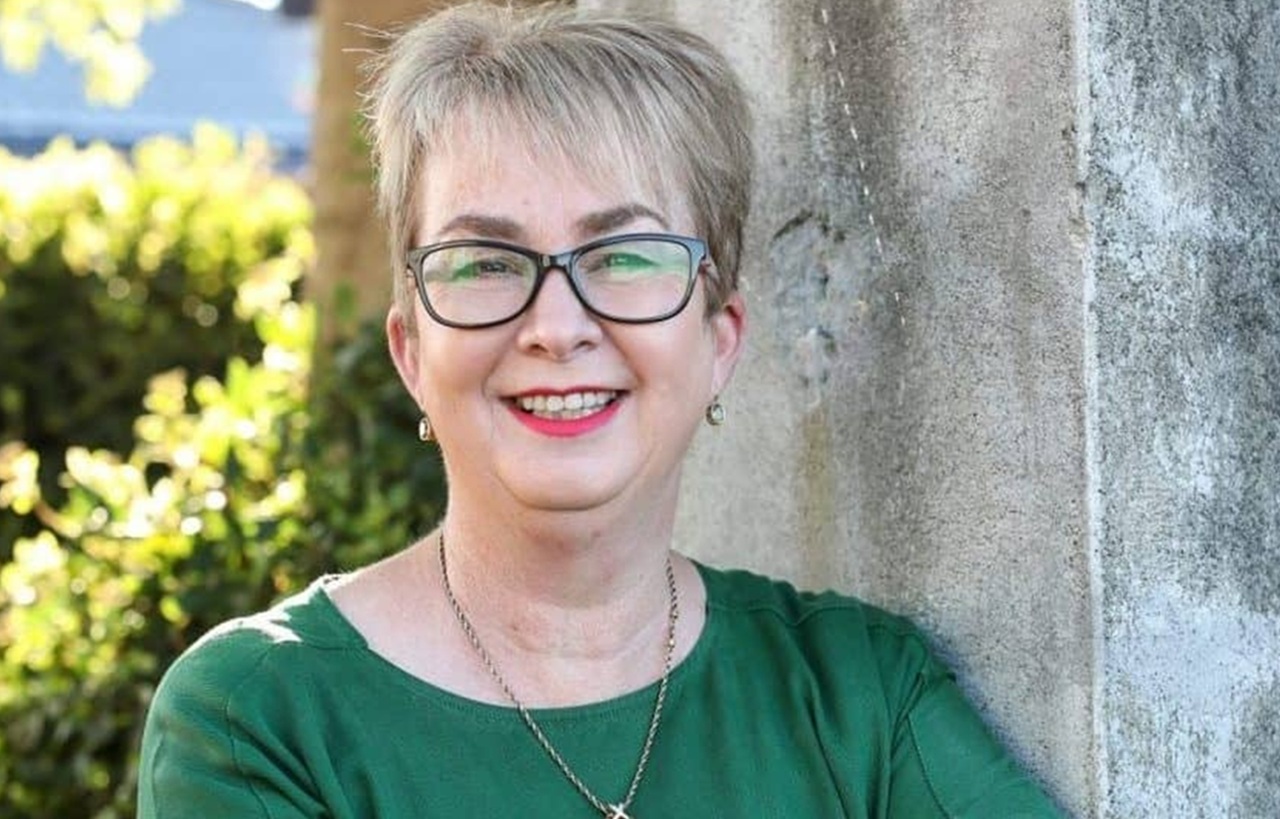
Local Motorsports Legend: Barry's always been keen for a spin

03 October 2025, 5:32 AM

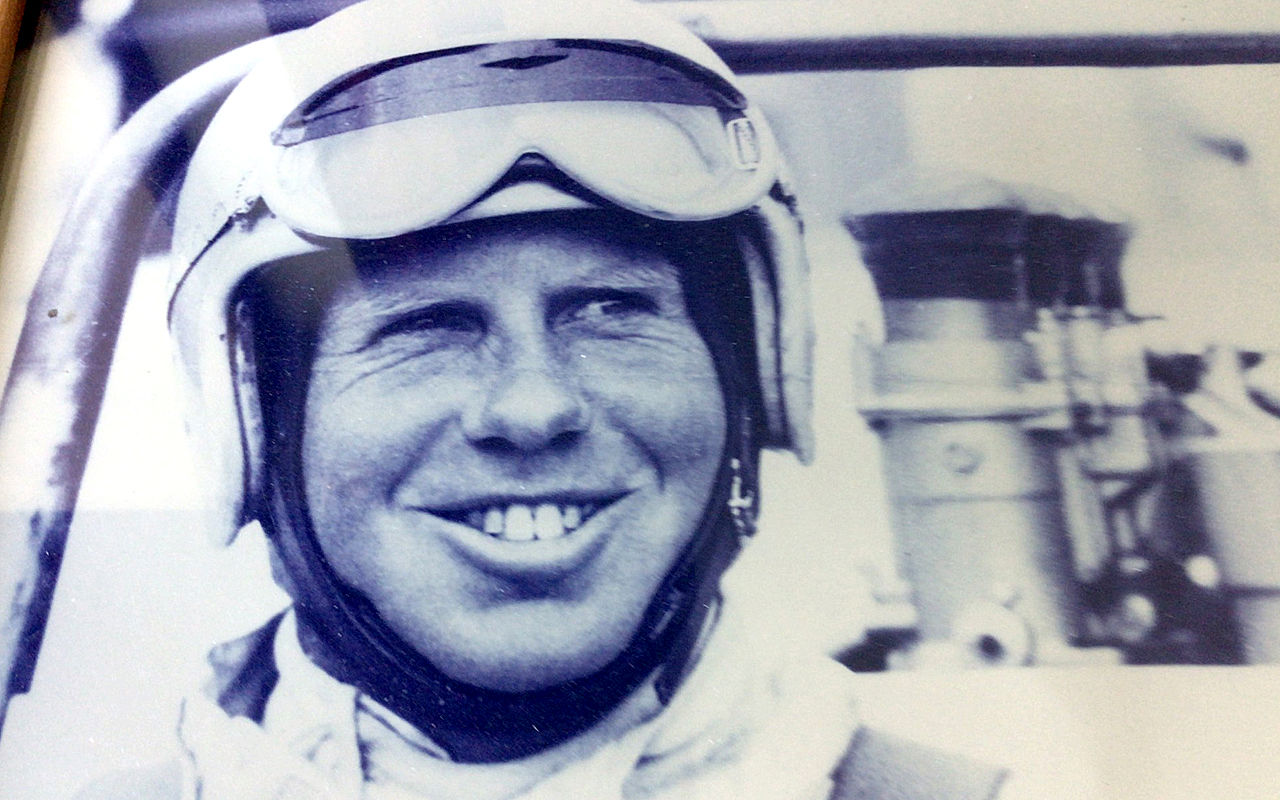
Tucked away in a quiet Invercargill suburb is one of Southland’s motorsport legends – a humble retired farmer who could’ve made his mark on international motor racing for New Zealand.The first car Barry Keen ever owned – his Ford 8 Special - 1956. Photo: SuppliedNow 86, Barry Keen was a very talented driver in his 20s, racing the legendary George Begg’s homebuilt cars all over New Zealand with great success.Introduced to motor racing one day by a contractor working on his parents’ Waicola farm, Barry took to the sport like a duck to water skinning possums and rabbits to buy his first car, a Ford 8 Special with a Austin chassis, at 16.“I wasn’t interested in car racing, but I went to a Hill Climb in Gore with this guy, who had a Mark 1 Ford Zephyr convertible,” Barry says.“I saw these cars screaming up the hill and I got hooked.”One in particular caught his fancy and a week later he’d earned enough money to buy it.“My first race was in 1956.""There was no Teretonga then, just grass tracks in paddocks or beach racing at Oreti Beach, sometimes the odd Hill Climb.”Barry Keen racing his Standard 8 at Ryal Bush road race in 1957, before Teretonga opened. Photo: Supplied“I’d take a burn down our No Exit gravel road past the Pickett’s place to the state forest bush where I’d roar around the paddocks,” he recalls.A makeshift racetrack at Ryal Bush in the late 50s saw the road between Invercargill and Winton temporarily closed, drawing in crowds of up to 18,000 spectators to watch.“They’d be lining the surrounding Ryal Bush paddocks and over the boundary fences, farmers allowing masses of cars to park in their paddocks.”Southland’s tiny Ryal Bush became renowned as a hot racing spot and was a regular on the national motor racing circuit, up there with Pukekohe (originally Ardmore) and Wigram.Barry was right there amongst it as a youngster, racing against some renowned overseas drivers and Auckland Sports Car stars at Ryal Bush from 1957 in his Standard 8.Rarely did he get a chance to test drive, straight onto the track.Teretonga was open by November that year when Barry won the Handicap Saloon Car Race.“Teretonga also attracted 18,000 to 19,000 in those early days,” Barry says.Barry Keen racing a Triumph Herald at Waimate in 1960. Photo: SuppliedHe’s been heavily involved in the Southland Sports Car Club since then, joining up at 17 and always on hand for working bees, track preparation and clean-ups after meets.Racing became his life in between working on the family farm, Barry spending weekends racing his Triumph Herald Coupe not only at Teretonga and Wigram but Dunedin and Waimate too.Born in 1938, Barry grew up in post war Southland between Wairio and Scott’s Gap, near Otautau, the youngest of four kids by 16 years.“I’d get sent to my retired bachelor uncle’s place in Riverton for holidays whitebaiting and fishing near Bluecliffs.“I had a great upbringing.”Surgery on his feet at eight, had left him out of action for six months and wearing callipers for two years but once that healed he made up for lost time.Barry biked or rode a horse 5.5 miles (8.8kms) to Wairio School, getting a ride with the mailman on his first day and walking home alone at five, as was the norm back then.Barry Keen driving the first Begg car that George Begg built – the Begg 650, in 1964. Photo: Supplied“I’d take a shortcut through the paddocks. If I was nice to the girl who lived down the road she’d double me on her bike,” he grins.Farmers were trying to recover their losses post war. Barry’s brother, 18 years older, had been shipped home after being wounded fighting in World War II.Barry travelled daily into Invercargill to Southland Technical College by H&H Bus, leaving school to work on the farm.Saturday motor racing was a light relief and some fun for the whole community.But much to his parents’ disgust, Barry was burning through his savings chasing his love of car racing and it was getting too expensive so in 1963 he gave up the sport he loved.Two years later he was back after legendary Drummond engineer George Begg asked him if he’d race the car he was building.Barry Keen, left, ready to start a race with George Begg, right, giving instructions. Photo: Supplied“I finished up racing seven cars he’d built through until 1967,” Barry says.“George never raced himself, but it was always a challenge to him to build a racing car.”The second car George built was for Winton doctor Dave Bruton.Barry raced these cars all over the NZ Sports Car Circuit, including the Begg sports car – a Chevvy with a V8 motor.They even raced in Levin and at the renowned Timaru Street Race.“Brian Nicoll was our mechanic and Brian and I towed the car to the North Island while George and his family followed and holidayed in their caravan.”Barry Keen in the third car George built – a Chevvy sports car that they raced for the NZ Series – Photo - 1966-67. Photo: SuppliedBarry was just 24 and they mostly always got at least a third place, clocking in second once at Wigram.The fastest speed he clocked was 160 miles/hr (257.4km/hr) but he never had a serious accident. “Once or twice, I’d spin off, but I never damaged a car.”The last car he drove for George ended up setting a NZ Land Speed Record – 178 miles/hr (286.4km/hr), driven by Lawrence Brownlie – no seatbelts back then. Barry had been invited to drive that day but was unwell.“That was a Crop Duster with an aeroplane engine, and he held that record for years.”By his mid-20s Barry had “become responsible” marrying wife of 56 years Shirley, an Oreti teacher he’d met through friends.With twins arriving making for three under three, Shirley’s pleased he’d given up motor racing.The McBegg - George Begg's seventh car and Barry Keen's last race. Photo: Supplied“If I heard ‘B.B. Keen’s in the pits’ in our dating days I’d be waiting and wondering what had happened,” Shirley says.“He could’ve raced overseas as George had been over there working at McLarens in England so there was that opportunity,” she says.They farmed at Waicola until 1990 then moved to Heddon Bush before retiring to Invercargill in 2002.Barry’s won a number of local championships but is equally champion for his services to the Southland Sports Car Club – a life member and patron, and until recently a flag marshal and First Responder for decades at Teretonga meets.Teretonga went on to host eight or nine world championships, Barry at the helm on regular working bees to get the track started and keep successful meets happening.He was honoured with a Historic Heritage Award at Te Papa in Wellington in 2019 for his long, distinguished career in motor racing, especially in Southland, long after he gave up motor racing due to those family commitments.Barry Keen receiving his Historic Heritage Award at Te Papa in Wellington in 2019. Photo: Supplied“It’s a very serious business now,” Barry says.“It’s changed a great deal with big money and a win at all costs mentality.""It’s not the same fun and camaraderie that we had. Money has ruined it to some degree.”Barry Keen, now retired in Invercargill, with his racing helmet from the early days and the special award he received at Te Papa. Photo: SuppliedThese days Barry’s still volunteering with Shirley at Southland Hospice where he’s been gardener for more than 20 years, gardens for elderly and is involved with the Southland Vintage Car Club.You won’t find him boasting though.“George Begg said in one of his books that if ever there was a prize for the ‘most humble man’ that had to go to Barry Keen,” Shirley says, proudly.Sue Fea is a senior journalist with more than 40-years experience covering police, social and general news in the southern regions.
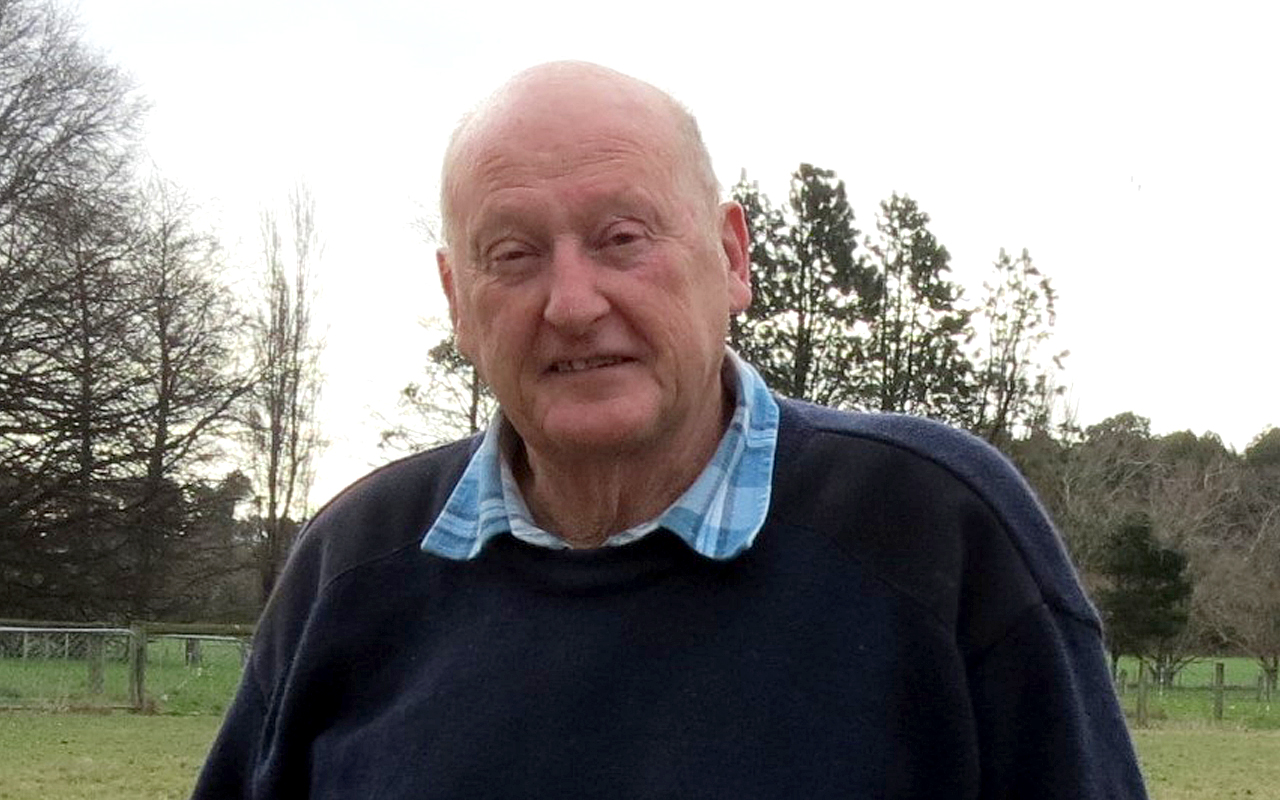
Local Legend: Farmer, father & fireman Ian 'Moth' Lindsay

05 September 2025, 11:17 PM

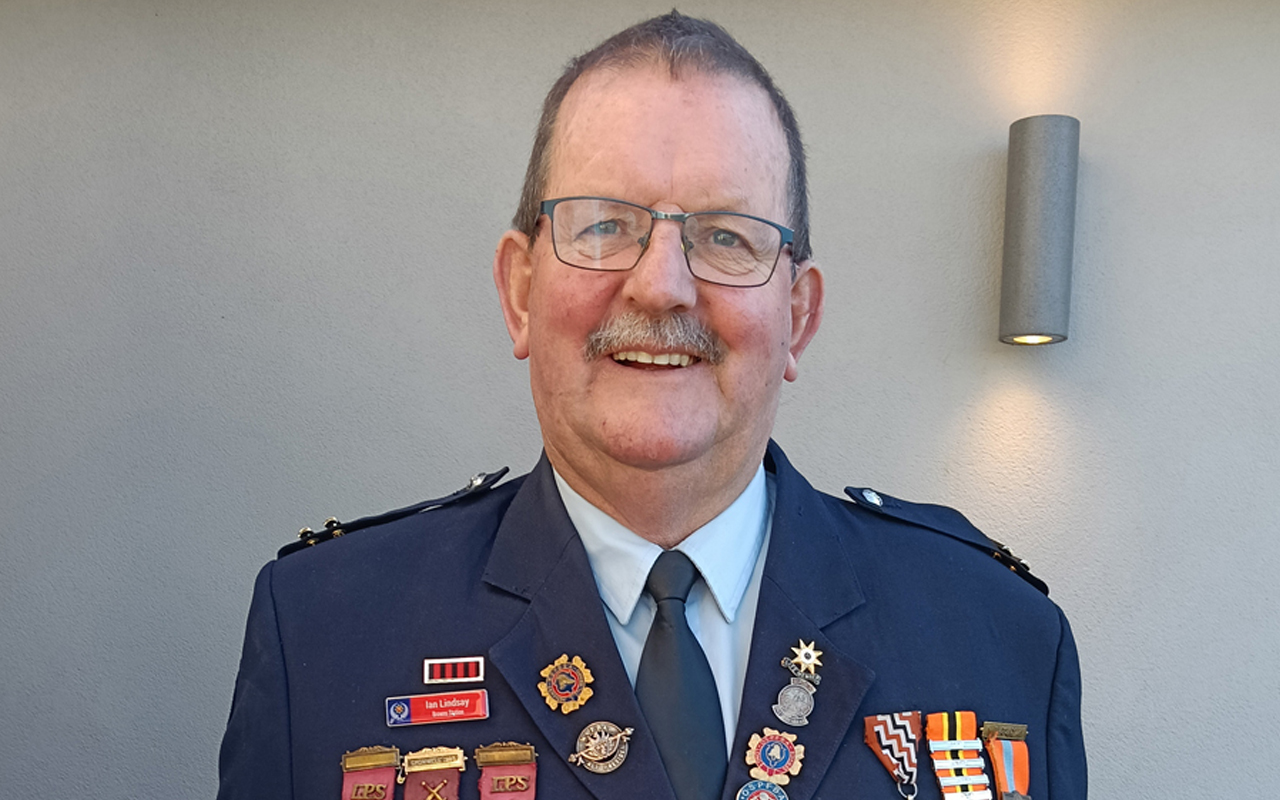
He’s attended hundreds of callouts at all hours and was recently honoured for 50 years of unequalled service to Southland’s Browns Volunteer Fire Brigade – 18 of them as its Fire Chief.However, 50 years on at 71 tireless volunteer Ian Lindsay, or ‘Moth’ as he’s affectionately known, has no plans to hand in the pager and abandon ‘The Friendship Club’, as he calls his firefighting family.Son of Drummond farmers, Ian has served at the highest levels, a former president of the United Fire Brigades Association, first elected to the UFBA Board in 2006 beginning five years of service in the world of Wellington politics.He quickly became Deputy Chair of the Board after a few emergency trips to Wellington to help solve a UFBA financial crisis.Ian, by now a successful sheep and deer farmer, and his fellow board members soon had that under control.But you didn’t mess with ‘Moth’, no matter how ‘Wellington hierarchy’ you were.“I’ve had the pleasure of working with some great people at National Headquarters, who really supported the volunteers,” he says.Not all did.“We’re there for our communities, not to appease a ‘Shiny Arse’ in Wellington, some who have never ridden in a fire appliance,” he grins.Ian Lindsay as president of the Otago Southland Fire Brigades Association – 2004. Photo: SuppliedHe once had a manager say she couldn’t work with him because he was a volunteer.“The chief executive said to her, ‘You can stay or go, but ‘Moth’ will be staying.""I took this as a vote of confidence,” Ian says.None of this extra responsibility stopped him from serving on the frontline back in tiny Browns, 10km from Winton.Not only a life member of the UFBA, but also his beloved Browns Brigade.Ian recalls his first callout when he and new bride Lyn moved to Springhills, near Browns.“It was about 2am and we didn’t have kids then, so she wanted to come,” he says.“We got down the road and she suddenly realised she had no bra on and wanted me to go back,” Ian chuckles.“That wasn’t going to happen.”Ian, after the presentation of his 50-year service medal recently - 2025. Photo: SuppliedThat began a pattern of service from wives and partners too, Lyn and other women whipping up delicious farm-style mousetraps back at the station for the boys – no girls then, upon their return.Lyn was always on hand with hot food for the Police too if there were any car accidents near Browns.“They called us the Springhills Café,” Ian grins.Ian was right there too amongst the fundraising for that first Browns Station, wood felled from a nearby farm and the Brigade members all pitching in to build their base.He’s a former secretary of the Otago Southland Fire Brigades Association, serving for eight years from 1993, and started out his political career on the Western Southland Sub Association.Heavily involved in organising and judging the UFBA’s Waterway Championships around the country, a role which has even taken him to Australia, Ian was secretary for the 1991 championship in Invercargill.“We put 1200 people in beds. Some of those who attended still rate it as their best hosted conference,” he says, proudly.When Browns couldn’t raise a brigade team, Ian first coached then ran for Bluff, judging at competitions around the country ever since.Growing up on the family farm in Drummond with his parents and grandparents, Ian always knew how to get the job done, driving the tractor and runabout farm truck from age eight.A dapper young Ian Lindsay in 1971. Photo: SuppliedRugby and hockey were big, Ian captaining Central Southland College’s A Hockey side and playing rugby for Drummond Club.But earning a wage in the city beckoned and at 17 he scored a job at NZBC in its Invercargill studio doing copywriting and clerical work and feeding radio station 4ZA’s mascot – Berite Budgie.“I did try out for the rural broadcast, but I think they thought I was too rural,” Ian grins.After six months he was sent to National Headquarters in Wellington for a “supposed promotion”.“I ended up spending more than I earned so had several secondary jobs, waiting tables and as barman at the plush new James Cook Hotel which had just opened.”The legal drinking age was 20 and he was 17.“They never asked my age. I told them it was my birthday and shouted when I turned 18 but I didn’t tell them it was my 18th.”One of the bars he worked at there – The Royal Oak, was a popular gay bar which he eventually figured out.“Some of the guys would come in for a drink after work, then they’d turn up later in the night in ballgowns."Lyn and Ian, after Ian's Queens Service Medal presentation at Government House in 2013. Photo: Supplied"I earned more tips there than ever before, but they were wasting their money,” Ian chuckles.After 18 months he was over the city and worked on Ian Chamberlain’s farm at Eastern Bush where it rained for 26 of the first 28 days.Ian played rugby for Waiau Star and got into surfing and waterskiing before connecting with Lyn, also from Drummond.They married in 1975, recently celebrating 50 years.“I finally plucked up the courage to ask her dad if I could marry her, to which he replied: ‘I’ll think about it.’ “It knocked the wind out of me, but that night he came around.”He had no job and no house at 21 but scored a loan on their honeymoon to buy their farm at Springhills. Not long after, lamb prices plummeted, and interest rates soared to 20%-plus.They diversified into growing flowers, then farming ostriches before succeeding with deer, son Blair taking over in 2021, daughter Christine also scoring a PhD and agricultural degree.Ian’s attended many tragic calls – fires and road accidents over the years, all hard to take, but there have also been plenty of laughs interspersed in between.A girl once told him off for not putting the horse show ribbons he’d saved from her room during a house fire into the correct order.The Lindsay family – Lyn and Ian, daughter Christine and son Blair – 1998. Photo: SuppliedHe’s helped rescue a four-year-old trapped by the leg in a cattle stop and a horse suffering the same.“He took a bit more persuasion. The jaws of life had to be used, but he was fine, no breaks.”He enjoyed watching a Police Sergeant craftily borrow his fire hose to fill an unpopular member of the Police ‘God Squad’s ute with water while he was busy checking a truck involved in an accident.Ian’s been a player and administrator of Browns’ Central Star Rugby Club, on the Browns Athletic Society since 1976, a member on the Winton A&P Show Committee for decades, currently chair of its Research Farm Committee. Somehow, he also fits in a few Meals on Wheels runs with Lyn.Not surprising then that on New Year’s Day 2013 he was awarded a Queens Service Medal – that trip to Government House where it was presented by Governor General Sir Jerry Mateparae, a huge honour.But nothing quite beats the recent 50-year medal function attended by 140 people from around NZ.Ian & Lyn with their grandchildren (from left) Nova, Maximus, Jack, Henry and Stirling. Photo: Supplied“I had a bit of a plumbing problem with my eyes at times.""That was helluva humbling,” he says.Sue Fea is a senior journalist with more than 40-years experience covering police, social and general news in the southern regions.
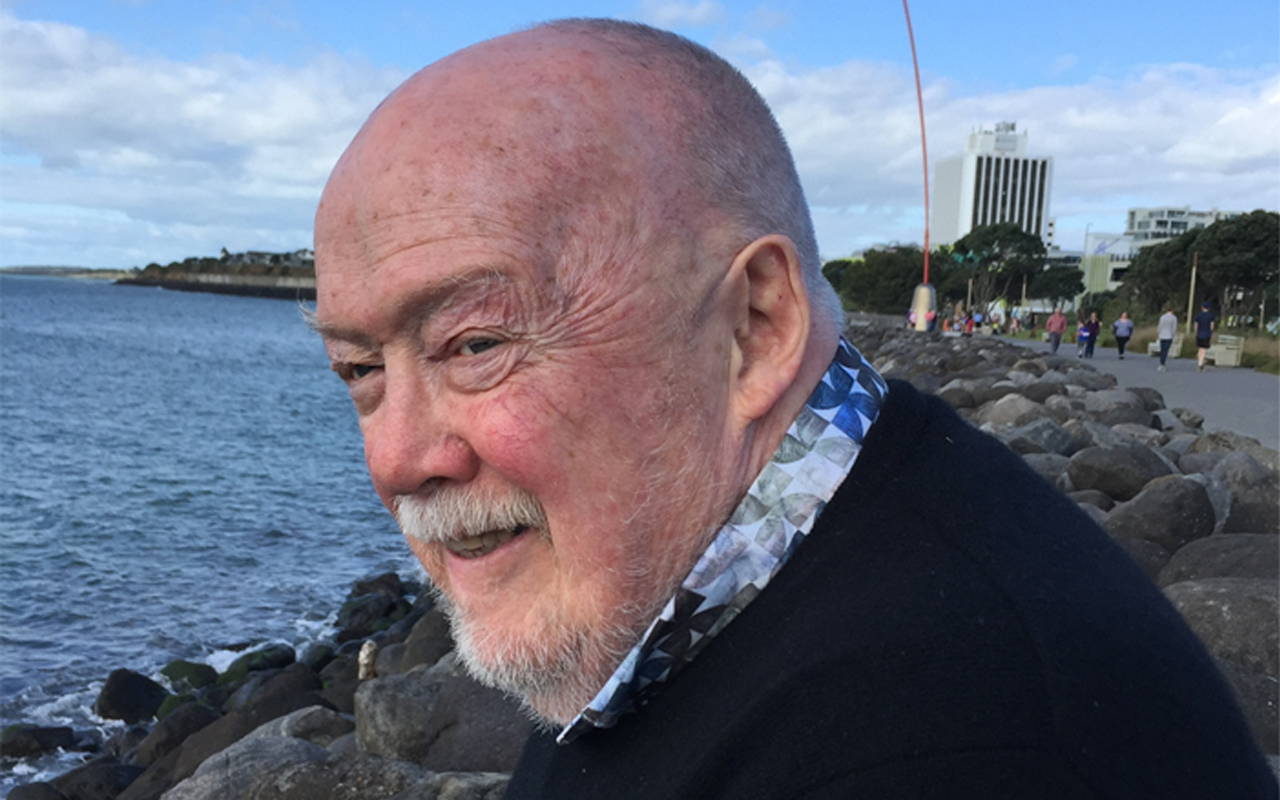
Local Legend: Haylee (Hayz) Simeon - ‘Supermum’ and Star Restaurateur goes the extra mile

25 July 2025, 11:16 PM

Just shy of her 40th birthday, Haylee-Chanel Simeon – ‘Hayz’, as she’s known in Bluff – has poured more time into voluntary community service than most manage in a lifetime, all while raising four children and building a thriving restaurant.Her selfless mahi and generous heart have earned her a spot as one of three finalists in the Southland Business Chamber’s inaugural Reece McDonald Local Legend Award – recognising extraordinary community spirit and contribution to the South.Hayz touches hearts as much as she does tastebuds.Hayz's creation, a sharing platter titled 'Taste of Murihiku', which featured in the May 2025 edition of the inflight magazine KiaOra. Photo: SuppliedKnown for her bold flavours and fierce dedication to local ingredients, she celebrates Southland’s bounty – from seafood to venison – all cooked from scratch, the way her traditional Ngāti Kauwhata grandfather and Ngāi Tahu grandmother mother taught her.Nothing goes to waste in the Hayz kitchen, a value rooted in Māori tradition.One of very few restaurants in Aotearoa offering muttonbird (tītī), Hayz at the Anchorage showcases this delicacy six different ways.Even the heart is honoured – transformed into a rich pâté and paired with handmade pōhutukawa flower jelly, available for just four weeks a year.The foraging doesn’t stop there - seasonal seaweed, watercress, and cockles are also harvested by her and her tamariki, who have grown up polishing cutlery from highchairs, drying dishes, and helping deliver meals. It’s a true whānau affair.There are plenty of laughs, too – like the day her twin girls were caught making ‘snow angels’ in the bar with polystyrene bean bag fill. “We were still finding those months later,” Hayz laughs.Hayz, staff and St. John’s cadets and leaders, after serving hundreds of meals and hampers to Bluff pensioners - 21 December, 2023. Photo: SuppliedFrom the very beginning, wider whānau have supported the kaupapa – aunties running meals, Mum on the till, cousins plating up. It’s always been a collective effort.And still, she gives back.For 14 years, Hayz has led countless community initiatives – from delivering hot meals to Bluff’s elderly, to running hamper drives, Christmas lunch for the local pensioners, cutting toenails, and foot massages for those who can’t manage on their own. Her heavily subsidised Pensioner’s Lunch Special started with 20 diners post-lockdown and now feeds 120 every fortnight across two sittings.“Everyone was so scared after Covid – this gave them a safe place to reconnect and enjoy good kai,” she says.Though it came at a personal and financial cost, Hayz refused to let it go – instead, she rallied support and sponsorship.With help from her kids and volunteers, hundreds of meals are prepared and delivered to kaumātua and the vulnerable in Bluff.Annette from GreenYard Veges, left, and Haylee supporting local growers at the Sunday Farmers Markerts in Invercargill. Photo: Supplied“Many of our elderly can’t cook anymore due to illness or injury. I just want to make sure they’re eating well.”Winter sees the team making stock pots of hot soup for churches and community groups, with hot soup dropped to market stallholders to keep spirits high.“If I see a gap, I’ll fill it, and if I need help, the community shows up.""I asked some local engineers to help move a freezer a few weeks back. ‘Good as, Hayz,’ they said, and sorted it straight away.”She’s grateful for local backing too – Fresh is Best, Talleys, Harbour Fish, KiwiHarvest, which rescues who rescue food from landfill), and Southland’s Deer to Care hunters who keep her stocked with fresh venison.Hayz at the Anchorage has also supported Bluff School lunches and breakfasts, and has regularly contributed extra treats like waffles and bacon for tamariki.Izaya Simeon and Mum Haylee Simeon at The Eagle Hotel in December 2016, delivering Community Christmas Hampers. Photo: SuppliedHer connection to kai runs deep. Both sides of her whānau are culinary leaders – her Grandad Simeon, of Ngāti Kauwhata, and Nana Simeon, of Ngāi Tahu, passed down generations of knowledge around mahinga kai.From whitebaiting with cousins off Aparima to learning to use every part of the harvest, Hayz was taught early to respect the land and sea, and to act as a kaitiaki – a guardian, of natural resources.Some of her happiest memories are rooted in this.“We grew up with cousins as best mates, building tree swings over cliffs and eating what we caught.""The wāhine were always in the kitchen – that’s where we shine.""That’s where Mum passed on Grandad’s recipes and whakaaro.”Aunty Terina Simeon (Volunteer/ and St John’s Leader) Rangatahi member, Haylee Simeon for the annual Rangatahi Zone in Bluff September 2023. Photo: SuppliedThat knowledge continues to shape her work. Everything on the menu is made from scratch – if it wouldn’t pass the standards of her whānau, it doesn’t go out.“If I’d served a chowder with a marina mix, they would’ve thrown it at me,” she jokes.Since launching Hayz at the Anchorage, Haylee has built an award-winning business that’s gained national and international attention.She’s served celebrities and media, sponsored local sports teams, and supported the Southland Exchange.She is also a supporter of the annual Rangatahi Zone event, honouring four Bluff rangatahi who tragically lost their lives in 2021, where she teaches young people the power of kai through cooking.Through every challenge, Hayz continues to lead with love, resilience, and the spirit of manaakitanga.Stuart, left from Deer to Care/ charitable organisation based in Gore, Hayz (Hayz At The Anchorage) and Hank (The Golden Age Tavern), receiving donated venison meat for community meals. Photo: Supplied“I’ve taken every obstacle and tried to flip my perspective – to look for the silver lining.”Sue Fea is a senior journalist with more than 40-years experience covering police, social and general news in the southern regions.

Local Legend: Bill Jarvie - guardian to Fiordland's freshwater fish

23 July 2025, 10:39 PM

He arrived in Te Anau as a young, freshly trained New Zealand Wildlife Service officer in 1982, having already heralded hero status for a remarkable historical wildlife find on Rakiura Stewart Island with his German Shorthaired Pointer, Adler.This Local Legends story is proudly supported by Fiordland Frontier SuppliesBill Jarvie retires in November after 47 years’ service – 43 of those in Te Anau for what became Fish and Game Southland soon after his arrival.In that time Bill’s been the ‘friendly face of Fish and Game’, also involved in the Wildlife Service’s takahe location and management in Fiordland’s Murchison Mountains.Bill Jarvie with a female kakapo that his tracking dog Adler had pointed for him on Rakiura Stewart Island in 1983. Photo: SuppliedHe joined the Service as a trainee in late 1978 working in the fisheries arena on early work to manage fisheries in Rotorua, Taupo and around the Southland Lakes, mostly Wanaka.In 1981, Bill was told he was going to Stewart Island with dog Adler to find kakapo.It turned out to be a historic trip – Adler, at Bill’s command, finding the first ever kakapo nest in living history on the island.“That was a gold star find – a nest of chicks,” he says.After that they were finding the birds and placing transmitters onto them before they were sent to predator-free Codfish Island (Whenua Hou) where they could be safely isolated.“I was stoked. I didn’t quite realise how important it was to find a nest of young kakapo."Bill Jarvie and tracking dog Adler with a takahe in the snow. Photo: Supplied"They’d been steadily killed by cats and were close to being wiped out.”He then applied for the Wildlife Service job in Te Anau which he got the following year, likely, he reckons, due to that historic find as not long after arriving he and Adler were at it again.Sent to help the Service’s takahe management programme in the Murchison’s where studied birds also had transmitters attached.“It was quite rewarding work, especially with the kakapo being on the brink of extinction.In 1987 the Wildlife Service, Lands and Survey and Forest Service all amalgamated into the new Department of Conservation – the Wildlife Service previously having the role of Acclimatisation Societies.“These societies around the country were condensed down into Fish and Game regions and the Southland one took over responsibility for Fish and Game from the government,” Bill says.Bill Jarvie, in 1984, with the first ever salmon to be spotted in the Pyke River, which he ran down as proof that they were migrating from, the sea up. Photo: SuppliedBill’s overseen everywhere from Te Anau, Manapouri and Monowai, and the National Park across to Mavora Lakes and Mararoa.He’s loved working with young anglers seeing the delight on their faces when they catch their first fish. “That’s very, very rewarding. There’s nothing like a child’s first fish,” he smiles.Sadly, throughout New Zealand we’re now seeing second and third generation people getting used to poorer water quality, but thankfully so much Waiau catchment in Fiordland is still under the protection of the National Park.“Our other saving grace is that the headwaters of our other rivers’ catchments are largely protected and the water from there keeps the quality high,” Bill says."We’re also very fortunate that progressive farmers are leading by example with their farm management protecting and creating habitat.”Bill well knows that the long-term benefits of assisting landowners to put in wetlands, hunted or not, will be better water quality and buffer the impacts of weather extremes on our rivers and streams.”Bill Jarvie with an Oreti River brown trout. Photo: SuppliedIt’s never been a battle to get compliance in his patch with no ‘fishy’ stories about leaving the licence at home.“We have very good compliance in Southland, and people know that we are only funded by licences,” he says.“There will always be some who will try it on, but it’s normally pretty obvious.”One memory that makes Bill grin is of a man and son entering their chinook salmon in a fishing competition restricted to Lake Te Anau only.“Dad swore it was from Te Anau, with the son proudly and repeatedly saying, ‘We caught it by the power station!’"Oh dear, no entry!” chuckles Bill.Bill Jarvie with a 15lb brown trout, trapped as part of monitoring the Mararoa Weir's fish pass' effectiveness. Photo: SuppliedColleagues say throughout his career, Bill’s been “a passionate advocate” for the health of the Waiau River and its tributaries, and Lakes Te Anau, Manapōuri and Monowai through his involvement with the Lake Guardians and Waiau Working Party.This is in addition to his work directly through Fish & Game advocacy.Bill, colleague Stu Sutherland and Dr Cathy Kilroy from NIWA, were the first to discover Didymo in New Zealand.“During a preliminary periphyton survey on the Lower Waiau River their keen observation and years of experience meant they immediately recognised the strange growth of algae as something foreign,” Southland Fish and Game staff say.“Little did Bill appreciate just how familiar Didymo was to become, going on to develop significant expertise that other agencies have relied on.”For more than a decade, he’s led Fish and Game’s monitoring of periphyton and didymo in the Waiau River to support recreational flow management for the benefit of river users.Shona Elder proudly shows Bill Jarvie a 12lb sea run chinook (salmon) she caught in Lake Te Anau, by the mouth of the Upukerora River. Photo: SuppliedHe's also managed Southland Fish and Game’s team of honorary rangers, responsible for recruitment and training, as well as liaison for offences and prosecutions.He’s the point of contact for Police to organise their joint compliance operations with Fish and Game during duck hunting season.Fish and Game has enjoyed a close working relationship with Meridian Energy which is the hydro generator for the Manapouri Te Anau system – important at this time of year with hundreds of rainbow trout spawning in the Upper Waiau.“The flow is controlled by them, so we try not to allow any dewatering or drying out where there’s a redd (where the eggs are laid) in the riverbed,” Bill says.Bill’s constantly liaising with Meridian, keeping up to date on the status for spawning.He’s not entering into the debate about the future of Te Anau’s Bird Park other than to say it originally began as a fish hatchery due to the beautiful spring water which rises there.Bill Jarvie releasing rainbow trout fingerlings into Lake Thomas (a 'Put and Take' fishery). Photo: Supplied“Hundreds of people have come to get spring water from there over the years via the tap we provide for them.""People coming up from Invercargill to fill 20-litre containers,” he says.While other sectors may be cutting back, Bill says there’s no shortage of work for Fish and Game in Te Anau.“This role will perhaps develop. It will always be needed,” he says.“The value of this environment and how much use it gets is vastly important to New Zealand, so we need to manage it.”Just turned 66, Bill’s happy to hand over the reins and spend more time with family and tending his rural block on, fittingly, Kakapo Road, outside Te Anau.“We’ve got a good view of two rivers and a lake so I will still be keeping an eye on things,” he grins.Bill Jarvie (right), with son Hamish, with kahawai destined for the smoker. Photo: SuppliedSue Fea is a senior journalist with more than 40-years experience covering police, social and general news in the southern regions.
Local Legend: Lindsay Wright - Done the hard yards

09 June 2025, 9:56 PM

He’s been almost 20 years at the heart of the Southland Rural Support Trust getting alongside farmers who’ve done the hard yards through tough times.Throughout that time, out of his own bad Lindsay Wright has been able to bring about good, something he’s now very passionate about.Lindsay, 70, recently retired as a volunteer trustee from the trust which he chaired for three years through the effects of Southland’s ‘Big Snow’ in 2010, also working as the trust’s coordinator for 10 years.However, he says if he hadn’t hit rock bottom himself due to extreme financial pressure farming then he wouldn’t have been able to help from a place of such empathy and understanding.Born in Mosgiel where his dad was the weather officer at Taieri Airfield, the family - six children, moved to Wendonside, near Riversdale, to his mother’s family farm to help his grandfather, who’d lost a son in World War II.His grandfather died just four years in leaving his parents to run the farm.A young Lindsay Wright negotiating the farm cattle stop on his trike. Photo: SuppliedLindsay went to Gore High then Canterbury University from 1972 where he studied electrical engineering before switching to a Bachelor of Computer Science, one of the early students.For five years he worked as a computer programmer for International Harvester in Christchurch then British Leyland in Sydney. “International Harvester had one of the first companies using data transmission up telephone lines in the mid-70s,” he says.“Transmission speed was 1200 characters a second and you could literally see the letters rolling onto the screen.""Now the internet is at 50 million characters per second."“It was fun, and I enjoyed it but it was a very ego-driven and empire building occupation back then,” he says.After a year-long OE in 1981 Lindsay returned to Wendonside to help his father on the farm which he and his first wife bought from the family in 1985.“I borrowed as much as I could but two months after I got my mortgage Roger Douglas (then Labour Finance Minister) removed SMPs (Supplementary Minimum Price) subsidies for farmers.""My mortgage stayed the same and my income halved.""I don’t know how we survived,” Lindsay says.“At the worst I could only feed the sheep. That was all I did. I was still farming with my grandfather’s old 7 to 8-foot-wide (2.13m to 2.44m) equipment.”His married couple farm worker left for the freezing works leaving Lindsay to run 1100 acres (445ha) on his own. “We just existed.”Even when the rural economy picked up it took 18 months to catch up on all the jobs. “Everything we had went back into the farm. I was forever in overdraft paying high interest rates. It’s expenses first in farming and income at the end of the year.”Lindsay Wright. Photo: SuppliedLindsay tried diversifying into goats, even developing some computer software for a goat consortium. “But I was spending so much time on that instead of my main income of sheep. I paid up to $200 a head for goats and sold them for $5. I lost $3000,” he says. “I learned to stick to my knitting.”After 24 years farming the numbers just wouldn’t add up while the bills and pressure mounted, which all took its toll on Lindsay’s health and he leased the property to neighbours in 2006.“The lamb price had gone through the roof in 2001 – the first time it had gone over $100. But four years later it had plummeted, Lindsay losing $40,000 a year while his mortgage kept growing.It was an immensely difficult time for him and his relationships.“I’ve discovered through my Rural Support work that many issues based out in the paddock end up in the kitchen affecting families,” he says.Farming can be a lonely, isolated existence so it’s important for farmers to stay connected and Kiwi men to learn to open up and realise it’s ok to ask for help,” Lindsay says.Lindsay Wright. Photo: Supplied“When you’re a farmer you don’t have a ‘Smoko’ room where you can talk to your workmates. Thankfully, now we have organisations like Rural Support and Farm Strong to look after farmers’ wellbeing.”After taking time out from farming Lindsay was able to turn all this life experience into both practical and emotional support for other farmers doing it tough, whether that be due to adverse weather events or personal issues.It all started as a follow-on to the lessons learned from the big snowfalls in Mid-Canterbury in the 1990s when Lindsay says farmers found themselves last to receive assistance as help always reached the greater populace first.“Farmers began to form groups to help themselves during adverse weather events.”By the late 90s the government through MAF (Ministry of Agriculture and Fisheries) realised it was worth having standardised groups in every province nationally.“By 2007 Northland and Southland were the only places without support groups so Southland Federated Farmers put an ad in the paper seeking expressions of interest for an Adverse Events Trust.”Lindsay Wright competing in the EH Coast Classic. Photo: SuppliedLindsay put his hand up for the steering committee to investigate setting up a trust for Southland. He turned out to be a real asset. “If you’ve been down the road you know where the bumps are and it gives you the ability to sit with people and go through what they’re going through,” he says.By 2008 the trust was formed, the volunteer trustees all actively out in the community helping initially. “We didn’t know much about what we were doing, but we did what we thought we could do.”There had been some droughts in those early days, but on 18 September 2010 ‘The Big Snow’ came catching farmers out in southern Southland during spring lambing and calving.It was a baptism of fire for the support trust.“Stadium Southland’s roof caved in in the snow on the Saturday. We had our AGM on Monday, where I was elected chairman, and by Thursday MAF was in Invercargill declaring an ‘adverse event’. We hit the ground running, co-managing it with Federated Farmers. We all got into a room and hatched a plan.”They brought in stakeholders from rural professions, Civil Defence, Councils, sending troops in trucks to all farms in the affected area with food packs and questionnaires asking if rural families were ok and what they needed.As Southland Rural Support coordinator, Lindsay Wright fronted the initiative that saw farmers invited off-farm for a 'Brunch on Us' event after the 2020 Southland Floods. Photo: Supplied“Over three weeks they visited 2000 farms.” Seminars were organised to help farmers with the necessary information to deal with what they’d lost.“Some had lost 50% of their stock. We brought in vets, mental health advisors. Some people had to make some major adjustments.” They didn’t know the true extent of the damage until tailing in October. “That was where we learned a lot about dealing with disaster.”Through his involvement with the trust and Toastmasters, Lindsay was invited to help create a mental health workshop with WellSouth.Lindsay Wright (centre) is farewelled from the Southland Rural Support Trust by chair Simon Hopcroft and vice chair Georgette Wouda. Photo: SuppliedThis piloted in Gore in 2014, morphing into what is now the nationally renowned Good Yarn workshops.“So far 23,000 people have attended one of these workshops in 10 years. That for me is a real buzz.”

Local Tourism Legend: Lady Olive Hutchins Turns 100

06 June 2025, 5:48 AM

Southern tourism legend Lady Olive Hutchins’ life has been one of courage, resilience and sheer hard work - the backbone and matriarch of one of New Zealand’s most renowned family tourism empires.One of the original boats used by the Hutchins for tourist excursions in Doubtful Sound in 1954. Photo: RealNZOlive turns 100 tomorrow (Saturday, 7 June) and will celebrate with a family function in Queenstown, many of her 28 great grandchildren in tow.From her challenging and quite traumatic childhood through to often single-handedly raising her, and late husband Les’s, family of five while he was founding their tourism business, Manapouri Doubtful Sound Tourist Company.A young Olive Hutchins (nee Simpson) at Heddon Bush. Photo: Cochrane Family CollectionOlive’s always been a girl who “got the job done”.Despite living their early years in Manapouri without electricity, Olive was a tremendous support to Les throughout their tourism career, “keeping the home fires burning”, eldest daughter Robynne Peacock says.“Mum has always been a great family person, so was Dad. They’ve led very busy lives but always managed to keep in touch with extended family and friends,” she says.Extremely loyal, supportive, very social, kind and generous, Olive was always a woman who overcame, her strong Christian faith giving her the strength to get through.Always positive and keeping excellent health even now, Robynne believes her mother’s early childhood years built resilience that’s seen her through.Growing up in Myross Bush, Southland, Olive’s father died of tuberculosis when she was just two.Lady Olive Hutchins (nee Simpson) as a young lady. Photo: SuppliedHer mother then contracted the disease and was sent to the Waipiata Sanatorium deep in the heart of Central Otago to recover for two years.Little Olive and her two older siblings were sent to live with her mother’s elderly relatives at Heddon Bush.Once her mother was healed, they all moved in with her mother’s single brothers and uncles, where her mother became housekeeper and cook and they in turn supported her family.“There were no widow’s benefits in those days,” Robynne says.“Mum had fun though and was always very fond of the relatives at Heddon Bush.”Later back at Myross Bush she biked to Southland Girls’ High and back – about 16kms, daily, working in the office at H & J Smiths after leaving school.“There were 12 girls in there and they called themselves ‘The Twelve Unclaimed Treasures’,” Robynne smiles.She met Les Hutchins at an Invercargill ball, Les having just returned from training as an Air Force pilot in Canada, fortunately sent home as World War II was ending.“Dad was in a uniform and Mum thought he was a bit of alright.” They married on 6 October 1948.Sir Les and Lady Olive Hutchins. Photo: SuppliedLes ran a furniture business initially in Invercargill’s Tay Street, but a distant cousin lived in Manapouri which took his fancy.He and Olive soon bought Les Murrell’s estate and founded the Manapouri Doubtful Sound Tourist Company, operating four-day walking trips to Doubtful Sound and return.By 1954 they’d moved the family to Manapouri during summers, leaving a manager in the Invercargill business, moving up permanently by 1956.There was no electricity in those early years, Olive managing with a tilly lantern and candles in the house they’d built, running the family and base manager and communications for the business via a two-way radio while Les was away running trips.Eventually Les bought a windmill and a generator.“We’d play on the roof of the generator shed,” Robynne says.While that got lights on it still wasn’t play for Olive with her gas stove, kerosene-powered fridge and a frustrating old washing machine run by a petrol motor that had to be kick started.They bought the then existing Fiordland Travel Ltd at Te Anau off Wilson Campbell and Lawson Burrows, renaming their whole company Fiordland Travel, later Real Journeys and now Real NZ.Olive made all the sandwiches and lunches for their boat trips each morning, the kids roped in to help.The Hutchins family, from left, Joceyln, Robynne, Bryan, Les, Olive, holding Graeme, and Shona. Olive sewed all the children's clothes. She was also very proud of all of her grandchildren and great grandchildren. Photo: SuppliedShe was very involved in Plunket and held ‘house church’ at their home, led by the industrial chaplain from the power project.Later she and Les were founding members of the Te Anau Presbyterian Church.Olive was also involved with Federated Farmers’ Women’s Division.Fiordland Travel's MV Explorer ferrying tourists to the Te Anau-au glow worm caves in 1975. Photo: Iain CampbellThe then dilapidated TSS Earnslaw steamship was due to be scrapped over in Queenstown in 1968, so Olive and Les bought her, painstakingly restoring her to her former glory.“Dad always said it took 11 years to turn a profit in Queenstown,” Robynne says.Les was always eyeing up new opportunities, Olive the steady influence.TSS Earnslaw. Photo: RealNZ“She always says she was the hand brake when it came to Dad’s big ideas,” Robynne smiles.The company continued to expand with their children now at the helm and Olive resigned from the board 30 years ago, still sharp and doing business into her 70s.She was as passionate as Les about the Save Manapouri Campaign in the early 1970s, making the odd television appearance in support of his fight. They became renowned for their local conservation efforts.Lady Olive Hutchins. Photo: SuppliedLabour had made a campaign promise not to raise Lake Manapouri for the planned hydro scheme, while National said they’d raise it. Robynne well recalls the celebration the night of her 21st birthday when Labour was elected government.Olive has always had a heart to help others and for many years has run her own charitable trust helping everyone from children who’ve lost parents to Christian schools.“Her faith has been a huge part of her life,” Robynne says.She also loved tramping, and they introduced their kids to a love of the outdoors, also travelling extensively once Les stepped back a bit from the business.‘The Shaylene’ their yacht decked out for Doubtful Sound was a favourite past-time. They even entertained former Prime Minister Helen Clark, and politicians like Trevor de Cleene, taking them to Dusky Sound for a week.Olive and Les also did the Auckland to Suva Yacht Race twice with friends.Lady Olive Hutchins (right) with her granddaughter Madeleine Peacock. Photo: SuppliedOlive was known for her cheeky wit: “We were flying from Queenstown to Wellington for the Wearable Arts when Mum was about 90 and she fluttered her eyelids at people in the queue, saying ‘I’m 90, you know’ and they’d let her through.”Unfortunately, her much-loved TSS Earnslaw won’t be able to sail the other Lady of the Lake to Walter Peak tomorrow, but Real NZ’s Spirit of Queenstown will do the honours.Prior to her arrival local scouts will have been busy planting 80 of 100 native plants going in at Walter Peak to mark her 100th birthday, leaving about 20 for those great grandchildren old enough to plant while Great Grandma looks on proudly.RealNZ's Walter Peak Station will play host to Lady Olive's 100th birthday celebration. Photo: RealNZ

Local Legend: Paddy O'Brien - Best in the Game

21 May 2025, 10:36 PM

He may have never donned the All Black jersey but his white referee’s one reigned supreme on the field. Southlander Paddy O’Brien is renowned internationally as New Zealand’s greatest rugby referee - a rugby icon, despite having never scored a try or kicked a penalty for his country.Highly respected in the game the world over, Paddy reached the pinnacle of international rugby, selected to referee some of the world’s top test clashes, his calls seldom questioned.Appointed the world’s first professional rugby referee with the introduction of Super Rugby in 1996, Paddy, now 65, retired from the field in 2005.A young Paddy O'Brien. Photo: Supplied“I was doing provincial amateur games and then the game went professional,” he says.“The top players got contracted to Super Rugby and Colin Hawke and I became the first professional referees in the world,” Paddy says.“We’ve set the blueprint for professional refereeing ever since.”He refereed the world’s first ever professional match - the opening Super Rugby game between the Blues and the Hurricanes in 1996 in Palmerston North.“The fact we made history that day, that was big for me. It’s a milestone that can never be taken away from you.”In 10 years, he refereed at two World Cups (1999 and 2003), 38 international test matches and 218 first class games.Until last year he still held the NZ record.“I loved it. Every moment, good and bad. It’s all part of the show,” he says.While it was high pressure stuff, Paddy never let that get in the way.“I’d be standing out in the middle of Twickenham in front of a crowd of 75,000 and have to pinch myself and ask: ‘How did a little boy from Makarewa get here?’ Then you’d go out there and referee.”That ‘little boy’ grew up in a strong sporting community, the middle child of nine, all fiercely competitive.Paddy excelled at athletics, harriers, tennis, squash and rugby, eventually playing for Southland Bs and Senior club rugby.Photo: SuppliedHe represented Southland in age-group tennis and squash and still held the Southland high jump record – 2.04m – the first New Zealander to jump 2m off grass, until 10 years ago.“Our American Marist College teacher, Doug Wray, taught us the Fosbury flop,” Paddy recalls.“My cousin broke the record and me after him.”A trip to Hawera to compete in the NZ Age Grade Track and Field Championships, where he placed third, meant hard work to get there.It was Paddy’s first trip away at 16.“If we wanted a new tennis racquet, we did a paper run or worked at the tulip farm. We weren’t affluent.”No win tasted sweeter than beating the kids with the flash tennis racquets using his old one though.School wasn’t happening so Paddy worked as a clerk at Colyer Watson Hide factory until his mate said he was joining the Police.Paddy did too, unfortunately sent home ill after a month from his first recruit training, resuming at Trentham in 1979.Photo: SuppliedTwo years later he was a plain clothes cop at the Christchurch test during the controversial 1981 Springbok tour of NZ.“It was pretty unreal. My older sister was protesting in the front row, my older brother was yelling abuse at the protestors and there was me in the middle feeding information back to the Police,” he says.“If proof was ever needed that the tour split families then that was it.”At the height of his rugby career Paddy was rated among the top international rugby referees in the world, winning NZ Referee of the Year seven times.His 1999 World Cup pool game between France and Fiji was a real setback.“I refereed poorly and was off the international scene for 12 months.”He’s proud he had the resilience to overcome that, and referee the third and deciding international between the British and Irish Lions and Australia in 2001, and appointed to the 2003 World Cup semi-final between France and England.After retiring in 2005, he was World Rugby Referee manager for eight years, appointed Sevens Referee manager in 2012 – a position he still holds, managing the World’s Sevens referees and support staff on the World Series.“I just love being involved with these outstanding young men and women.”Photo: SuppliedPaddy is clearly equally as passionate about his 17 years in the NZ Police, appointed patron to Wing 370 at the Royal NZ Police College last year, which he really enjoys.His six years in the Invercargill CIB were the most challenging, but nothing equalled the pain of losing close younger brother Danny to suicide, aged just 25.“I was working at the time. I can count every minute of that day,” Paddy says.“That was a defining part of my life. It helped me deal with stress and pressure,” he says.“You realise nothing’s really that bad in life. Take some time out and things will be better the next day.”Just 19 when recruited for the Police, Paddy says he was far too young and immature.“I had to learn fast. It really made me grow up. Everything I do now reflects on my time with the Police though – management and dealing with trauma.”On the lighter side the “old school initiations” were fun.“One of the cops would lie under a blanket at the mortuary with a label on their bare toe, then suddenly sit up to the horror of the new recruits,” Paddy chuckles.Newbies could also be called at night to Coldstream Pool, where Police had night-time access for training, only to find ‘someone’ – another officer playing pranks, lying in the pool.“It was terrible, and you wouldn’t get away with it today, but all in good fun,” he says.“I just loved being in the Police. I have nothing but praise for them, the great camaraderie. Everybody is so loyal to each other."“It was different back then. You could help those with the right attitude, rather than lock them up, and there was total respect from the public.”By 1995 though he needed out.“The work was starting to affect me.”He worked in sports administration for a year before landing his professional refereeing role.Before long he’d been catapulted from one of the top five Southland, then top five NZ, referees straight “into people’s lounges” with Super Rugby and its huge TV audiences and match crowds.“Everyone knew you. It was a great life, and I loved every minute of it.”Southlanders were loyal and there was no social media back then.Upon retiring Paddy was awarded the ONZM – one of the first referees. “That was a huge honour.”World Rugby referee manager was one of his most stressful roles, managing when NZ lost the World Cup quarter final to France.In 2012 rugby was accepted into the 2016 Olympics and Paddy became Sevens manager.At one stage he moved the family to Dublin for 18 months for his World Rugby work.He still travels the world with the Sevens role and has just become citing manager after the sad loss of his colleague last year.Paddy O'Brien (left) on-site at Invercargill's new Hawthorndale Care Village. Photo: SuppliedAs if that’s not busy enough, Paddy’s also been on the ILT board for nine years, chairman for the last three, and he’s devoted to his volunteer work on the Board at Calvary Resthome and the new Hawthorndale Care Village – “an absolute legacy for Southland”.“Mum and Dad were in Calvary and just loved it. I promised Mum I’d go on the board.”Paddy’s in demand as an after dinner-motivational speaker and his life story, ‘Whistle While You Work’, written by Bob Howitt in 2004, has been a best-selling book, but there’s one thing Paddy would still like to improve on.“I’m the worst golfer in the Riverton club, but I love it.”

Local Legend: Ian Trainor - No Stone Left Unturned

02 March 2025, 1:25 AM

Invercargill stonemason Ian Trainor devotes much of his time to honouring those who’ve long since passed by restoring historic headstones and memorials, many for free.While Maiden Stone is his business, Ian, 67, just can’t help himself.It’s the heart of the man, who’s worked on and driven many local charitable, restorative projects.This Local Legend story is proudly supported by Distinct Funerals“I like to think I’m doing something good so when I go through The Pearly Gates I will be looking up at Moses and saying, ‘I hear you’ve got some tablets that need repaired’,” he grins.It all started after Ian, a funeral director, decided to follow his creative passion in 2001, setting up his monumental design and headstone restoration business.“It was part of what I did anyway and then the business I worked for changed hands,” he says."In the beginning my wife and I would often install headstones in the weekend, so I could man the office during the week."Maiden Stone's Ben at work at the Eastern Cemetery in Invercargill. Photo: Supplied"Eventually your reputation builds up and now I have a team of four to design and install.”He works a lot on old headstones, many of historical significance in remote places, restoring those that have toppled and fixing the lettering.“Sometimes the descendants have moved away, and nobody has cared for these graves,” Ian says.His explorations led him to the Baxter family graves in Invercargill’s Eastern Cemetery. They all died tragically in 1908.“I found out they were all buried in the same plot without a headstone, so I made sure there was something there to mark their resting place.”He also began pushing for the Invercargill City Council to remove some offending gum trees along the Rockdale Road side of the cemetery to protect the grave of British schoolteacher William Augustus Gordon, the brother of a famous war general.The grave hasn’t been visible for more than 20 years.Gordon was the brother of Major General Charles George Gordon C.B, who was a hero for his exploits in China and India during the 1800s.The plaque currently marks William Gordon's grave. Photo: SuppliedCemetery records show William Gordon was buried in 1863 close to the Tay Street-Racecourse Road intersection.His grave and elaborate headstone feature in the 1970s book, ‘Our City – Our People’, sketched by local artist John Husband with short stories by legendary Invercargill journalist Fred Miller.Ian was approached about providing a plaque for the grave which he happily supplied.He’s also happy to help restore the old grave to its original status, providing the Invercargill City Council removes a large gum tree behind it.“Bark and leaves from this are the main culprits causing the damage and mess on these surrounding plots,” he says.“It’s been over a year since my request, and it doesn’t seem to be happening.”Families from surrounding ancestral plots are also pushing for the tree removal, he says.Ian helping the Braggs restore their family history, at Braggs Bay on Stewart Island. Photo: SuppliedLast week (Feb 12) Ian headed to Stewart Island to refurbish the dilapidated War Memorial.While working for a client there, he met Donald Bragg whose great grandmother’s headstone had toppled at the family cemetery.He was engaged by the Braggs to help with that restoration and during that trip Ian noticed the memorial was hard to read.He now wants to have that rectified by Anzac Day as a voluntary contribution. RealNZ donated his ferry fares.Not everyone is so nice. Maiden Stone just got back to its charitable work on 30 January after being out of action since early December when thieves stole the company’s gantry from the Eastern Cemetery.“Even the cemetery isn’t safe from thieves,” he says.This Local Legend story is proudly supported by Distinct Funerals“Thanks to John at All Purpose Engineering, who fast tracked a new, lighter and stronger gantry for us, we’ve been able to carry on the huge task of restoring 50 stones per year on a voluntary basis.”Ian admits he hasn’t got the work-charity life balance quite right but there’s just something in his DNA that keeps him working to honour the past.As a youngster holidaying with his Auntie and Uncle near Kaitangata, where 34 miners died in an explosion in 1879, Trainor says he’s always held a fascination with broken headstones.”While Maiden Stone’s worked on major ICC and Southland District Council projects, those of small family significance are just as important. Ian’s recently been working in Bluff Cemetery, where family tragedies have been steeped in story.St John’s Cemetery off North Road was the target of a lot of vandalism a few years ago with headstones pushed over and broken.Ian and his team restored 30 of those and while doing so learned from a Fraser Street local that as a kid they’d innocently remove the lead from old headstones and melt it down for fishing lures.The headstone that marks the grave site of Maori Chief Paororo Toataua, between Colac Bay and Cosy Nook. The site is a significant Māori burial site and is Ian's next project. Photo: SuppliedIan’s latest charitable mission is at Te Wakapatu between Colac Bay and Cosy Nook – an important Māori burial ground and the grave of Chief Paororo Toataua, the last chief in the south and friend of Captain John Howell, an early European settler and whaler who founded Riverton.Seventy people are buried there and only 13 have headstones,” Ian says. Retired Bluff crayfisherman Vaughan Fisher is kindly paying for the restoration work to protect and restore this significant Māori resting place.“I’ve laid a big concrete block where we will place plaques for all of those laid to rest there who don’t have headstones so that those early Māori and settlers are honoured.”Upon discovering the graves each marked with a small rock, Ian erected white crosses in the meantime.“We had to make people aware as there were campervans there and people having picnics.”He’s now got his eye on restoring the large, 30- to 40-foot-long mausoleum honouring Invercargill’s first surveyor Turnbull Thomson.“It’s falling into a state of disrepair, and I’ve suggested to the council that they get onto it soon as if that collapses it will cost more.”No stone is left unturned.

Local Legend: Michael Fallow - man of his word

24 February 2025, 7:48 PM

He’s thrown up all over the Admiral of the Royal New Zealand Navy during high tea in calm seas and dodged flying eggs thrown by angry farmers, aimed at a nearby politician’s head.But you won’t catch Michael Fallow ducking away from a good story.Michael Fallow. Photo: SuppliedAfter 46 years in the job, all but a few for The Southland Times, Michael’s interviewed many famous names and never had to travel far from the hometown he loves.Every Prime Minister back to Rob Muldoon has been subjected to his dry wit and satiric style.From Woodstock musicians to dramatic stories recounted by famous war correspondent Peter Arnett and occasionally jailed African-based reporter John Edlin, both from Bluff, Michael has told them all.His unique, descriptive style has held readers captive and searching for more. Two interviews stand out as unforgettable for Mike – record-holding American NASA astronaut Shannon Lucid, who travelled more than 70 million miles around the globe mostly on the Russian space station Mir, and renowned Auschwitz survivor Fred Silberstein, who testified at the Nuremburg trials.“That one nearly brought me to tears,” Michael recalls.This Local Legends story is kindly supported by E Hayes & Sons“He was young enough to be put to work but unfortunately caught the eye of the horrific Nazi “doctor” Josef Mengele – nicknamed the ‘Angel of Death’, who operated on him without anaesthetic as part of his awful experiments.’’Despite this travesty Fred was quick to advise Michael not to confuse people with a swastika tattooed on their neck walking around Invercargill with Nazis.“’They are just angry young men’, he said. He was a moral, intelligent guy,” Michael says. “At the time someone was trying to say the Holocaust was a hoax.He said, ‘Drag the argument out into the open and test it. It will wither in the sunlight but do very well in the shadows.’ I’ve always remembered that.”As for Shannon, in true Fallow style Michael’s first question was: “Is it easier to get up on a Monday morning if you’re weightless?”Edlin had him mesmerised with stories of tagging along with Mother Teresa in Africa in the Band Aid days. Her challenge prompted Edlin to fundraise around Europe with a friend and build a lifesaving African orphanage.A young Michael Fallow. Photo: SuppliedMichael was raised Catholic - taught well by Dominican nuns and Marist Brothers.Sadly, his mother died when he was only four, leaving his bank officer dad, Ken, to raise their three sons.While his forebears – early pioneers who settled in Thornbury, were strong Presbyterians, Michael’s mum had been assured that her boys would be raised Catholic which they were.“I think the nuns spoiled me a bit knowing I was going home to the cold bosom of a Presbyterian household,” Michael grins.Playing on the banks of the Puni, building tree huts and playing soccer “badly” passed the time until Michael discovered the movies – then three picture theatres in Invercargill – the Majestic, Regent and Embassy.“Saturday was a stampede to the matinee. I loved it.” His earliest memory was at about three and being taken to see the Wizard of Oz.“Nobody had explained what the movies were, and I’d been assured and promised that there was no such thing as witches, but there she was up on the screen, and she was big and green!” Michael cowered under the seat until he heard ‘Ding Dong The Witch is Dead’.“No way was I coming out, but they finally coaxed me out only to see flying monkeys!”The long-time Times television and film reviewer, Michael gained early entry to the opening of the new Invercargill Movieland complex, unofficially baptising it by rolling ceremonial Jaffas down each auditorium aisle.Somehow writing had always come naturally so Michael’s dad encouraged him to apply for the one-year Wellington Polytech course in 1977 while still in sixth form – only 50 places a year. He got in and in 1978 started work at the Ashburton Guardian on the Police round, dubbed ‘The Blood Beat’.Michael hard at work, during the typewriter days. Photo: SuppliedAt 21 he was encouraged to be nurtured in his career by the “safe hands” of Southland Times chief sub editor Jim Valli, editor Peter Muller and chief reporter Clive Lind.“We had Imperial 66 typewriters. I never feel older than when I go into E. Hayes and see one of those. I desperately want to bang away at one again, but the sign says, ‘please don’t’.”His editors have come under flak for his controversial ideas, none more so than a satirical, tongue-in-cheek effort that sought to mock climate change denial, insisting that not just the extreme summer melting in Antarctica - but the existence of the continent - was a hoax perpetrated by the corrupt scientific world.“An awful lot of people didn’t get the joke.”Stretching the truth about never being seasick when Michael ‘smelt a junket’ to Tahiti on the Royal NZ Navy frigate Southland, didn’t end so well either.“I’d never been to sea but pretended I had. We ended up sailing from American Samoa where I was horribly seasick all over Captain Ian Hunter in his cabin where he’d invited me for tea.The seas were calm!” Several years later he became Admiral Sir Ian Hunter – head of the navy.“I was put on naval medication and remained pretty high for the rest of the trip, filing stories daily which Michael Turner had to rewrite back at the office.”This Local Legends story is kindly supported by E Hayes & SonsFlying around the Sub-Antarctic Islands on an Air Force Orion he didn’t fare much better.Standing on the Civic Theatre balcony in 1986, Michael narrowly escaped flying eggs and tomatoes, aimed at Labour Minister Trevor de Cleene by thousands of angry, shouting Southland farmers.“An egg sailed right over Trevor and me and detonated over organiser Lionel Paterson.”It’s all been worth it though, Michael winning one, and finalist for three, NZ Qantas Editorial Writer of the Year Awards and a team Qantas award for the anniversary project on the Southland floods of 1982.The NZ Sceptics Society even awarded him for his part in stitching up a leading English psychic performing at the Civic Theatre – the headline: ‘Can A Rare Medium Be Well Done?’ Trainee journalist plants were sent into the audience in venues around the country, seeking and receiving messages from either non-existent or still-breathing relatives.“They did the heavy lifting. I was just the smart arse who wrote the end story,” Michael grins.He wrote the company history ‘Times of Change’, but the role Michael’s most proud of was sitting on the committee overseeing, ‘Murihiku – The Southland Story’, a modern era regional history of the south.While the job has changed around him, Michael says it’s now up to journalists to adapt to this new environment.“There are a lot of parasitical organisations making money off our work, but we will always need local journalism.”Michael in pensive mode. Photo: SuppliedThe formats and methods of delivery may change but journalists should still hold true to those core values:“Journalists need to have moral, accountable and informed judgment so they can best discern the truth.”Michael turns 65 in April and reckons it’s time to cut him some slack. “Last week I registered for National Superannuation at the Ministry of Social Development.The guy let me have a card on his desk that said in big letters: ‘Elder Abuse is Not Ok’.When the need arises, I will be pulling that out and shoving it right in the face of my colleagues.''

Local Legend: Adventurer & Explorer Dr Stan Mulvany grabs every opportunity

05 February 2025, 3:34 AM

Born in post-war Dublin in 1948 to a psychiatrist mother and farming father, little did Southland’s Stan Mulvany know he would become something of an intrepid modern-day explorer, venturing into every remote corner of the globe.This Local Legend story is brought to you with the kind support of Locator Beacons New ZealandBut it wasn’t until his close-knit family moved to a farm in the Dublin Mountains in 1959 that Stan first discovered a love for hiking and the mountains. Money was tight and there wasn’t much time for sport and hobbies with Stan and his younger brother helping on the farm, but whenever he could, he’d head for the hills.In his late teens Stan “drifted into” medicine – the family tradition, along with his brother, studying and excelling together at University College Dublin. By the time he graduated in 1972, the ‘Troubles’ (Na Trioblóidí), which started in 1968 in Northern Ireland, were in full swing. The Irish Republic’s economy was in the doldrums, and there seemed little future there so the entire family emigrated.Stan (left) and his brother Nicholas at Good Samaritan Hospital, Ohio USA in 1969. Photo: SuppliedStan came to New Zealand, working as a house surgeon in Wellington, Dunedin and Rotorua hospitals before a six-month climbing trip around the world with friends in 1975.They climbed peaks in Nepal, Ireland, Scotland and Norway, then Western Canada and up to the Yukon, camping along the way.Stan was hooked. It was the start of a 50-plus-year-climbing and outdoor adventure career, still going at 76.There was more world to explore, so after working as a GP in NZ Stan headed to Australia in 1975, working in Canberra for five years.Stan at 6000metres on Ramdang Go in the Himalayas in 1981. Photo: Supplied“But the love affair with the mountains was greater so I came back to NZ in 1982,” he says. He worked at Wellington Hospital as a radiology registrar until a moment of epiphany sent him south to the Southern Alps.Initially he worked as a locum for Dr Hunter in Invercargill, then bought his GP practice.In 2001 Stan merged the practice with Dr Sier Vermunt’s, and built the Waihopai Medical Centre, with Kieran O’Neill and John Burroughs. Medicine can be very stressful and full of drama but climbing, and eventually sea kayaking, became Stan’s escape.After climbing many of the high peaks in the Mount Cook region – many failures, some great successes among them, he ventured into sea kayaking founding and running the Southland Sea Kayaking Network in 2003.Stan near O'Leary Pass, Fiordland, in 1999. Photo: SuppliedThe mountains beckoned once again and Stan got back into alpine climbing, also discovering mountain packrafting trips, and serving on the Southland section of the NZ Alpine Club for more than 30 years.He’s led expeditions to North and South America – Alaska, Arctic Canada, the Canadian Rockies, Patagonia, Bolivia and Peru, to Europe climbing The Eiger, Northern Norway and Scotland.He’s also led three to Southwest Greenland, including sea kayaking and a packrafting traverse, and climbing expeditions to remote peaks in the Himalayas, Pakistan and Tibet, biking across Central Asia and completing community service projects in Pakistan and Nepal.In 2019, aged 70, Stan and friend Bruce Farmer did a packrafting and mountaineering trip across Southwest Greenland. “You have to be well prepared as you’re on your own out there,” he says. “We’d been doing this sort of thing for a lifetime.”Adventures have included some “challenging situations” with black bear encounters, navigating treacherous, remote canyon gorges in Greenland and slogging through deep snow over high Himalayan passes in winter.Stan climbing in the Lopfoten Islands in Norway in 2014. Photo: SuppliedStan took up blue water sailing about 15 years ago, sailing for six months with David Haig across the Indian Ocean into Pirate Alley and the Middle East. He and Bryan Scott went to Nepal in challenging circumstances after the devastating earthquake in 2015 to garner support for earthquake relief.It’s all the stuff of Bear Grylls and makes for good reading – Stan’s other talent writing. He’s written three books recounting his adventures and hopes to publish them this year.“We’d always learn from the locals – the indigenous Inuit (Eskimos) how to keep watch for polar bears and camp safely, never where seals have been slaughtered, as we’ve never carried rifles.”This Local Legend story is brought to you with the kind support of Locator Beacons New ZealandIn Pakistan, the Taliban were on the rise, so they had to be careful, as did Stan during a solo trip in a potentially volatile Yemen.Stan’s learned the hard way about pack ice - his party had a close call surrounded by fast-moving sea ice against a cliff in South Greenland.Stan (left) and his group at 5000m on Ganja La in the Himalayas, December 2015. Photo: SuppliedMountaineers are bound to have near-death experiences, he says, but it’s something he brushes over. “I’ve had my share.” He does recall once having to be rescued by helicopter after a major fall in Mount Aspiring National Park.Tragically, most mountaineers find themselves dealing with fatalities, however, Stan says his health and safety record has been pretty good. “I’m very careful with risk assessment. There are old climbers and bold climbers, but no old and bold climbers,” he says.“I did get very hypothermic once in Australia, trapped in a waterfall while abseiling about 1978. I was in a poor state, but I managed to save myself.”About 2013 Stan launched his own action to save the environment. “I realised things weren’t doing that well in terms of conservation and the environment here in NZ.”Stan checking traps at Homer in 2015. Photo: SuppliedWith help from the Southland Section of the Alpine Club, the Southland Tramping Club and Fiordland Tramping and Outdoor Recreation Club, he began laying traplines near the Homer-Gertrude and Bowen valleys. He’s also worked in Dusky Sound, Resolution Island and Indian Island.Stan’s also a trustee of the Permolat Southland Charitable Trust, its conservation/team leader, managing DOC traps in the Spey Valley and Deep Cove with support from wonderful collaborative sponsors.Last year he went to Martins Bay for the Hollyford Conservation Trust, camping out on his own, servicing traplines in the mountains. “I just beaver away for a week in the bush by myself servicing traps. I love the work and environment. They’re now putting huts in for us. They must think we’re getting soft,” he jokes.Stan and others work for American conservationist Edith Jones checking traps in her privately-owned Slope Point Forest, Stan’s wife Belinda helping remove plant pests. “That whole ecosystem has recovered enormously since Edith bought it about six years ago,” he says.Stan and mate Bruce Farmer in Greenland in 2018. Photo: SuppliedBelinda, who’s shared in many adventures and helps on conservation missions, is understanding of his intrepid tendencies to explore. One of their two daughters, Tara, is already famous for her own sea kayaking adventures, becoming the first woman to circumnavigate the three islands of NZ by sea kayak. Dana and her family are also very adventurous.So, it goes without saying that the pack’s out again this week (week ends Jan 31) as Stan and an old friend head deep into the heart of one of the most inaccessible and remote areas of Fiordland on yet another challenging mission.Food caches have also been positioned and a refuelling ship lined up for a ride for yet another major southern expedition in February.As Stan says, ‘Well, you’ve got to grab opportunities while the weather’s still warm and your health is up to it.”Excerpts from ‘Arctic Journeys’Southwest Greenland – 2018…But some more bad news was to come, as there was a final gorge to negotiate. It loomed ahead like a giant bird of prey luring us into its icy talons. Our wild sheep trail disappeared as we forced our way through shoulder-height birch scrub along a terrace high above a gorge with a huge glacial river rushing with unfettered haste to the Sioralik Fjord…...Now the sky darkened and rain was coming. Bruce was skeptical about this route but I was adrenalized and forging ahead. Now I was on a narrow ledge butting up against a cliff with a stupendous drop to the raging river far below…... . I went for a recce and found an ancient stone cairn possibly built by the Norse that marked a route down the bluffs to the valley below. I felt an ineffable, transcendental joy seeing this pile of rocks, covered in lichen that might be a millennium old in such a wild location…

Local Legend: Graham Hawkes - the Culinary King

22 January 2025, 6:18 AM

To say Graham Hawkes is a dab hand in the kitchen is a massive understatement.He was running two of Invercargill’s leading hotel kitchens by the age of 25, with 10 years’ cheffing experience already under his belt.Graham Hawkes following being awarded an Honorary Life Membership of the World chefs Board in 1994. Photo: Supplied‘Hawksy’, as he’s affectionately known in hospitality circles, went on to become highly acclaimed, nationally and internationally, in what became a successful 60-year career.One of Southland and New Zealand’s most renowned, award-winning chefs and restaurateurs, Graham’s lost count of the culinary medal haul…dozens, and the honours bestowed upon his cooking prowess awarded by several countries.He served as secretary general on the World Chefs’ Board, which currently has 10 million members, for 13 years.As president of the NZ Chefs’ Association, he hosted the World Congress in Auckland, one in Melbourne too, and was Pacific Area Continental Director for World Chefs.Hawksy (right) and Scott Ritchson at the World Chefs conference in Thessaloniki, Greece. Photo: SuppliedGraham is now an honorary member of the World Chefs’ Association. He’s received the World Chef Award out of Singapore – International Chef of the Month in 2003, and was an inaugural member of the NZ Chefs’ Association Hall of Fame, along with Queenstown’s Grant Jackson.He was also named a member of the Hospitality NZ Hall of Fame in 2021.Graham retires in March (2025), aged 73, but not before he’s organised one more community fundraising degustation dinner, prepared entirely by his young Southland proteges.For him this voluntary work is the greatest honour of all, passing on the baton to an enthusiastic new generation of young culinary wizards, gunning for the big time in an industry where’s there’s increasing demand. His passion in recent years has been to pay his immense experience forward to that next generation coming through so those skills aren’t lost.Scott Ritchson with two SBHS students who won medals at the National Culinary Competitions. Photo: SuppliedGraham works closely with SIT the ILT and Southland Boys’ High School staff to encourage, mentor and nurture that new blood.Graham learned the old-fashioned way from the best, and pity help him back then if he got it wrong, starting out as a trainee restaurant chef from the tender age of 13, beginning a six-year apprenticeship at Invercargill’s Grand Hotel by age 15.A true Southlander, Graham was born in the back of his Uncle Allan’s Vanguard car on the way to the Herbert Street Maternity Home in 1951.Number two in a family of eight kids, the family lived in a garage on an empty section in Grasmere while his dad built their house.He and his brother would bike to their grandparents’ home in Otatara and dig for toheroa at Oreti Beach.“Grandma was a great cook. We’d return with toheroa and she’d say, “You got them. You can cook them’,” Graham says.“I’d always been inquisitive when she was baking or cooking, and she taught me to make the best toheroa soup. I’ve always used her recipe, for oyster soup too, and in all of our restaurants the seafood chowder went, ‘Boom!’.”She taught him to make ice cream too, after bringing him the cow to milk.Graham (left) and his brother John. Photo taken after one-year-old Graham had just won a baby show. Photo: SuppliedFreezers were a very new invention then.“My grandfather only had an ice box, so he got big sheets of ice from the butter factory and put them either side of the bucket. Grandma then made the ice cream batter with unseparated milk and it started to freeze in between the sheets of ice. It was delicious.”Graham’s maternal grandfather Ted Crosland was also a renowned Orepuki baker.Creating great food is definitely in the family.All three of Graham’s sons are now successful Southland restaurateurs and chefs.At 13, Graham simply “stopped going to school” and cooked for a shearing gang, refusing to return to school after the season.Instead, he set up a little baking enterprise from his mum’s kitchen.“We barely had a telephone then, so people left their order at the grocery store or a note in the letterbox. Mum had a Kenwood mixer, and I made a good money.”Graham's collection of medals includes gold and silver medals from the 1987 World Culinary Arts Festival in Vancouver, CanadaBy 14 he was working for Anio’s in Waikiwi, cooking great steaks in her steakhouse under her expert guise.“She also taught me how to bake her famous layered chocolate sponge.”Graham loved cricket and football but at 15 in 1968 that all ended when he scored an apprenticeship, one of the only two in Southland, at the Grand Hotel for manager George Mertz and his European chef.“If you did something wrong you got a kick up the arse back then as most of the European chefs coming out here had big expectations.”His job was to clean out the inside of the wooden fridges and freezers.“It was an absolutely great way to learn.”Pouring through his archives, Graham still has menus that read: ‘Leading Young Chef – G. Hawkes’.Married to Glenise at 21, they headed to Sydney where he gained invaluable hotel a la carte experience, and they both worked at Flannigan’s Afloat Seafood Restaurant.They returned home the next year then Graham took a chef’s role at the Ashburton Hotel in 1975, the ILT soon headhunting him to come back to the Don Lodge and set up The Hungry Knight.A 1968 The Southland Times newspaper clipping featuring Christmas dinner preparations at Invercargill's Grand Hotel. From left Graham Hawles (trainee cook), T.F. Wilson (fourth cook), N.A. Kooy (chef) and J. Graham (second cook). Photo: SuppliedBy 25, Graham was a father of two, managing two kitchens and dining rooms at the Kelvin Hotel, and relieving for the executive chef at the Ascot.“I was running around like a blue-arsed fly.”Finding favour with the board after some younger chefs got up to a few antics, Graham was promoted in 1980 to Ascot Park executive chef, also overseeing the Kelvin for six weeks now father of three at just 30.He thrived on the extra responsibility and before long was invited to be chef at a rundown hotel up for renovation in Whanganui.“Moving is how you learn,” he says.Time off to study Communication English followed before hotel management in Levin where the sister of a troublemaker Graham had pinned to the ground twisted his leg around snapping it in two places.It was back to Invercargill in 1987 where he became general manager of Avenal Tavern and Elmwood Gardens.He and Glenise become caterers to Air NZ, the Lorneville and Makarewa freezing works and Tiwai, bank canteens and the Southland Racetracks.Graham in front of their restaurant's Beef + Lamb Excellence Awards. Flannigan’s and later Paddington Arms was the only restaurant in New Zealand to receive the award for 23 straight years. Photo: Supplied“We had 120 staff when we finished in 1990. We were both knackered.”Graham and Glenise then set up their own businesses, Orchids Café in Queens Park first.Graham then became renowned for Invercargill’s upmarket Donovan Restaurant, which won Best South Island Restaurant, turning that into Flannigan’s Seafood Restaurant and Paddington Arms, helping his sons in their popular restaurants too.For 23 years Flannigan’s and then Paddington Arms received NZ Beef and Lamb Awards of Excellence, the only NZ restaurant to do so.The Hawkes family in 1992. From left, Jeremy, Matthew, Brodie (with Tess the dog), Glenise and Graham, outside their Donovan Restaurant. Photo: SuppliedIt hasn’t all been a piece of culinary cake, like the time the new apprentice dropped Graham’s perfectly prepared pea and ham soup just as it was to be served to former Prime Minister Rob Muldoon at a banquet for 500.However, Graham kept calm, whipping up another 50 or 60 portions just in time.There’s never been a day when he’s been unhappy in his work so it will be hard to retire, but there’s plenty more giving in this old legend yet.Southland Boys’ new Scott Richardson Memorial Chef Training Kitchen will probably not be the last beneficiary after Graham’s finale fundraiser with his beloved students come April at Hansen Hall.The next generation in training. Graham and Glenise's granddaughters, Sofie and Brie, at home learning to cook Afghans, Pistachio Brownies and Pavlova. Photo: Supplied

Local (Bluff) Legend: Flutes Gets the Job Done

12 January 2025, 1:38 AM

If there’s a job needing done in Bluff then ‘Flutes’ is your man.Third generation Bluff royalty as the grandson of the renowned Fred and Myrtle Flutey, famous the nation over for their iconic Bluff ‘Paua House’, Flutes pours out practical kindness wherever he goes.From organising mass pallet drop-offs to his workplace at Southfish, cutting them up for firewood or recycling them, also repurposing reject fish blocks for crayfishermen, all to fund the Awarua Boating Club, Flutes has had it sussed.He’s your ultimate DIY innovator, turning a rubber bobbin off a fishing boat and an old fishing net into a netball hoop for the local kids.Flutes has been one of Southland’s best rowers in his day, sporting a haul of World Masters and Australian Masters golds between 2004 and 2014.He took out New Zealand titles as a youngster cleaning up the lightweight doubles at the national champs with fellow Bluff rower Rex Ryan.Kevin (rear) and his faithful rowing buddy, Rex Ryan, pumping out the wins as Southland champions about 20 years ago. Photo: SuppliedHe also rowed for the NZ Lightweight Colts from 1979, based in Christchurch for two seasons. Eileen Keys and her husband billeted him.“She was like my second Mum.”The other rowers at Karapiro meets called him ‘Penguin’ because he rowed in Bluff.Flutes may have gone on to even greater things, but oystering is in the Flutey blood so when good mate Willie Calder came to Christchurch and said, ‘Come home and come oystering for me’, Flutes says he couldn’t resist.“I just love it, and you can’t take the Bluff out of the boy,” he grins.‘The Bluff’ represented a wonderfully, happy childhood roaming the outdoors, the eldest of four kids, racing homemade trollies down steep Bluff streets, making flax darts for street competitions, bows and arrows from lupins and toi toi weapons with nails in the tip. No OSH concerns in the 1960s.Kevin (left) and the kids with Grandad Fred and his dad Ian. Photo: Supplied“Mum would call us for tea and we’d be straight back outside again, kicking rugby balls over the power lines to the neighbours’ disgust,” he chuckles.“We even built an underground wartime tunnel from the henhouse to Dad’s workshop with old timber and a tin roof which we camouflaged with grass clumps and Mum and Dad couldn’t find us.”Flutes has had a few close calls, like the time his hand slipped off an oyster boat rail, eight-year-old Kevin plummeting into the ocean off the wharf, gumboots and all.“Thankfully, my cousin heard the splash, and Keith Templeton threw a rope to me, which luckily hit me on the hand.”At three he got into his dad’s shed and drank fresh paint, rushed to hospital to have his stomach pumped.“They thought they’d lost me.”Kevin, 28, shows how it’s done in the children’s playground in Queens Park, Invercargill. Photo: SuppliedMuch tastier was Nana Myrtle’s baking, her Drop Sponge a winner.Flutes was bound to become adventurous.Grandad Fred would get dropped off by the Wairua Stewart Island ferry at Chalky Inlet on its way to service the Puysegur Lighthouse.He’d live in a cave for two weeks while collecting washed up paua shells.“That was his holiday. He’d walk along the shore up towards The Five Fingers leaving the big bags of shells then collecting them in his 16-foot (4.8m) dinghy,” Flutes says.“One day he got stuck due to weather so he pushed that huge dinghy through the bush into Preservation Inlet where he could meet the Wairua.”Famous Grandad Fred Flutey polishing his beloved paua shells. Photo: SuppliedDad Ian also rowed in the 1950s and once a very slight Flutes had got a taste as coxswain, aged nine, he helped take the local team to stardom for seven years until he was old enough to take a seat.“We had some ding dong battles rowing against Invercargill’s Eade brothers and the Riverton club,” he recalls. The Awarua Club was humming then with 72 rowers and seven coxswains.A 21-year-old Flutes was right there amongst it helping fundraise and build the new club building in 1981.Photo: SuppliedHe was also a volunteer as camera boat driver for the World Rowing Championships in 2010 at Karapiro and served on the Southland Rowing Association executive for eight years, representing the province nationally.A man who likes to get the job done, not even Flutes could turn down the offer to row his first Masters in Hamburg, Germany, in 2004.“I’d just pulled our kitchen sink out to start a $20,000 renovation for my wife when Rex Ryan knocked on the door.”Another rower had fallen ill, and Flutes was needed to compete, his boss at Southport urgently helping raise the airfares.Fortunately, wife Debbie was a good sport about it encouraging him to go.“I’m halfway through that kitchen now,” he grins.Kevin (centre) in action in the Intermediate 8 in 1994. Photo: SuppliedHe’d be finished but Flutes is too busy volunteering his time to help others, something Debbie and his family have been fully supportive of.“It’s just who I am,” he says.With rowing numbers dwindling in Bluff, for the last eight years Flutes has coached young Invercargill high school rowers.“It was supposed to be for two days a week but that’s turned into seven,” he grins.The competition’s still in him though. “I tore my hamstring in four places trying to beat the school rowing girls at our May Ten Pin Bowling break-up.”Flutes has been at the helm of his dad’s 72-foot steel oyster boat from a young age, even helping out back then.Four generations of Fluteys, from left, Grandad Fred holding Kevin’s son Matthew, Dad Ian and Kevin (‘Flutes’). Photo: Supplied“Dad had lots of farming mates who’d come down and go out on the boat on a Sunday, sometimes getting a bit worse for wear so I’d steer the boat into the harbour,” he grins.A trained electrician, Flutes had been nagging to leave Kingswell High School and man his dad’s oyster boat.“He wouldn’t let me until I got a trade.”He trained as an electrician completing a six-year apprenticeship, working as an electrician while rowing in Christchurch.After 10 years oystering, forced redundancies in the industry saw him reluctantly working at a fish factory and driving trucks.Not even serious motion sickness held him back from those boats though.Flutes and Debbie with the grandkids. Photo: SuppliedTwenty years with Southport followed and for the past six years Flutes has been making salt ice at Southfish and delivering it to the fishing boats.The pallet drop-off he turned into firewood during Covid times was just typical of the heart of the man who delivered it to the elderly and those in need.“One guy nearly ripped the bag out of my hand he was that cold,” he says. But the work of a volunteer man never ends, it seems.“I always help out when someone asks me.”However, Flutes reckons it’s his wife and family, including three sons, who should be honoured for their years of understanding.“I’m an electrician and the lights on that new kitchen were hanging off the ceiling for quite some time,” he grins.There’s always time for the grandchildren though, who recently called on ‘Gong Gong’, as they call him, to collect the floats for the preschool Santa parade.A kind man’s work is never done.

Local Legend: RSA Parade Marshall Bill South

25 November 2024, 3:38 AM

At 81, Bill South’s had more than a few brushes with death, but this hardy Southland farmer always seemed to escape unscathed, and in the end his spelling ability wasn’t what saved him.In 1963, aged 20, Bill applied to join the Police and was told he needed an extra six months’ training to learn to spell. Bill wasn’t having any of that, so the Police force’s loss became the NZ Army’s gain.Not only would he serve bravely in the jungles of Malaya and Borneo, but Bill served in Southland too, the volunteer Parade Marshall organising local Anzac Dawn Parades and services for 50 years, the longest serving southern marshall to do so.This Local Legend story is brought to you with the kind support of Macdonald & Weston Funeral Directors“I’d walked down the street just after the Police turned me down and I met my mate, Tom, who said, “I’m joining the Army and I’m going to Malaya,” Bill says.“I said, ‘That sounds like a darned good thing and on 3rd June, 1963, I was on my way to Burnham Camp to train until October, ready for two years in Malaya.”However, during a training camp in Rotorua Bill contracted deadly spinal meningitis.20-year-old Bill South during basic training at Burnham Camp. Photo: Supplied“They gave me 12 hours to live and flew my mother up to say goodbye. They said if I survived 12 hours I’d make it.”He reckons he had the Army to thank for that.“I lost four and a half stone, but my 14 and a half stone weight after my training saved me. I’d never been so fit in my life, but I was pretty sick.”After recovering in March 1964 Bill was off to the main British military base in Terendak, Malaya, to prepare for his battalion’s first posting on the Thai border.Bill South during camouflage training in Malaya. Photo: Supplied“The Indonesian CT’s (Communist Terrorists) had threatened to take out Malaya and Singapore before the cock crowed at midnight, but we managed to hold them back,” Bill says.“More than 250 of them landed one night amongst our seven battalions, so not many survived. They all surrendered.”It was a baptism of fire for a young country boy from Grove Bush, Southland.He’d been a night rabbit shooter as a teenager, but the stakes in the Malayan jungle were a lot higher.Private Bill South (Sixth from left - Centre row) with the 1st Battalion Royal NZ Infantry Regiment. Photo: Supplied“There were that many shooting you just knew that’s one of theirs. There was no choice,” he says.“We became the 1st Royal NZ Infantry Regiment – the Gurr Battalion.”In 1965 they moved to Sarawak in Borneo for six months, another target for the CTs, the first European battalion and second division there where they relieved the Gurkhas.“We fought under the 28th Commonwealth Brigade Unit, led by the British.”Bill South's first army parade in Malaya. Photo: SuppliedHere Bill endured his first contact with the enemy, their rounds firing back at him.Out on patrol in the jungle, they’d start ‘harbouring up’, digging shell scrapes to hide in while patrols were out checking.“Our luckiest escape was walking back to camp after three weeks in the jungle near Sarawak when my cover scout yelled, ‘Grenade!’. Everyone flew in every direction, but it had been raining three days earlier so the fuses must’ve got damp.”Head scouts were handy. Another told them a tiger had just been lying on the track where they were marching, and they had a run in with a giant 17-foot (5.1m) python coming down a stormwater drain too.Bill ran over it with the Land Rover then finished it off with a hoe.He and four others were sent to hunt down some escaping enemy ‘soldiers’ in a mangrove swamp.Bill, far left, with the Otago Southland Regimental Association winning team after the JJ Walker Trophy Shoot. Photo: Supplied“After 10 days we found them in a bus shelter by a remote road with no weapons, the youngest was 14 the other 16,” Bill says.“They told us they’d been sent with no training to ‘shoot anybody not dressed the same as them’. It was very sad.”In November 1965 Bill got his wish to be a policeman, posted to the Garrison Military Police, 17 miles (27kms) out of Melaka, overseeing law and order among 7000 troops, breaking up fights, and directing military traffic and families to church.There were tragedies – two trucks in a Malayan regiment smashed into a mosque killing 44 of their own people.Then there was the mass brawl at the beach club that lasted 23 hours after a smart-mouthed Aussie soldier swore at and punched an Irishman walking past the military camp bars.Bill finished his three-years’ service ranked as a Warrant Officer Class 1 Substantive – the highest non-commissioned rank, having earned a Chief of General Staff Service Award for Outstanding Service to the NZ Army, among multiple other service medals.Warrant Officer Class 1 Substantive Bill South being presented with his NZ Defence Medal by the Brigadier in Auckland. Photo: SuppliedBack home he continued working at the freezing works, shearing and driving trucks, then after a break he joined the local territorials in 1973, serving in a voluntary role in Southland for 27 years.“The late John Dawson, a prison officer, asked me to fill in with just a couple of days’ notice in the first year as he wasn’t well. Then it happened again the following year,” Bill grins.“They just kept me coming back.”His first parade in 1973 attracted about 2000 people and his last a few years ago attracted between 4000 and 5000, many of them children which was lovely to see.“It was challenging at times, but very rewarding.”This Local Legend story is brought to you with the kind support of Macdonald & Weston Funeral DirectorsThroughout those 50 years Bill’s always tirelessly turned up as volunteer organiser of Invercargill’s weekly Wednesday Night Territorial training and parades.The RSA presented him with a framed photo of himself as Parade Marshall in recognition of the years of service.There were still World War I vets marching in every dawn parade when Bill first started in 1973, while now there are very few World War II ones remaining and only the odd ‘tough fella’ Korean vet hanging on.While society now honours returned servicemen and women as they should be and lest we forget, Bill says those old diggers would rather they did: ‘What happened over there stays there,” he says.Wrights Bush senior rugby team 1972 - winners of the Gordon Grieve Conduct Shield. Bill South is 3rd from left in the back row. Photo: SuppliedFarming at Waianiwa and Branxholme Bill only retired to Invercargill early last year.He’s been at the forefront of Southland rugby in his day, serving as a member of the Central Southland Rugby Selection Committee on its executive and has been president, secretary and player for Wrights Bush Rugby Club.Son Brad played for Southland in the 1990s while son Nathan is a Southland Claybird Shooting Champion.Bill’s also been president of the Drummond Golf Club, his lowest ever Handicap, 11, winning the club Junior Championship in his day and enjoying regional team wins.A serviceman all round, it’s now time to kick back and enjoy his retirement.

Local (Fiordland) Legend: Ray Willett

25 October 2024, 10:18 PM

On Saturday, 19 October, Te Anau lost a ray of sunshine.On that gloomy spring day, a well-known local personality, Raymond William Herbert Willett, or Ray to everyone who knew him, passed away.Activist, environmentalist, eccentric, tireless community mover and shaker, comedian, supporter of good causes, animal lover and outdoor enthusiast – these are just some epithets that spring to mind in relation to the man whose association with Fiordland went back more than half a century.Originally from London, at 16 Ray saw a sign in a window saying, “Come to New Zealand”.He went in and picked up a form to fill in.At home, when he told his parents, Edward and Catherine Willett, about his plans, they tried to persuade him to stay, but he said he wanted to be a farmer and that his mind was made up to go.Ray Willett holding his niece on the day of his departure from England, 6 August 1953. Photo: Ray Willett’s private collectionHe qualified under the child migrant scheme and joined a group of 15 youngsters on a voyage from London to Wellington aboard the ocean passenger liner RMS Rangitata to arrive in New Zealand on 9 September 1953.Ray was placed with Joe and Marl Burnside in Northland to help with milking cows.The young lad’s love affair with Fiordland started in 1956 when he embarked on a motorbike tour of New Zealand which took him from Auckland to Milford Sound.He came back for the 1958-59 summer season to take on a job of a guide and track hand on the Milford Track for the Tourist Hotel Corporation (THC).In 1961 while working at the Chateau on Mt Ruapehu Ski Field, Ray met an attractive Kiwi blonde, Helen Shepherd.Freshly back from a 3-year stint in the UK, Helen got a job at the Ruapehu ski field cafeteria while Ray worked in the boot room.At the end of the winter season, they came to Te Anau to work on the Milford Track.Two years later they were married.Ray Willett at Mackinnon Pass on the Milford Track with Clinton Valley below, 1958. Photo: Zygmunt Kepka (with permission)The couple managed the Pompolona Hut on the Milford Track during the summer 1964-65, before THC asked them to run the Lake Waikaremōana motor camp for six months.Half a year turned into five and a half years in the Urewera National Park, but the grandeur of Fiordland lured them back for good in 1970.The Willetts were both involved in the Save Manapouri campaign back in the ‘70s to prevent the raising of the levels of lakes Manapouri and Te Anau as part of the construction of the Manapouri Power Station.Passionate about the environment Mr Willett had been involved with conservation since 1959, when he came to Fiordland to work on the Milford Track as a mountain guide.This is when he saw his first stoat and learned about their impact on the New Zealand native birds.Later as a National Park Ranger he set up predator trap lines at the Eglinton and the Hollyford Valleys, and continued trapping to the end of his days.Ray Willett with a ferret he caught on his Kepler Track trap line in 2023. Photo: Beth MasserAll this work has earned Ray the conservation champion title he received in 2008 at the Department of Conservation annual awards for his extensive contribution to various conservation initiatives in Te Anau and Fiordland areas.One of the founding members of the Fiordland Tramping and Outdoor Recreation Club (FTORC), in 2023 Ray was granted a lifetime membership of the club.Known for his zest for life many younger individuals might envy, at 65 he was the oldest person to complete the 2001 New Zealand Coast to Coast race in one day for which he was awarded the Endurance trophy.He competed in 25 Kepler Challenges, finally retiring from this mountain endurance race in 2013, aged 77.His other achievements include climbing Mitre Peak (1692m) in Milford Sound at the age of 76, completing an 8-day Outward Bound course at 77, and at the age of 80 participating in a 15-hour epic caving journey down New Zealand's deepest vertical shaft called Harwood Hole.The popular Te Anau restaurant, Redcliff Café, was built and owned by Ray and Helen Willet in 1978.Ray Willett and local GP Dr. David Hamilton (left) on top of Mitre Peak, Milford Sound, Fiordland, 2011. Photo: SuppliedOriginally used as a craft shop, it was converted to a Restaurant & Bar in 1993 and quickly became a favourite meeting place for locals, travellers and performing artists.Its manager, Megan Houghton became a close and life-long friend to Ray and Helen.In 1990 Ray Willett was named the Fiordland tourist personality of the year which acknowledged his part in playing Te Anau’s first European settler, Richard Henry during the town’s centenary in 1983, and explorer Quintin Mackinnon during the Milford Track centenary celebrations in 1988 and again in 1989. No doubt Ray’s long-time involvement with Fiordland Players, the local theatrical society, has helped him to play these roles convincingly.Ray Willett with a statue of his hero Quintin Mackinnon, 18 May 2015. Photo: Alina SuchanskiRay never shied from putting himself out there for a good cause.Being blessed with the natural “gift of the gab” and quirky sense of humour has landed him many MC roles and speaking engagements at dinners, meetings, conferences and as part of the DOC’s Summer Programme.He loved making people laugh, be it reciting long humorous poems or walking his pet pig, Penelope, on the shore of Lake Te Anau.Ray's distinctive signage can be seen at numerous places around Te Anau. Photo: Fiordland Trails Trust/FacebookRay Willett died aged 88, leaving behind his infectious love for the mountains and rivers of Fiordland, his appreciation of everything this amazing region has to offer and of course his distinctive signage.He will be missed by many.A memorial service to celebrate the life and times of Ray will be held at 1pm, Friday 1st November 2024 at the Fiordland Events Centre, Luxmore Drive, Te Anau.Messages to 24 Charles Nairn Drive, RD 1 Te Anau 9679 or to Ray's tribute page at frasersfunerals.co.nz/tributes where the livestream can be accessed.

Local Legend: Colleen Bond - blowing the whistle on time

16 October 2024, 2:45 AM

She’s been a whistleblower the world over, exposing foul play and making tough calls. Colleen Bond’s done herself and New Zealand proud and she wouldn’t have it any other way.Colleen might be married to James Bond – a real one, but she’s pretty famous in her own right.A highly acclaimed and sought after international netball umpire for some 50 years, Colleen may have retired from the world stage, but she’s still top of her game, mentoring and inspiring young proteges rising through the ranks.This Local Legend story is brought to you with the kind support of AWS LegalShe’s been appointed to call the shots at dozens of the world’s top netball clashes and test matches during her time, touring everywhere from Scotland and England to Jamaica, Southeast Asia and the Pacific Islands.It's an honour she doesn’t take lightly and a role she takes very seriously.“You have to really work hard on your fitness and skills, to be your best, as you just can’t get it wrong,” she says.NZ Umpire Colleen Bond at the 1982 England vs Wales test match. Photo: SuppliedIt’s involved countless hours of commitment, Colleen driving from the home farm near Mataura to Dunedin every Wednesday night during Coca Cola Cup days.“I had to do that. It was my job to build on that experience and prepare,” she says. “You aim to be the best you can.”Things don’t always go smoothly, especially when there are big titles at stake.Colleen once found herself surrounded by an angry Jamaican team on court in Sydney, televised live, after calling out one of their players with a warning for being offside.Even their angry coach chimed in, threatening a mass team walk off, but Colleen stood her ground. Often travelling to strange countries alone, she’s found herself in some compromising situations.“It was a real education at times.”She may supposedly be retired but regular Zoom meetings are the norm and as an international testing panel member, Colleen has just returned from Umpire Panel duties at the Netball Smart NNZ Open Championships.Born in Tapanui, Colleen’s dad managed a farm at Edievale, where she walked 1.5 miles to school. Times were tough then and her mum washed with a copper and worked a butter churn, while raising four kids.Colleen in 1970 with the horse 'Airfare'. Photo: SuppliedSeveral moves to farms outside Gore saw Colleen develop a love of farming and animals and after scoring an admin job at Bannerman Brydone & Folster in Gore, at 16, she was allowed to leave school.A Southland Country and age-group rep netballer from her mid-teens, Colleen was a talented Wing Attack and Centre in her youth, also versatile enough to star when needed as Goal Attack.Colleen played for Southland Country from 1965 to 1968 and was vice captain one year.After marrying her James Bond at 20 they moved to Pukekohe to further his horse training career, and Colleen worked in an accountant’s office, playing for South Auckland/Counties in the Opens for two years and achieving zone level in umpiring.In 1971 they moved back to Mataura where they’d purchased a property.Colleen played and umpired Southland netball, quickly passing her qualifications up to her NZ theory badge.This Local Legend story is brought to you with the kind support of AWS Legal“Violet Lynch (Anderson), my Ex High Club coach, was responsible for me taking the whistle,” she says.“We’d run from Wigan Street in Gore up to the old netball courts in Preston Street, about two miles, for training. She never let me off shuttles either,” grins Colleen.“Violet was a NZ umpire and always encouraged me to work through the qualification levels to achieve my NZ Practical level. I worked my way through, and I enjoyed it.”Colleen’s also umpired at 28 NZ Nationals and after many trips overseas with the Silver Ferns as one of NZ’s top umpires, she’s now retired.“It makes you feel very humble when you get an appointment with the Silver Ferns,” she says.Dame Lois Muir would always ensure Colleen felt part of the team, her first trip out of NZ with the Ferns to England and Wales in the early 1980s.“For me it was quite daunting, but she was amazing.”Colleen being recognised at NZ Nationals by NZ Umpire President Fay Freeman. Photo: SuppliedIt was also Rhonda Meads’ first trip with the Ferns and the overseas media only wanted to interview her because she was Colin Meads’ daughter.“Lois wouldn’t allow her to go on her own, so she’d have the captain attend with her, where the interview, supposedly about netball, turned out more about rugby,” Colleen says."Lois was very inclusive, even with me.”Dame Lois, Lyn Gunson, Yvonne Willering, Wai Taumaunu were among the wonderful names she worked with.Colleen umpiring the Australia v's Jamaica test match. Photo: SuppliedShe had been reserve for the World Championships three times and was about to give it up in 2003 when she was appointed to her first World Tournament in Jamaica. Colleen, a Kiwi household name umpiring the National Bank Cup, went on to the World Games in Germany and Holland and appointments in Fiji and Samoa before retiring.Colleen still treasures those memories, the James Bond bolts and chains hanging on her hotel door when one player prankster was at work and the little clogs team manager Lady Sheryl Wells gave her in Holland.In Germany once Colleen was concentrating hard on the goal line controlling a shooter when the players all roared with laughter. “I thought, ‘What have I done? I hadn’t seen that the pole had slipped down from 10 foot to 3 foot.”Colleen brings prestige to the game and strives to maintain that high standard. It’s imperative that umpires present with high level standards and rules knowledge for games and dress smartly in whites.Colleen Bond coaching the Southland Smokefree Champs. Photo: SuppliedUnfortunately, two new hips prevent her from running at her old pace, but she’s coached the Ex High Premier team for more than 20 years.She’s pretty chuffed that they won the Eastern Premier Competition and the (new) Centre’s Premiership Competition this season.“I did help umpire one game this season and I’d never normally lower myself to wear track pants, but I told them I’m not getting dressed in whites or tanning my legs,” she laughs.Colleen presenting her trophy to umpires Sasha McLeod and Kristie Simpson. Photo: SuppliedFor many years Colleen’s been inspiring new umpires and coaching for Netball South, covering Otago and Southland, mentoring many southern international successes.She’s even entertained the entire Namibian netball team at home.“They each had a ride in a sulky driving a horse around our home race training track, also fascinated with climbing our haystack.”Colleen receives her Member of the NZ Order of Merit Honour from former Governor General Jerry Mateparae. Photo: SuppliedProudly displayed in her kitchen is her Member of the NZ Order of Merit Honour, awarded by former Governor General Jerry Mateparae, and Gore District Civic Award.You won’t catch her skiting about them though, quite the opposite, just like you won’t catch her giving out her age. “You’re only as old as you feel,” she grins.Colleen’s a dab hand with the reins too, now an accomplished harness horse driver and stable hand for husband Jimmy’s trotters, her workouts on the home racetrack keeping her looking ripped.“Horse driving is part of life now. It keeps me fit.”But Colleen clearly gets the most joy from helping grow new quality umpiring stars, and seeing southerners reach international ranking.“They don’t come along every day, but to work with the ones that really want it, for me, that’s just so exciting.”

Local Legend: Helicopter Pilot Richard Mills - beats working for a living

16 September 2024, 12:12 AM

It’s 24 years last week (September 9) since Richard Mills – one of New Zealand’s most seasoned helicopter pilots, crashed into dense jungle working in Borneo. It was a life-changing experience that grounded him in so many ways, leaving him incapacitated and hospitalised for months, unable to fly and work again for four and a half years.It was a long and painful recovery but with the support of his family and mates ‘Millsy’ eventually got back behind the controls, regaining his pilot’s licence and resuming a 40-plus year commercial flying career.Raised in Invercargill holidaying with family at Stewart Island, Riverton and Queenstown, the south was always home, so Richard found a way to combine an international flying career with Southland life.This Local Legend story is brought to you with the kind support of Southland Helicopters LtdFor 25 years he flew helicopters month on, month off, everywhere from the UK and Southern and South Africa, to Malaysia, Papua New Guinea, Mexico and Canada.Many of these missions were in extremely challenging terrain working in searing heat, conditions that make helicopter flying risky and at times dangerous.From agricultural spraying in Southland and counting zebra in African game parks, to conducting seismic surveys in oil fields in Papua New Guinea and logging in Malaysia, Richard was living the dream.Richard Mills provides the transport for local bride Jackie Davies on her wedding day. Photo: SuppliedIt was hard work and while there were big family sacrifices it certainly got them ahead financially.“I reckon I spent more time with my wife and sons than the average working man,” he says. “But I couldn’t have done it without my wife, Sue, and her parents stepping in while I was away.”From the age of 14 Richard knew he wanted to fly, saving up for his first flying lesson mowing lawns for $2.50 and working at the Woolstore for $1 an hour.“Mum and Dad paid $5 for my first lesson on my 15th birthday in 1974.”This Local Legend story is brought to you with the kind support of Southland Helicopters LtdStill at school and 18, he passed his private pilot’s licence, clocking the 60 hours necessary.Working on a Hunt International Petroleum oil rig in the Southern Ocean for 18 months, and at the freezing works, helped get him through - a first day pupil at Nelson Aviation College along with Southland Boys’ High mate, longtime Air NZ captain Wayne Swinburne.“I went loose to the helicopter side,” Richard laughs.Both sons now successful pilots – Andrew an Emirates training captain and Willie an agricultural pilot, Dad gave them some advice early on:“Everything you do for the rest of your life will be challenging but fulfilling. You may help save lives, even bring babies into the world, and facilitate last farewells. You’ll never be bored, but never believe the myth that it will be hard work. It beats working for a living.”Taking a break - Richard Mills in the early days at Mount Linton Station. Photo: SuppliedHe’s flown both fixed wing and helicopters, starting out with deer recovery in the late 70s and for Mount Linton Station, also doing Northern Hemisphere summers in Scotland and England.After working as an agricultural pilot for Southern Aviation in Otautau, Richard and Sue bought the helicopter in 1984 forming South Coast Helicopters.Unfortunately, that prized Jet Ranger – an exact replica to that used by Police in cannabis operations, and their hangar, were mysteriously burnt to the ground.Richard also flew missions to the Muttonbird Islands, where he gained a fresh insight into Rakiura Maoridom.Working alongside aviation legends like Te Anau’s Bill Black on the early Kakapo Restoration Programme, Richard gained the utmost respect for Rakiura kaumatua Harold Ashwell.“He introduced me to the significance of the history behind the Tītī Islands and Rakiura.”(L-R) Michael Glynn and Richard Mills. Richard and Sue established South Coast helicopters in 1984. Photo: SuppliedHaving flown the length of NZ under a watchful instructor at the age of 16 flying was very exciting stuff.It’s a risky career and in Richard’s first crop spraying season in Britain seven people he knew were killed back here in NZ, mostly in venison recovery.On a happier note, Richard was a popular stand-in for Santa Claus when the reindeer were out of action, flying in by chopper in the big red suit. “Probably for reasons of my ample girth,” he grins.In their dating days it became hard leaving Sue, but he flew stock counting operations in South Africa’s Natal Game Parks, chasing baboons down ridges, and hyena and zebra.Once their boys arrived, international flying was well established.“It worked out really well as I was away for half of their formative years,” Richard jokes.Richard Mills (left) stops for a fruit juice with locals in Papa New Guinea. Photo: SuppliedFrom 1990 until 2012, pre and post his accident, Richard flew extensively in Papua New Guinea, logging, supporting oil and gas operations and mining.There were many cultural and language lessons along the way, as with the seismic work in Mexico.“I got 19% in School Cert French but even then, I managed to pick up pieces of Spanish.”However, when you’re at the controls of a Russian logging helicopter plummeting into the jungle near Borneo after an engine fails there’s not much that knowing the lingo can do to help.He and his Kiwi colleague spent three hours in the wreckage doused in jet fuel.Badly smashed up in a Malaysian hospital with multiple breaks to his arm, shoulder and legs, Richard was pleased to survive, and to see Sue and her dad arrive soon after.A newspaper clipping of Richard Mill's accident near Boreno. Photo: Supplied“Sue said, ‘Did the Greenpeace fairies catch up on you?’,” Richard grins.He flew home post-surgery with just 4% use of his arm, a plate inserted in his femur and a catheter in, spending another 10 weeks in Southland Hospital, then confined to a wheelchair.He rebroke the femur falling while attempting physio exercises at home, his bum jammed up against the searing hot woodburner.“Sue reckoned the surgeons had got titanium and tin foil mixed up.”For the first three years ‘Fox Trot Charlie’, as he was affectionately known, didn’t want to look at a helicopter, but gradually the boys coaxed him back, Richard eventually back flying in Papua New Guinea.In 2012 ‘Millsy’ came home for good, working as general manager for mate Sir Richard (Hannibal) Hayes at Heliworks in Queenstown as general manager.Richard and the team in Sarawak, Borneo, in front of the largest helicopter in the world - the Russian made Mil 26. Photo: SuppliedThroughout his career in NZ his most satisfying work has been his involvement in Search and Rescue in the mountains and over the treacherous waters of the southern seas.However, he’s quick to point out there are no individual heroes in SAR. It’s a team effort with skilled rescuers on the ground.A memorable job was the last chance rescue of a 16-year-old Bluff boy who’d been clinging to a life ring in Foveaux Strait for almost 12 hours after a fishing boat overturned. The two older men who’d been with him had drowned.“The Police had exhausted their search after a week, and I was going to pick up two hunters so offered to search on the way. About 8 miles(12.8kms) out somebody spotted something, so I hovered down and saw the boy in the ring, barely hanging on with one arm.”Richard tried to throw him his life jacket and radioed a nearby boat, whose crew hauled him in.Trying to do a good deed, Richard later flew the two grieving widows over the site throwing their special wreath out his door, supposedly into the sea, only to discover upon landing it was caught on his helicopter skid.Richard Mills (front) stands in for Santa, alongside his Heliworks colleagues. Photo: Supplied“I had to discreetly stuff it down my overalls before I went to offload them.”He flew back and did the honours.Richard’s also served on the Lakes District Air Rescue Trust.This Local Legend story is brought to you with the kind support of Southland Helicopters LtdBut these days, happily retired, he drives the Southland Boys High hostel van, encouraging young boys keen on a flying career.He gets a real kick out of mentoring and connecting them with established operators.“I just know how hard it is to get your first break in this game.”

1-20 of 24
The Southland App
The Southland App
Advocate Communications

Get it on the Apple StoreGet it on the Google Play Store