


Young hikers rescued near Homer Tunnel after atrocious night out

Sue Fea © the Southland App
13 February 2026, 3:07 AM
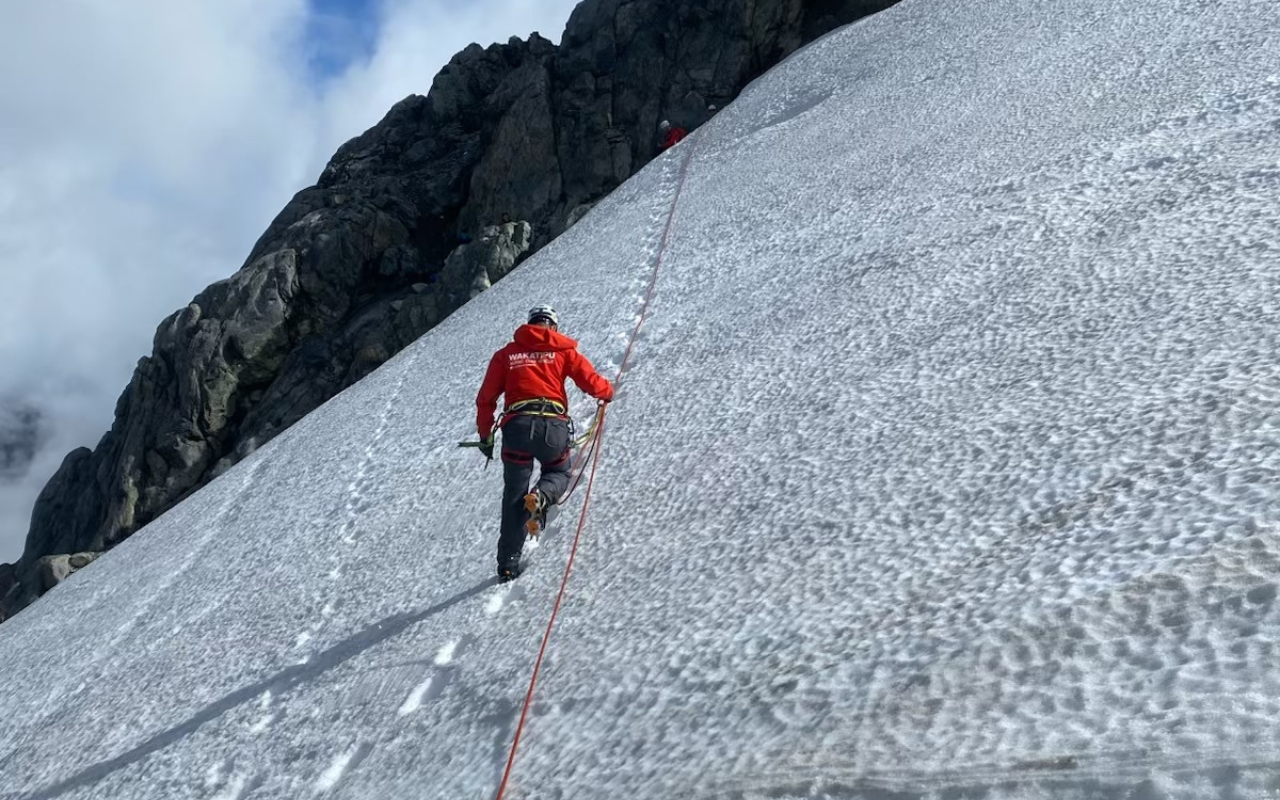 Wakatipu Alpine Cliff Rescue Team members head across a tricky snow slope to rescue two Israeli tourists near the Homer Tunnel early this morning - Photo - Wakatipu Alpine Cliff Rescue Team
Rescuers and Police are warning not to rely on social media after two young Israeli hikers were finally rescued from high on Barrier Knob near the Homer Tunnel at Milford early this morning with Police calling in specialist alpine cliff rescue experts from Queenstown.
Southern Lakes Helicopters attempted to fly in to rescue the tourist couple – a woman and man in their mid-to-late 20s, on Thursday night but “horrendous weather conditions” meant they couldn’t undertake the rescue, Police Southland SAR coordinator Sergeant Alun Griffiths says.
The alarm was raised around 7.40pm when the pair managed to find a pocket of cellphone coverage and they were finally retrieved late this morning.
Wakatipu Alpine Cliff Rescue Team coordinator Karl Johnson says they were trapped behind rocky bluffs high at 1796m beyond a large, steep snow slope.
“There was another rocky point at the opposite end of the snow slope which they couldn’t get across,” Johnson says.
“This was another case of taking advice from social media,” he says.
“They were on the right route and diverted to another route after seeing that on social media.”
Social media had given them misleading directions, and they didn’t have the equipment or knowledge to be attempting what they were doing, Johnson says.
Five specialist Alpine Cliff Rescue Team members flew in with Heliworks early this morning once the conditions eased sufficiently after the pair had been forced to spend the night out in freezing conditions.
“There were severe winds overnight, it was freezing with temperatures dropping and heavy rain. Wind gusts were up to 130knots up there during the early hours of this morning,” he says. Johnson wasn’t prepared to put his team in overnight on foot in those conditions, he says.
It’s understood winds were gusting some 160km/hr round nearby McKinnon Pass.
The pilot hover offloaded the rescuers onto a rock ledge early this morning and Johnson says they set up ropes across the snow slopes retrieving the pair one at a time before the pilot winched them all out.
“We were prepared for a HEC deployment using a long line with all the equipment but managed to get them out with ropes across the snow.
Those are big permanent snowfields up there.”
Johnson says the pair were totally unprepared for those conditions and that terrain.
“They were very cold after spending the night up there.”
A local LandSAR team member was also involved on the ground, and two others were on standby.
Johnson and Griffiths say it’s imperative that people get their information from reliable sources before heading into the backcountry and mountains.
DOC, NZ Alpine Club and the NZ Mountain Safety Council have accurate and reliable route information.
“They were going from Moraine Creek up to the Adelaide Basin, and had climbed Gifford’s Crack and were heading over Barrier Knob then planning to descend to Gerturde Saddle and out to Homer Hut,” Griffiths says.
“It was a lack of research. These are permanent snowfields and this is a serious semi-alpine track requiring careful route taking and technical experience. It shouldn’t be undertaken lightly,” he says.
“You need a helmet and should be carrying crampons, basic equipment.”
The pair were given reassurance by Police when Southern Lakes was unable to rescue them last night, and advised to be “self sufficient overnight, stay warm and as dry as possible and seek shelter”.
Griffiths says people obtaining wrong information from social media is an increasing issue due to the sheer numbers following these sites, with Gertrude Saddle a prime example.
Today’s rescue follows a number of similar incidents, including one late last month when a young American woman was knocked unconscious suffering moderate head injuries after falling while attempting to cross The Remarkables’ Grand Traverse.
Police and rescuers have been warning those heading into the hills and mountains not to rely on social media for accurate information for some time.
It’s especially important for overseas people who don’t know the area and local conditions, but people need to ensure they’re adequately equipped with plenty of food and water and have the right level of experience to tackle what they’re attempting, they say.
Sue Fea is a senior journalist with more than 40-years experience covering police, social and general news in the southern regions.