


Woodland's Chris Smith - keeping an eye on Southland's pastures for 52 years

Sue Fea © the Southland App
22 December 2025, 8:54 PM
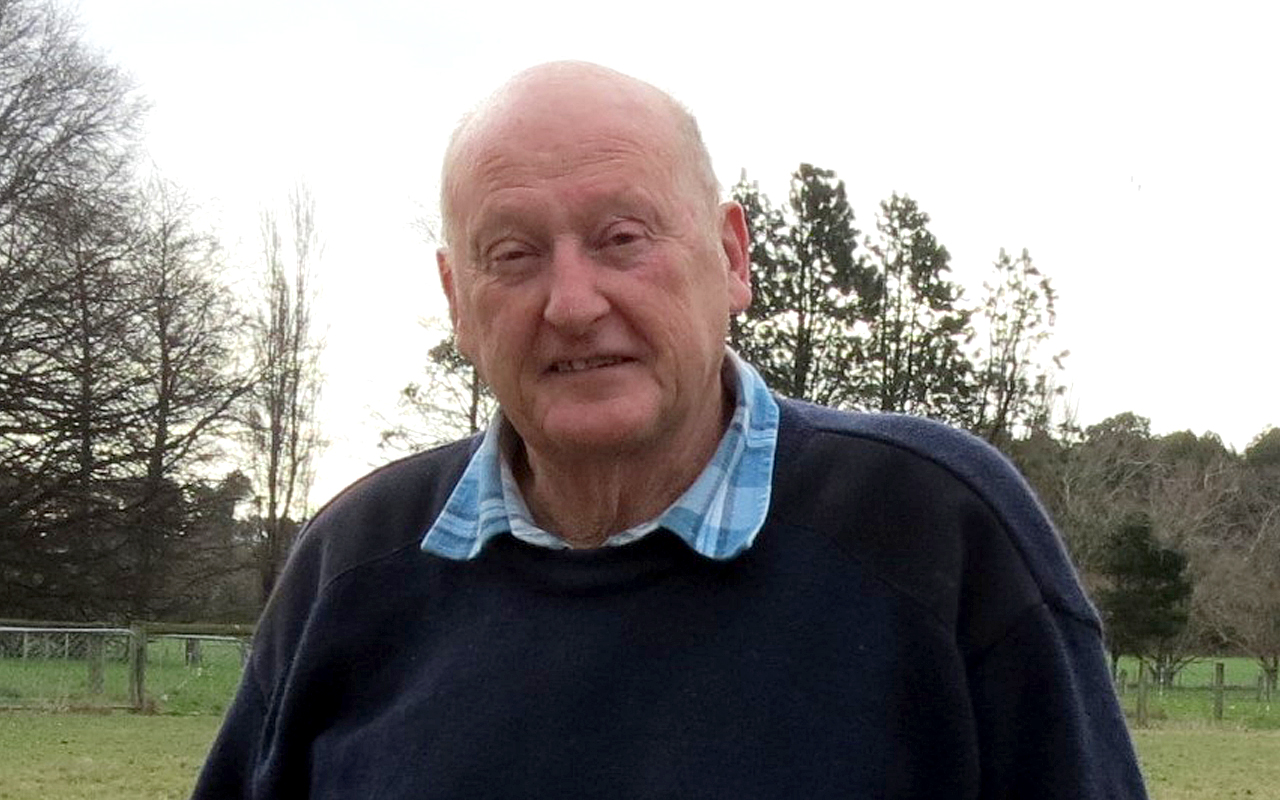 Longtime Southland agricultural researcher Chris Smith reflects on his 52 years amongst Southland's soil and grass. Photo: Supplied
Chris Smith has been poking around in the grass and soil for 52 years as one of Southland’s, and possibly New Zealand’s, most experienced agricultural researchers.
He’s ensured we’ve had plenty of tasty cereal on the table, fought pesty grass grubs, even starred on Country Calendar.
Chris’s research has been well recognised, published nationally and internationally.
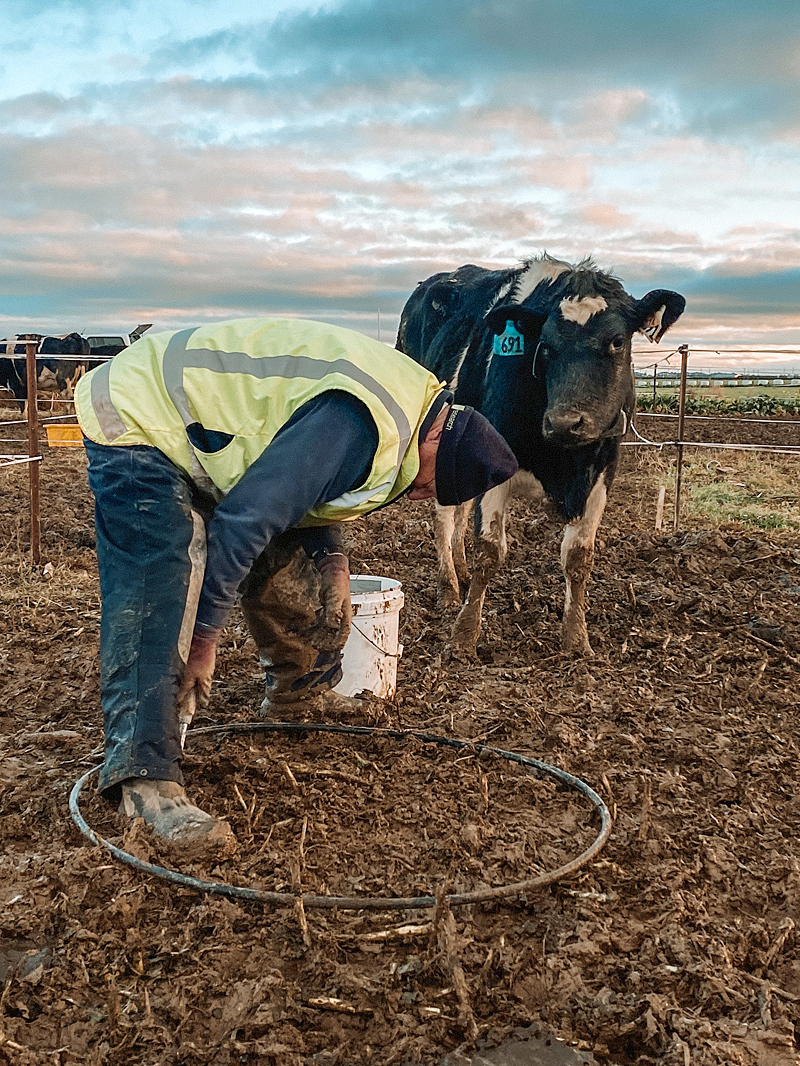
Chris measuring winter crop residuals in 2020. Photo: Supplied
He helped to revolutionise organic farming with his work on reactive phosphate trials in the mid-1980s, charged with collating and summarising the results of all 18 national trials – three conducted in Southland – a job that took him a year.
The 71-year-old AgResearch Environment Science South Team researcher and scientist finally called it quits last week (19 Dec), his last on the job with the Woodlands Pasture Rate of Growth Trial.
He’s fought hard over the years to keep the Woodlands pasture growth rate trial operating, having seen how vital the results are, many still being put into practice by farmers decades later.
Chris started the pasture rate of growth trial at Woodlands in 1977, measuring pasture growth using cages, then when government funding cuts came, he argued to keep the Woodlands project going.
It’s still operating today – the second largest continuous pasture measurement research on one site in NZ, something he’s proud of.
Some of what he fought to retain is now being relied upon by scientists who are researching and monitoring climate change.
“Farmers and clients were using that as a benchmark as to how pasture was growing in Southland at the time."
"Even now those monthly updates still go to 300 or 400 farmers and they’re very important for their management decisions,” he says.
“I argued to the keep the funding on and just carried on doing the research without the funding. I did it anyway."
“I think that data set is now very important to gauge what pasture growth will do under climate change,” he says.
“Climate change modelling predicts pasture growth will increase but our data set shows it isn’t,” Chris says.
“People are starting to look into why it’s not increasing like it should, but there’s no funding which is a bit concerning to me.”
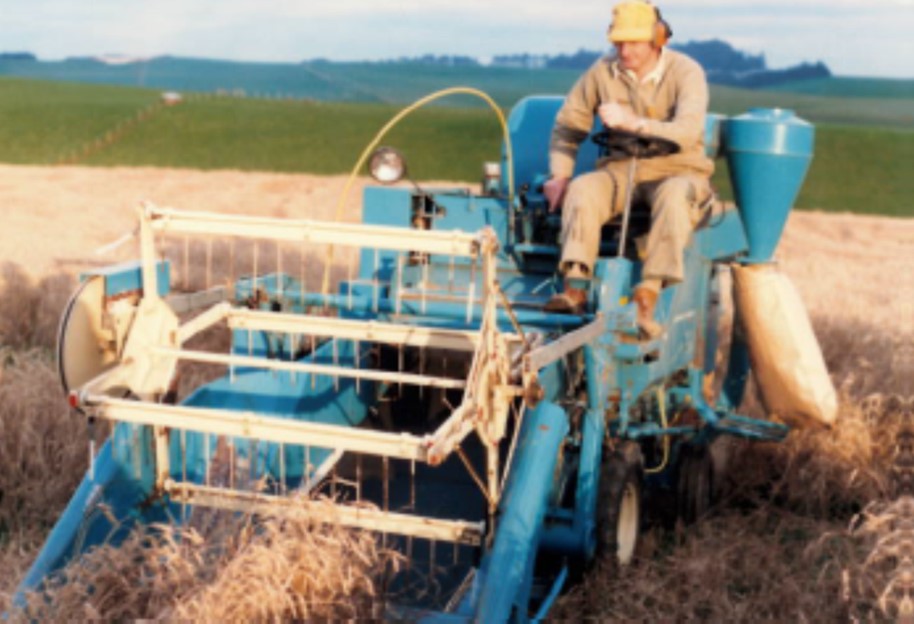
Chris working on a harvesting cereal trial in 1986. Photo: Supplied
He's “not a denier” – but climate is a process and it’s always changing."
"It’s just changing faster,” Chris says.
“We’ve got to live with it. It’s more a case of adapting to it than preventing it.”
He says there’s seems to be less and less funding for agricultural production while other more high-tech industries get funding, “not those that keep the country going”.
“I’m concerned what will happen in 20 or 30 years as that research isn’t being done now.”
A lack of funding for on farm research is his greatest concern.
“A lot of our farming production practices now have come from research done 20 or 30 years ago,” he says.
The most satisfying aspect of his role all these years has been seeing farmers adopt his research, talking to them about it and helping them change their management practices.
It’s also been hugely satisfying to see his research results published in NZ and overseas journals and his papers presented to scientists at NZ and international conferences.
His other major concern is how nitrogen loss is destroying Southland’s waterways due to increased dairy cow stocking rates.
”This results in a high concentrations of nutrients going into our waterways."
"I’ve seen our pristine waterways become ruined but lately there have been some major improvements with the way farmers farm.”
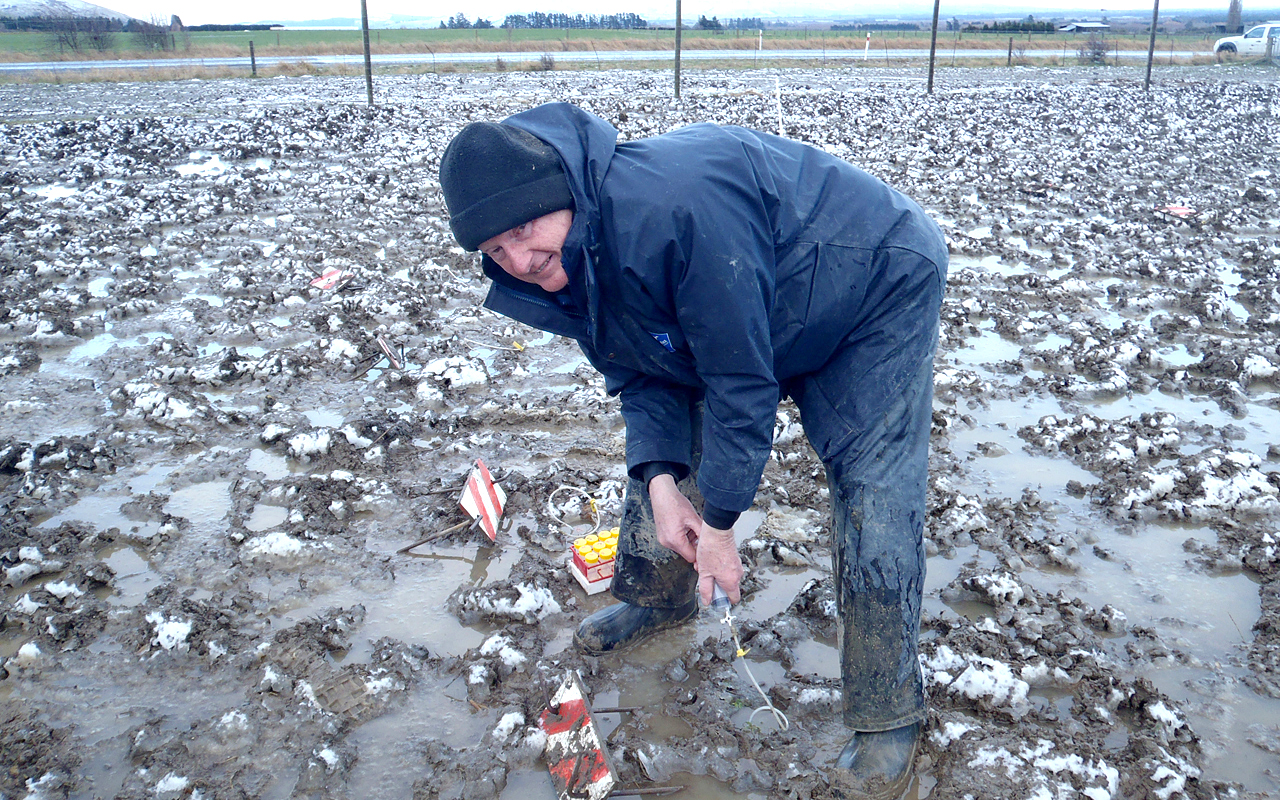
Chris sampling soil leaching samplers - mid winter in 2010. Photo: Supplied
While the first 20 to 25 years of his research focused on increasing production, the last 25 years has focused on the environmental impacts that result from that increased production.
In 2008 Chris was awarded L C Blakemore Award for Top NZ Research Technician by the NZ Society of Soil Sciences.
He was also a trustee of the Ballance Farm Environmental awards for about three years from 2008.
He’s just finished his last term as president of the NZ Grassland Association and has organised two NZ conferences for them in Invercargill, on the committee for the 2000 event and chairman for the 2020 one, which had to be postponed until 2022.
Not bad for a boy from Masterton, who quit a chemistry degree at Canterbury Uni after two years when he scored a job at the Ministry of Agriculture and Fisheries Takapau Research Station.
By 21 he’d won a Young Farmers Exchange to Western Australia spending three months on eight or nine farms stretching from Geraldton in the north to the far south coast at Esperance.
Mulesing lambs’ backsides to protect them from fly strike was new to this Kiwi boy as were the size of the paddocks, and the heat.
“I was cultivating spring wheat, and it took 12 hours to drive around the boundary fence of one paddock.”
He teamed up with some fun Rural Youth guys (equivalent to Young Farmers) heading to the Royal Show in Perth, all asleep on the open-air crate on the back of a truck while one of the guys drove them through the night.
One of his farming families also took him camping in the wildflower area of Southwest Australia for one last look at its beauty before contractors completed a giant motorway being built right through it.
Then there was the “culture shock” of being transferred to Gore by MAF on his return in spring 1976.
“Everyone was parked up in the centre plots of the main street having a beer."
"That wasn’t my scene. I thought it was a bit stupid,” he says.
So Chris headed for the country in his Holden Torana Straight Six joining the Waimumu Young Farmers Club instead where he fitted in just fine.
He also joined the Southland Gliding Club, eventually becoming chief instructor for a period in the late 1980’s.
As for that Country Calendar episode: “We were testing fertiliser rates on various plants in hill country – the Blue Mountains and the Remarkables."
"They were filming a segment on high country farming at our Remarkables site,” he says.
“I was using a brush cutter with metal to demonstrate how we measured growth for them when it hit a stone, which chipped and flew off into the TV camera lens!”
The cameraman wasn’t impressed and there was no ‘On Demand’ back then.
“I never did get to see that programme,” Chris grins.
Sue Fea is a senior journalist with more than 40-years experience covering police, social and general news in the southern regions.