


Southlanders battle 43degree heat & 'things that want to bite' fighting Australian bushfires

Sue Fea © the Southland App
16 February 2026, 10:20 PM
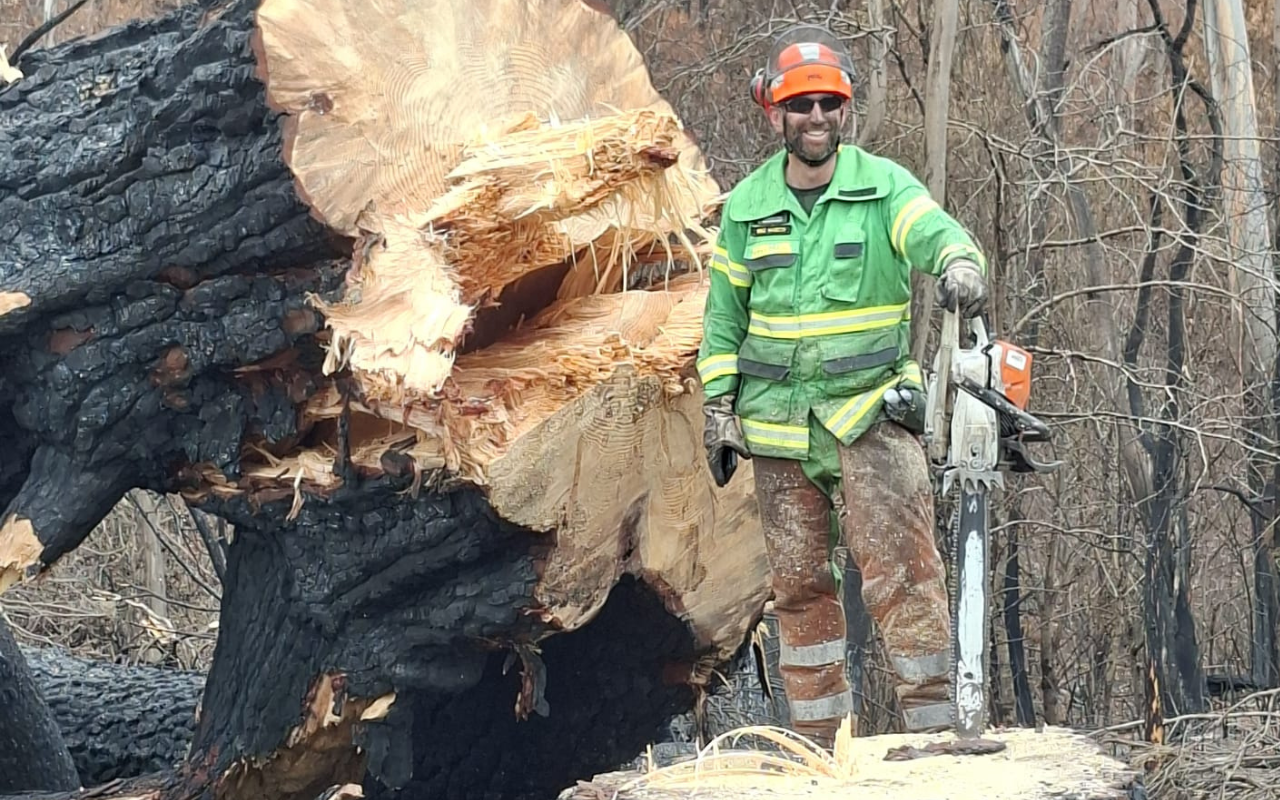 Advanced tree feller Will McBeth, from the Otago Southland crew, on the job in Victoria. Photo: Supplied
They endured searing heat at times reaching 43degC beating down hotspots and flare-ups, clearing tracks blocked by fallen charred trees and dealing to those still falling, all this in full firefighting kit while on alert for poisonous snakes, spiders and nasty biting ants.
The second batch of 20 Kiwi firefighters – three from Southland, including Hedgehope Fire Chief Ken Keenan, returned home on Saturday, after a two-week stint based in remote Tallangatta, Victoria, where the devastating mass fires that started in early January are still burning in places.
The 20-strong Bravo taskforce of South Island firefighters also included a DOC fire crew and two Forestry workers, along with a Field Liaison Officer and Jurisdiction Liaison Officer.
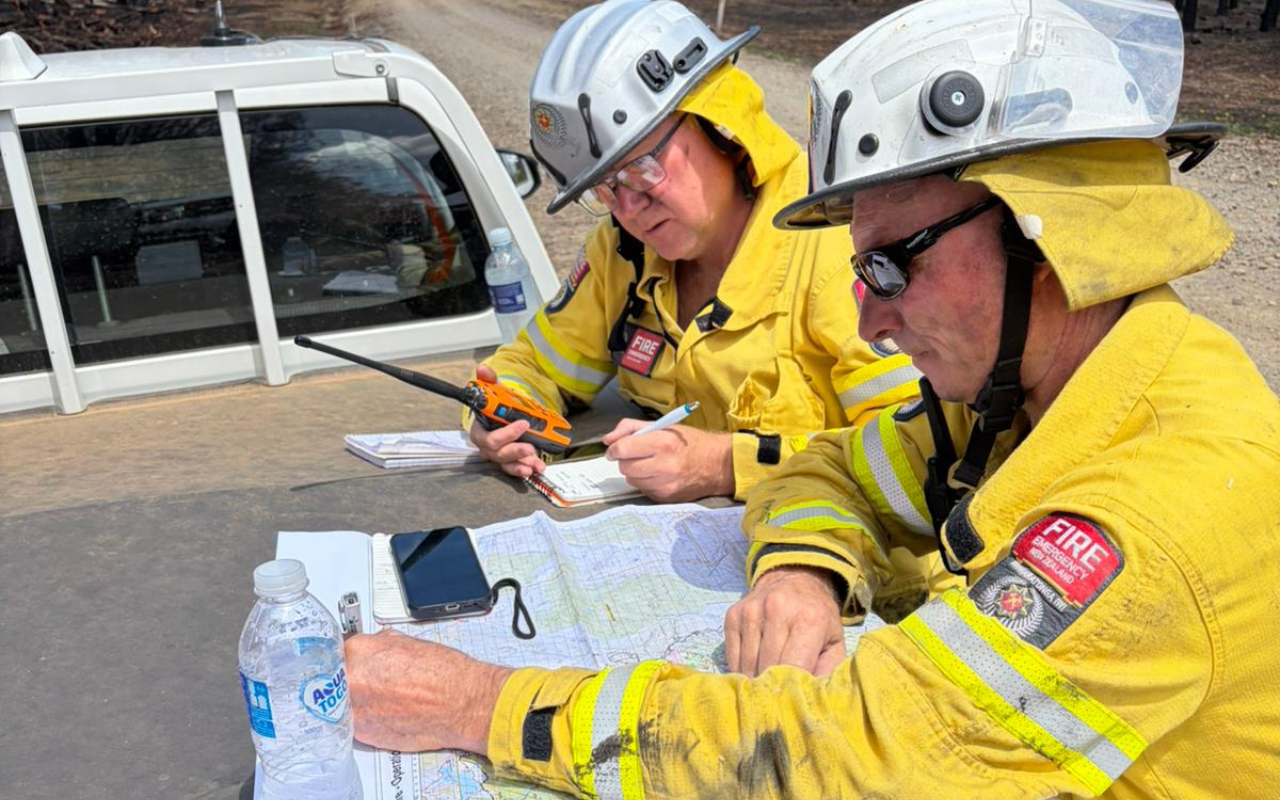
FENZ Northern Southland group manager Area Commander Hamish Angus, left, and Hedgehope Fire Chief Ken Keenan, right, plotting a report of a flare-up which their crew responded to. Photo: Supplied
They set off at the end of January replacing the Alpha crew, which also contained two Southland firefighters, both from Hedgehope, who endured sizzling temperatures as high as 48degC, at times working up to 14 hours a day.
Fire and Emergency New Zealand Northern Southland group manager Area Commander Hamish Angus says the 120,000ha fire ground Bravo was assigned to had a perimeter of more than 400kms.
It was Angus’s eighth such deployment and he says he’s still learning.
“Our job was initial attack responding to any flare-up with a Toyota Landcruiser smoke chaser,” he says.
“We spent a lot of time clearing and opening tracks, getting roads safe and open to the public and assessing the danger from still falling charred trees.
“They could fall in the wind or collapse at any time,” he says.
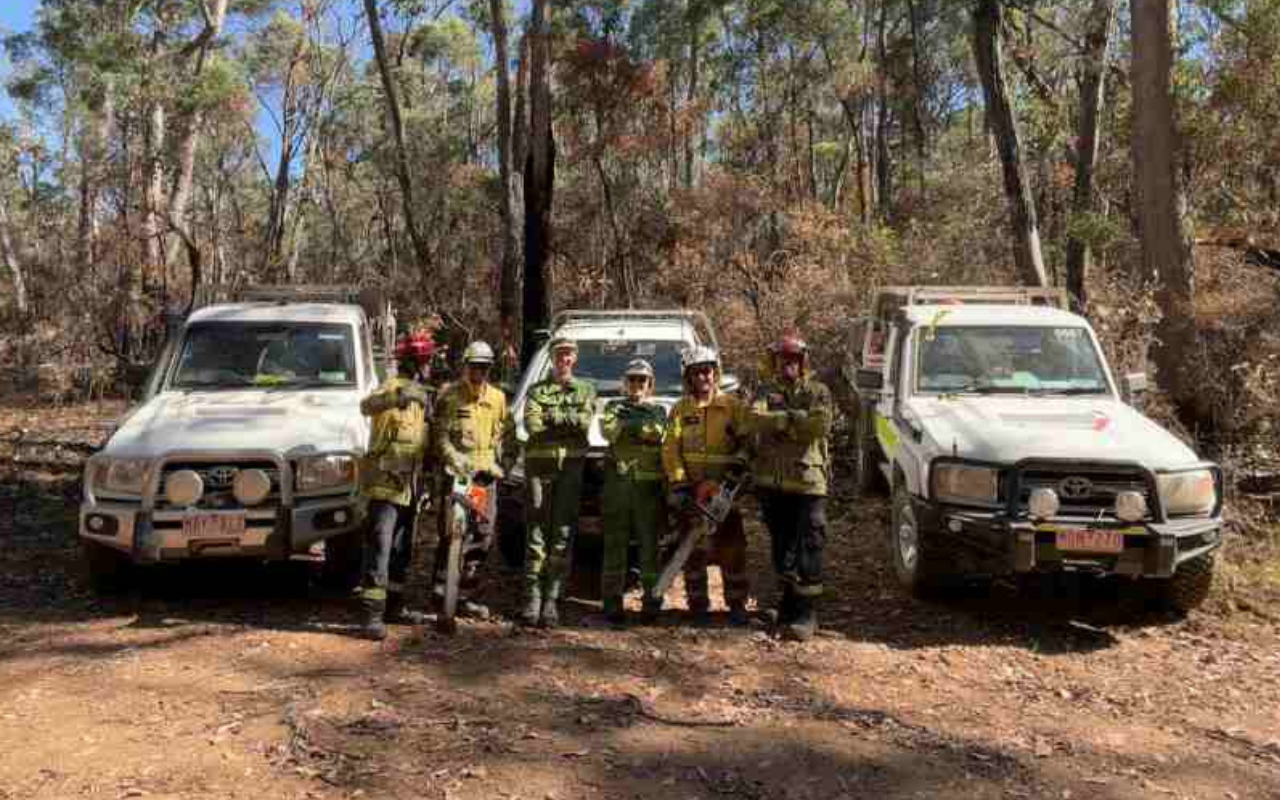
New Zealand firefighters with the tools of their trade. Matt (Canterbury) and Greg Robertson (Blackmount), left, and Ken Heenan (Hedgehope) and Marcus Hammett (Arrowtown), right, flank two Australian firefighters (in green). Photo: Supplied
"Some of our crews went through ahead clearing the tracks wide enough to get a truck through and spray marking the trees that needed felling."
"Our advanced tree fellers then went through to perform the drop, followed by a digger to clear the larger trees off the tracks.”
The Kiwi crews all had extensive experience fighting fires in dangerous conditions and extreme heat and were carefully selected for that reason.
Keenan too was on his eighth such deployment and proud that three of his Hedgehope crew were chosen.
“We’re always very pleased to get selected. We class it as a real honour,” the fire chief of 22 years says.
Angus, who led the Bravo taskforce, says it was humbling to have the Air NZ crew announce on board Bravo’s flight over that the Kiwi firefighting contingent was on board and the whole plane erupted into cheers and applause.
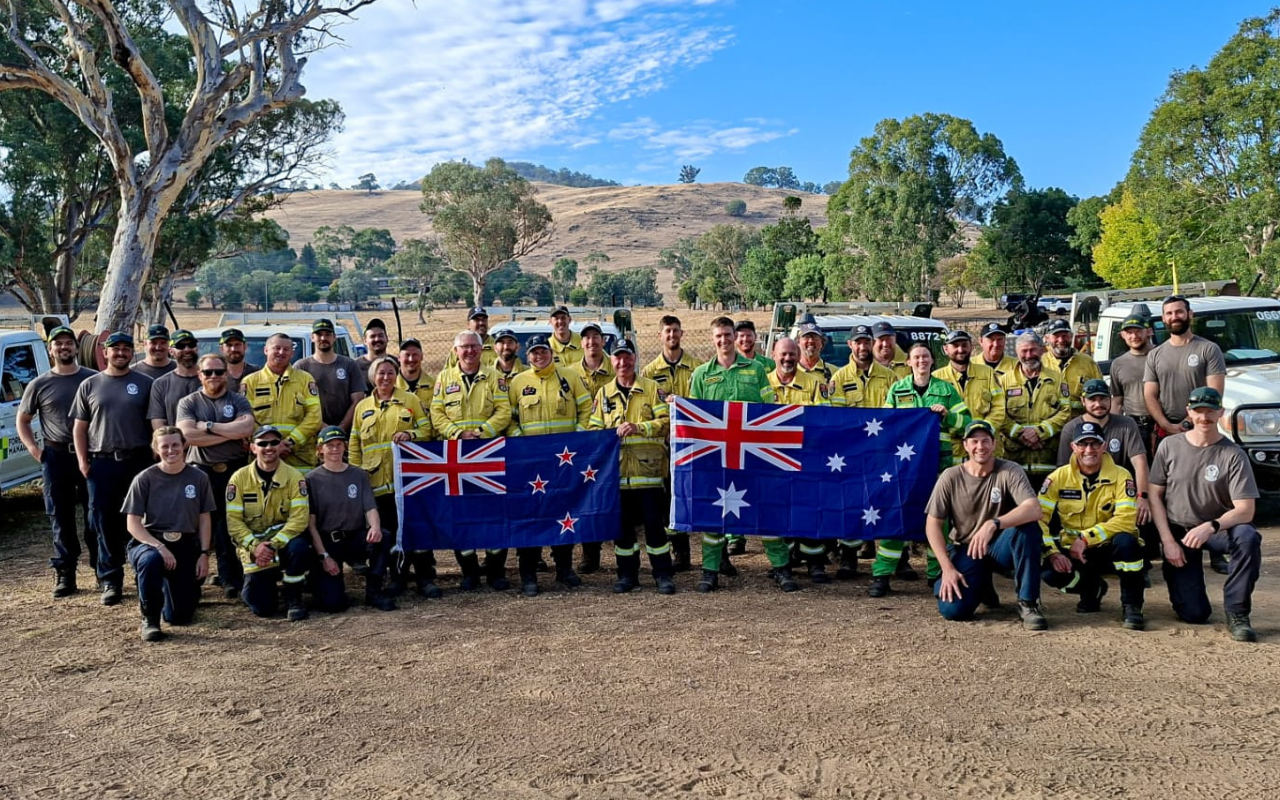
New Zealand firefighters (yellow) join up with Canadian firefighters (brown) and Australian firefighters (green) to record their time at the Victoria, Australia bushfires. Photo: Supplied
Aussie crews and the local communities were extremely grateful: “The communities over there couldn’t thank us enough,” Keenan says.
“It’s a chance for the Aussie crews to have some time out and recharge."
"These fires will burn on for months and they were exhausted.”
It was dangerous work, but the Aussies had good support, including St John Ambulance crews on standby watching their backs with stressed gum trees spontaneously dropping large heavy branches around them on a regular basis.
“We had the odd near miss,” Keenan says.
“Adjusting to the heat was the biggest thing, getting those fluids and electrolytes into us,” Angus says.
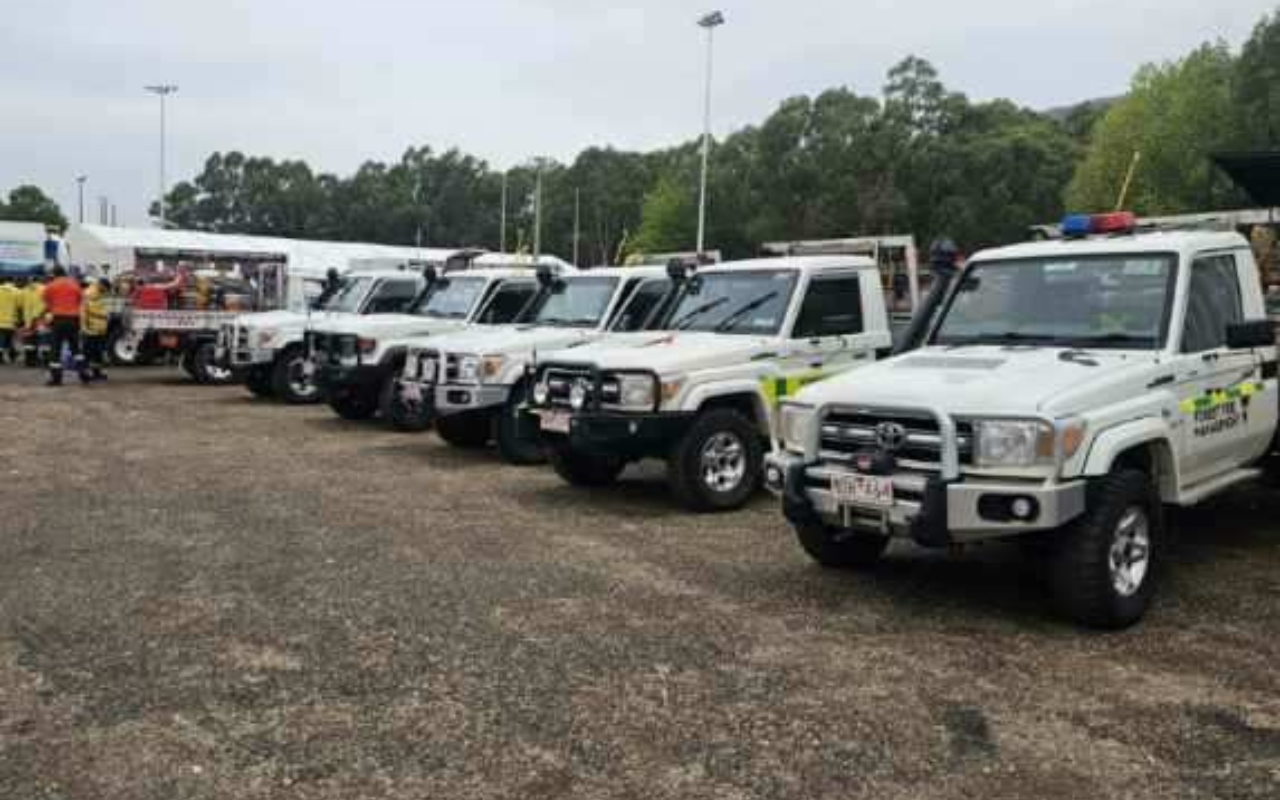
Firefighters prepare for another day battling Victoria, Australia's bushfires. Photo: Supplied
“You’re perspiring constantly, your body’s adjusting."
"It takes two or three days before your body goes, “Geez, hang on a minute! You’re not in Southland now!”
Dehydration and headaches settled after the first few days “then you’re into the groove”, Angus says.
Thankfully, nobody suffered severe heat stroke, but Keenan says a few firefighters had to be parked in some shade to rest while they got their fluids up.
The heat, the sheer size of the fires, snakes, kangaroos and large spiders were all added dangers with the emphasis over there on dry firefighting methods using tools like chainsaws and axes due to the lack of water, unlike Southland.
Heavy machinery was used to cut fire breaks and firefighters sometimes went in ahead, lighting controlled burn-offs to protect areas that the wildfires were approaching.
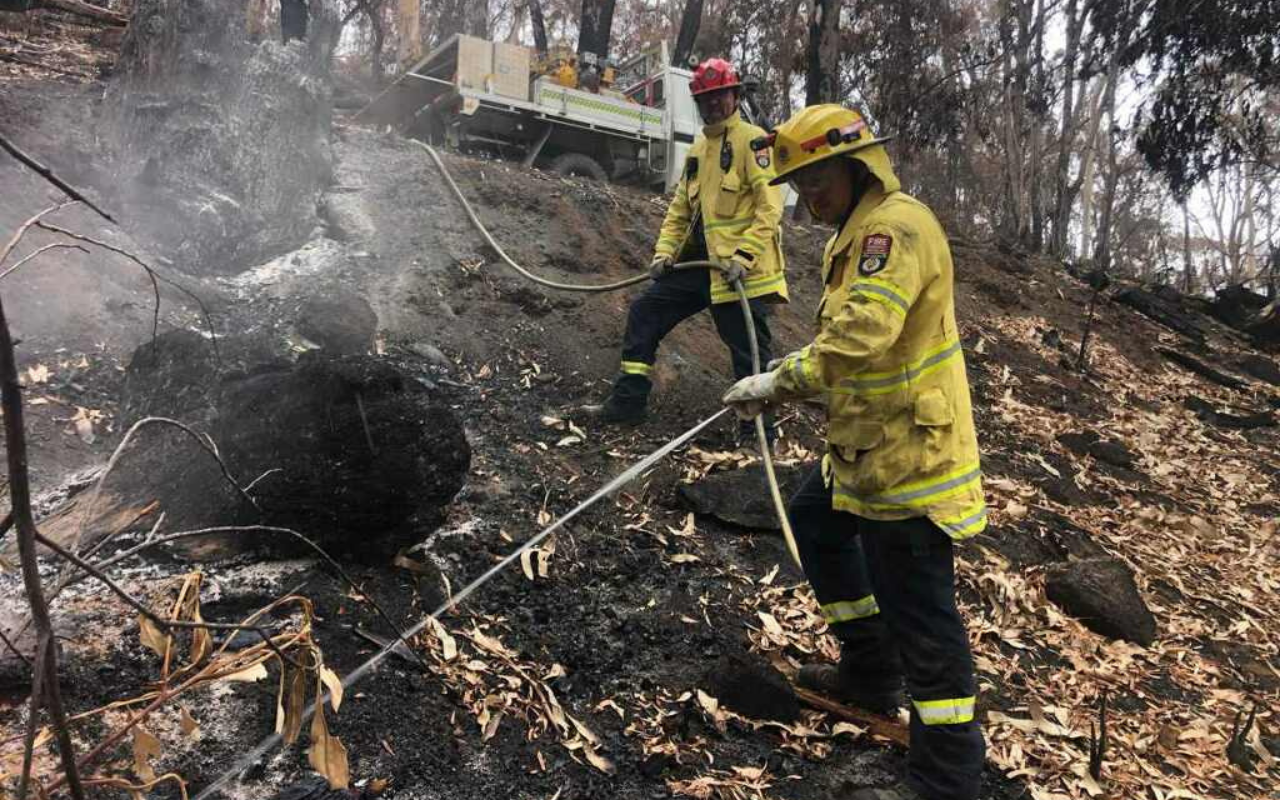
Blackmount's Greg Robertson, right, along with fellow New Zealand firefighter, Matt, douse down a hot spot. Photo: Supplied
They kept an eye out for any injured, stressed wildlife calling in help when they weren’t likely to survive.
Besides the Huntsman spiders “the size of your hand”, Hedgehope’s Brodie Butcher, on his third deployment during Alpha, copped a nasty bite from a Jumping Jack – Aussie ant.
“Everyone’s well trained in similar situations and we’re always looking out for each other,” Keenan says.
“We’ve got each other’s back because we have to.”
They brought back invaluable experience in working with new crews. “You learn to trust your crew straight away – that’s big thing.”
The Kiwi experience was invaluable too with Southland rural firefighters well accustomed to fighting fires in remote terrain, Butcher among those helicoptered in on a Remote Area Fire Team (RAFT) to a new fire in 5ha of bush at Dartmouth Dam.
For first timer Greg Robertson from Blackmount – a Fiordland tourism operator, there was so much to learn.
“I wasn’t sure what to expect but I knew there would be big, long hot days and potentially things that want to bite you,” he says.
The heat was “the biggest shock”, not only working in full firefighting kit but with protective chainsaw chaps over their legs.
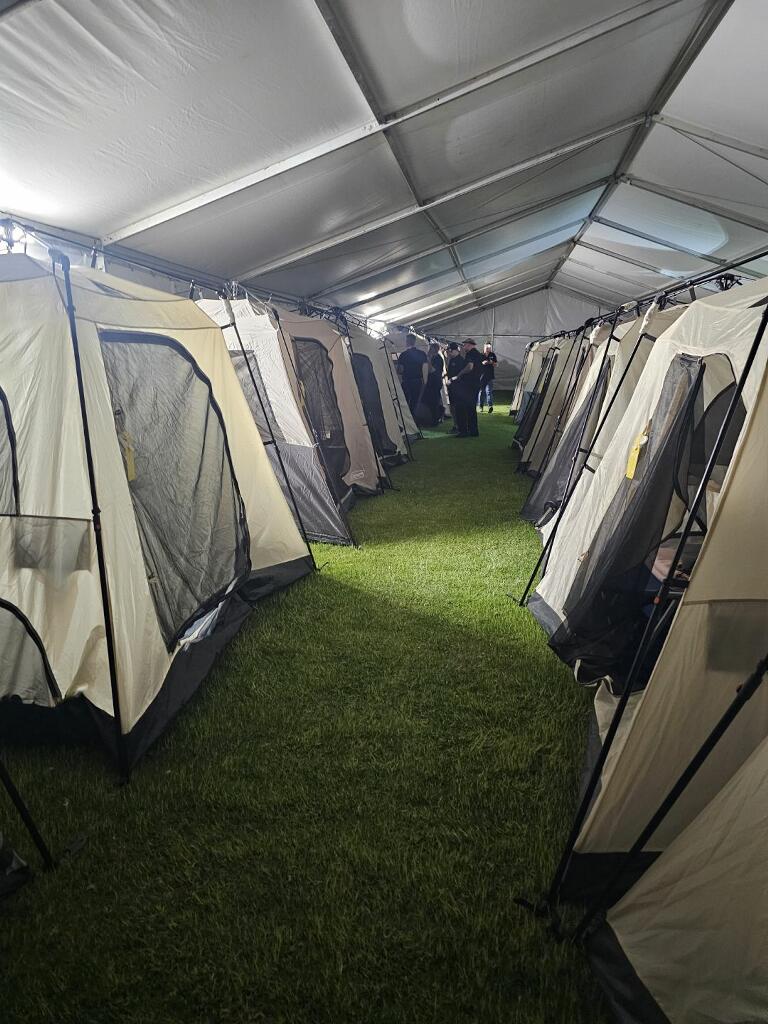
The New Zealand firefighters camped under canvas within a large air-conditioned marquee. Photo: Supplied
“The biggest thing I learned was working with different skill sets and understanding people’s capabilities,” he says.
“Because you’re working on such large-scale fires you need to find out very quickly where any flare-ups are so we were using FireMapper to get the exact grid reference."
"It’s a good piece of kit to have and in the process of being rolled out in New Zealand.”
Dry lightning was also another first for Robertson – a big cause of fires in Australia.
“The second night we had a massive dry lightning strike, but rain only fell up in the hills.”
They camped in tents pitched inside a large marquee on a sports ground but even with air conditioning running inside it the marquee was too hot to enter until about 9pm.
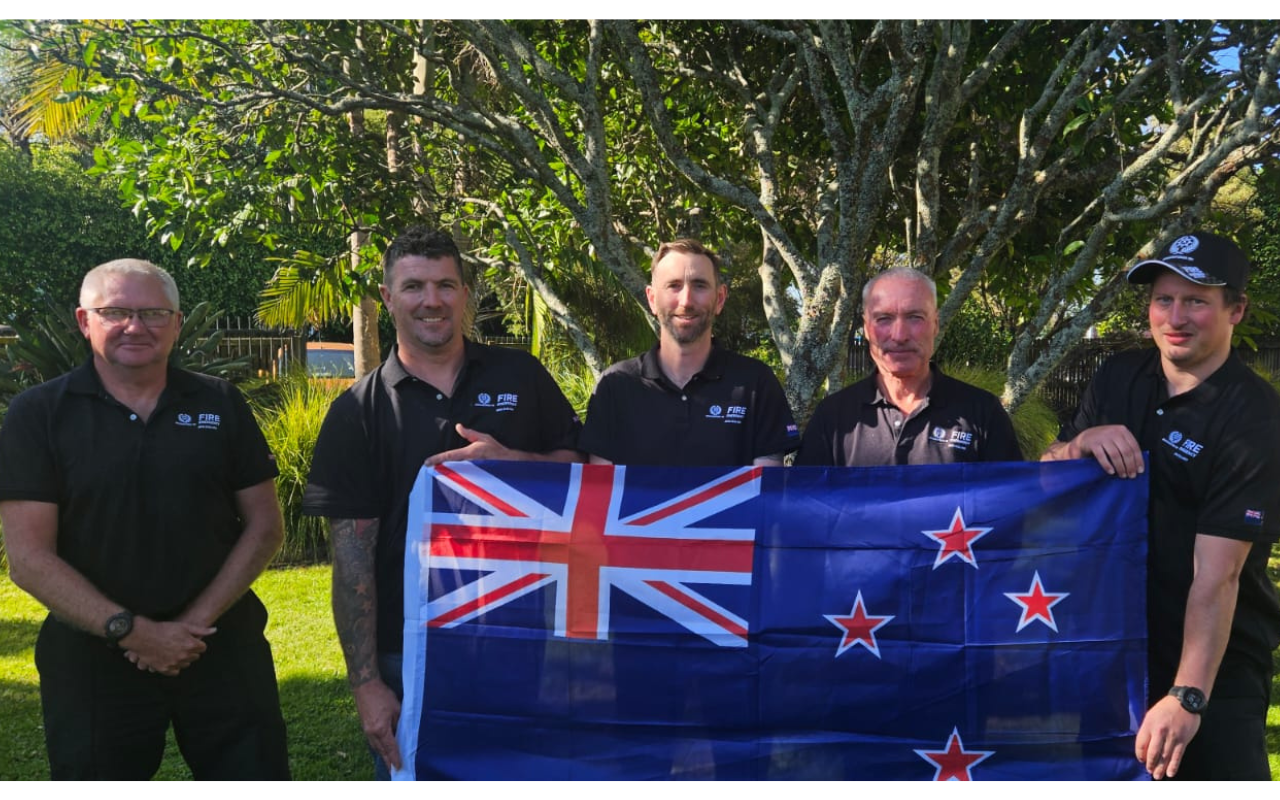
Southern firefighters before their deployment with the Bravo contingent. Photo: Supplied
Roberston says they were issued with air plugs, but it was a race to get to bed first “before the chainsaws (snorers) started up”, two Canterbury women in the crew subjected to the racket too.
Hedgehope’s Thomas Brock, also on Alpha, was also a first timer.
All the crew members say they’re extremely grateful to their families, workmates, staff and friends for holding the fort while they were away, whether on the farm, building site, at home or in the business.
And for those whose wives and partners stepped up, they assure those belated Valentine’s dinners are coming!
Sue Fea is a senior journalist with more than 40-years experience covering police, social and general news in the southern regions.