


Foreign drivers dice with death in Milford rush

Sue Fea © the Southland App
09 January 2026, 8:29 AM
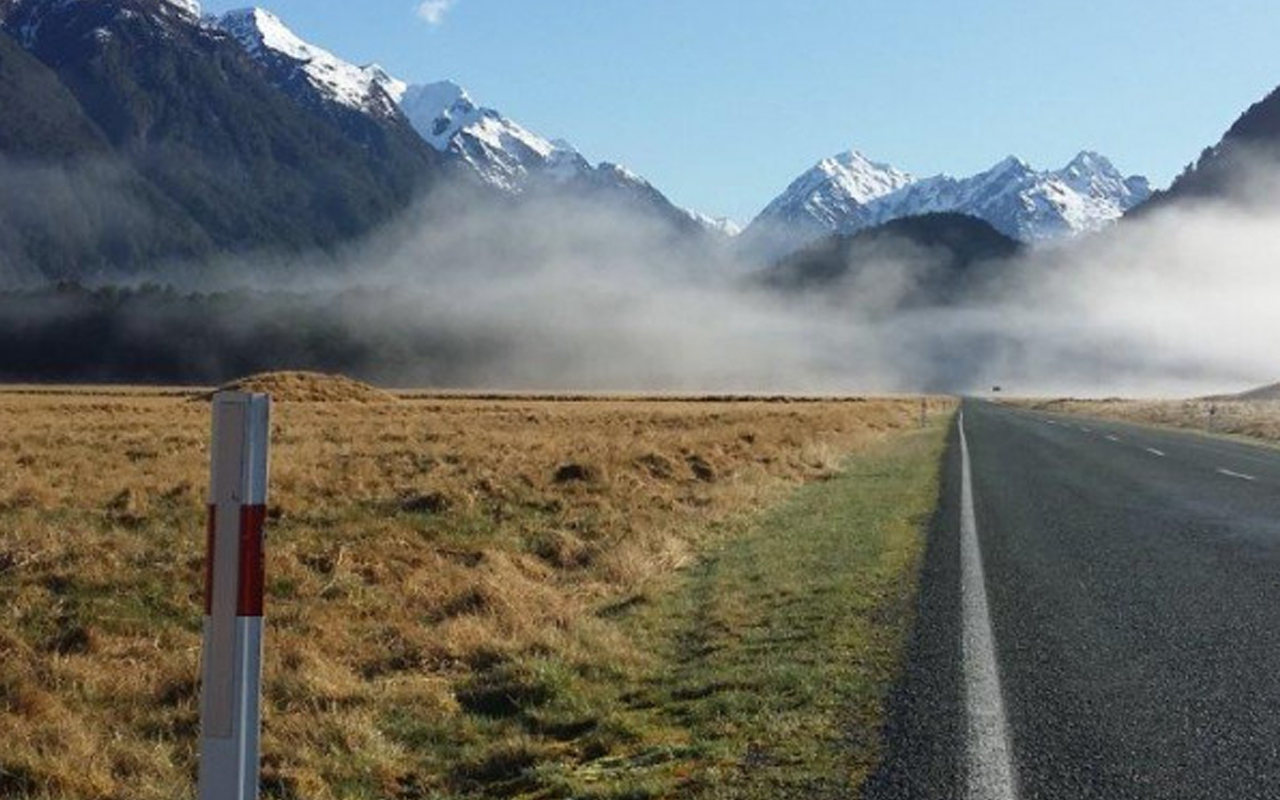 Police are concerned about unsafe driving as tourists race to Milford Sound. They encourage motorists to report any unsafe driving and also try to get a vehicle registration number and a good description of the vehicle. Be prepared for Police to come back to you for further information. Photo: NZTA
Police are concerned there’s an accident waiting to happen in the south with increasing numbers of drivers, many from overseas, speeding to get to Milford for boat cruises, another near miss head on collision today (9 Jan) near Deer Flat on the Milford Road.
Sergeant Tod Hollebon says a tourist vehicle was allegedly passing a campervan on a straight section of road right into the path of an oncoming delivery truck heading into Milford.
“The truck driver had to suddenly stop stationary on the road to avoid a head on collision,” Hollebon says.
“This is a concern for Police. There’s no consideration for oncoming vehicles, especially from some overseas drivers who have an expectation that the oncoming driver will just pull over and let them in, as that may be customary practice in that driver’s home country,” he says.
It was a huge concern for Police and obviously for other road users with a marked increase in driving complaints coming in via the Police Communications Centre.
“Sometimes we get several complaints within an hour, at least several a day, and we encourage that,” Hollebon says.
Cellphone connectivity has been very poor until recently but now that that’s improved Police have noticed a corresponding increase in unsafe driving complaints.
The worst areas are around the Devil’s Staircase south of Queenstown, between Kingston and Five Rivers, and also on the Milford Road.
One Te Anau officer driving an unmarked Police car recently was overtaken by a driver travelling into Milford who was allegedly clocked at over 150km/hr.
Other officers have clocked drivers travelling at 130km/hr, Hollebon says.
“Unfortunately, an oncoming vehicle is not necessarily a barrier to someone passing,” he says.
“At times we’ve witnessed a complete lack of consideration for oncoming vehicles, which is very concerning.”
Visitor numbers into Milford are higher than pre-Covid – “the highest we’ve seen”, with the number of visitors for last month (December 2025) alone up 13,000 on the previous December (2024), Hollebon says.
The most common excuse is that they’re speeding to “catch the boat”. “They misjudge the time. They actually have time but don’t think they do. It’s like they’re rushing to catch the plane,” he says.
“We stop large numbers coming into Milford.” Other excuses like ‘my wife needs to use the toilet’ just don’t fly, he says.

Many motorists, in their rush to get to Milford Sound, are dicing with death by not adhering to the speed limit and road rules. Photo: Milford Opportunities
Milford Sound visitor numbers increased almost 30% in December (last month) to 115,344, up from 89,958 in December 2023, and up 13% compared with December 2024.
Great South general manager tourism and events Mark Frood says Milford Sound is definitely busier than pre-Covid and that’s expected to continue through the summer.
A total of 476,636 visitors headed to Milford last calendar year (2025), according to the latest figures – a 105.71% increase on pre-Covid times, Frood says.
“Anecdotally the feedback we’re getting is that there are more people travelling there in cars rather than as part of tour groups,” he says. “Our message is that people need to understand the road conditions, drive to those, and know the (road) rules.”
While unsafe passing was the biggest issue, increasing numbers of motorists are ringing to complain about vehicles travelling too slowly with lines of traffic behind.
“These people are generally unfamiliar with our roads. It’s often their first time driving in New Zealand and some just have limited driving experience,” Hollebon says.
Many overseas tourists don’t pull over for the Police and emergency services despite full lights flashing and sirens blaring, whether that be to speak to the driver or get past to an emergency.
“We’ve had cases where overseas drivers haven’t stopped for up to several kilometres despite sirens and flashing lights,” Hollebon says.
“They don’t recognise it, that you pull over. It’s a cultural thing, but that also impacts ambulances and fire appliances trying to get past to a callout.”
If it’s safe Police can sometimes pull up alongside these drivers and signal them to stop, or get in front of them to slow them down.
“They have different rules and signs in their country. It’s just the volume at the moment, the sheer numbers of vehicles on our roads."
"Some drivers are making good decisions and some bad.”
Sue Fea is a senior journalist with more than 40-years experience covering police, social and general news in the southern regions.