

First kākāpō chick of season hatches on Anchor Island

15 February 2026, 11:20 PM
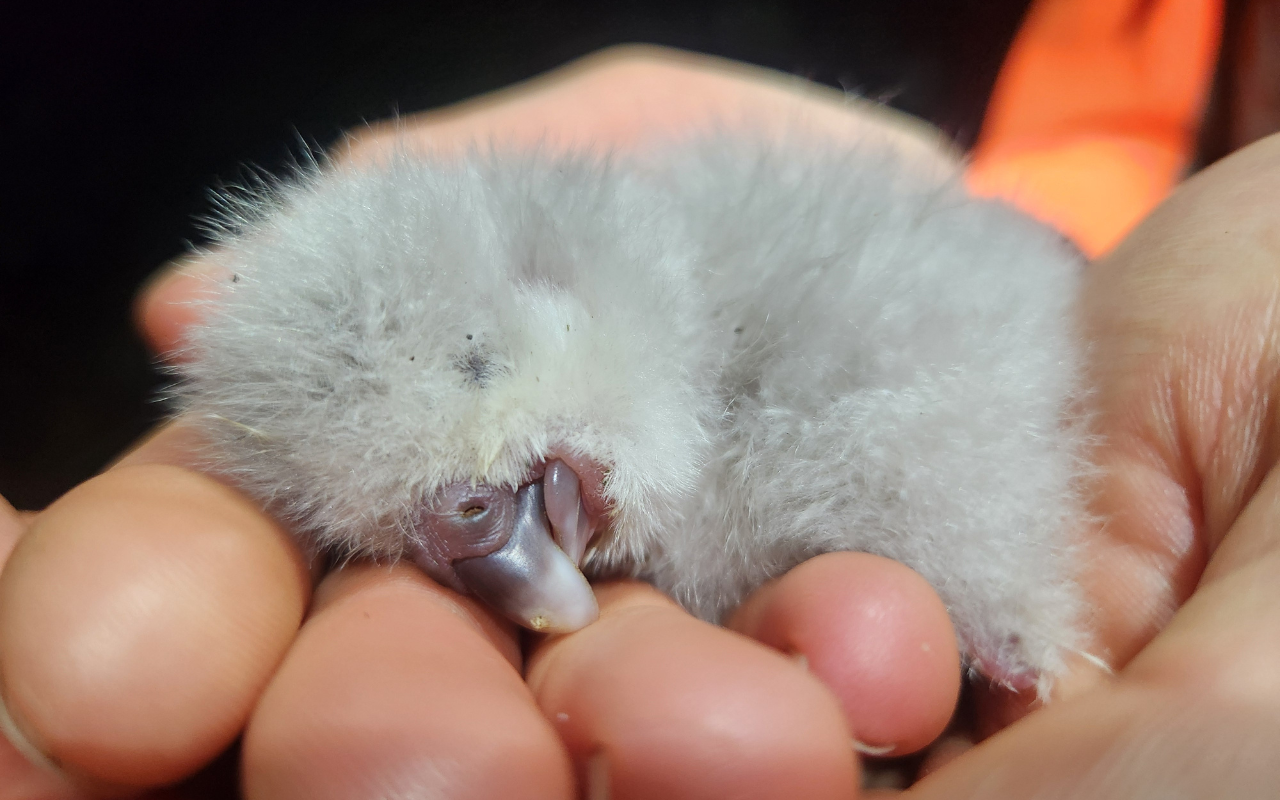 The first chick of the 2026 breeding season, Tīwhiri-1A hatched in foster mum Yasmine’s nest on Valentine’s Day. Photo: Lydia Uddstrom/DOC
The first kākāpō chick of the breeding season has hatched on Pukenui Anchor Island.
Kākāpō Yasmine hatched an egg fostered from kākāpō Tīwhiri on Valentine’s Day (14 Feb), bringing the total number of kākāpō to 237 – though it won’t be officially added to the population until it fledges.
DOC Operations Manager for kākāpō/takahē Deidre Vercoe said the first chick of the breeding season was an exciting moment on the long road to recovery for this critically endangered species.
“These exceptionally rare taonga only breed every 2-4 years, so it’s a long time between chicks. We have more breeding-age birds than ever before this season, so we’re anticipating many more chicks to come.”
Vercoe said fostering eggs and chicks between different kākāpō mums is one way to improve nest success rates.
“Kākāpō mums typically have the best outcomes when raising a maximum of two chicks."
"Biological mum Tīwhiri has four fertile eggs this season already, while Yasmine, an experienced foster mum, had no fertile eggs.”
Kākāpō face a range of challenges with low hatching success being a key obstacle.
So far this season there are 187 eggs, and 74 of them are fertile. Of those, not all will hatch, and not all chicks will survive through to fledging.
“The kākāpō population was once down to just 51 birds which created a genetic bottleneck we are still managing today,” Vercoe said.
“Kākāpō are one of the most intensively managed species in the world and while numbers are still so low, the breeding season requires a lot of intervention.
“Priority goes to the eggs and chicks that are less well-represented across the gene pool, and we have a more hands-off approach with those that are well represented. This approach helps us answer questions around what a natural breeding season might look like one day.”
Te Rūnanga o Ngāi Tahu representative on the Kākāpō Recovery Group Tāne Davis said the hatching of the first kākāpō chick of the season on Pukenui Anchor Island was a welcome milestone of special significance to Ngāi Tahu.
“Pukenui Anchor Island serves an important purpose in accommodating the growing numbers of not only kākāpō but other critically endangered taonga species."
“While it is wonderful to see the manu thriving on this island due to its predator free status, we need to continue our collective efforts to create other safe havens for the chicks of the future."
“One of our future aspirations through Predator Free Rakiura is to return the kākāpō back to its original home,” Davies said.
Until that happens, the best way for people to see a kākāpō is Kākāpō Cam, a live camera streaming from the nest of a female named Rakiura, on Whenua Hou / Codfish Island.
The camera was first trialled in 2022, and Deidre Vercoe says the team is thrilled to have it up again for breeding season.
“Kākāpō cam is a great way for people to see conservation in real time and do their own little bit of naturing from their home, office or wherever in the world they might be,” she says.
Rakiura is currently sitting on two eggs, and all going well, her first egg is due to hatch in about a week, which could mark a world first opportunity for viewers to watch a chick from one of New Zealand’s most elusive species hatch, live in its nest.
The Kākāpō Recovery Programme has been supported since 2016 by National Partner Meridian Energy.