The Southland App
The Southland App
Advocate Communications
Get it on the Apple StoreGet it on the Google Play Store
Shop LocalNotices | JobsContactAdvertise
The Southland App

News


Deceased Fiordland climber's family reflect on son's life

18 December 2025, 3:47 AM

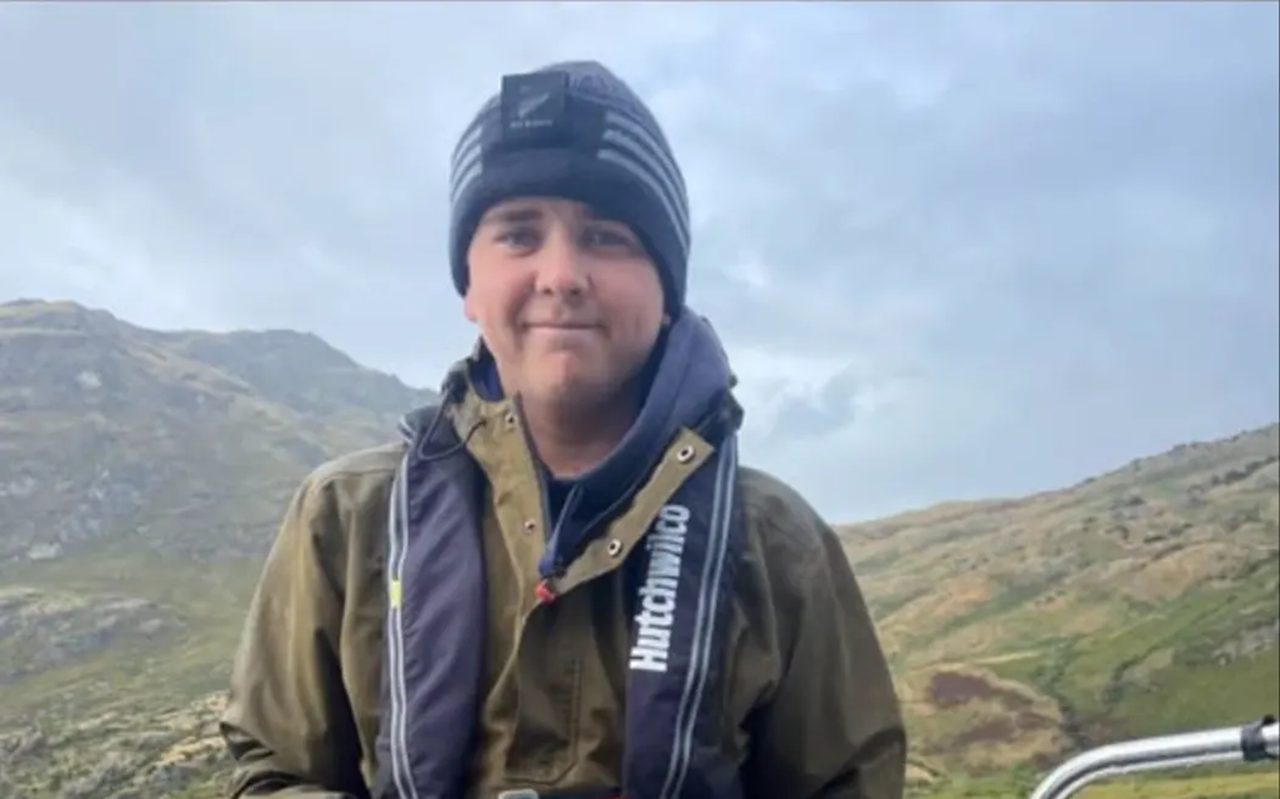
"If wealth was measured in the number and quality of people you have as friends, then my son was rich," Paul McKenzie said of his son - deceased Fiordland climber Scott McKenzie.28-year-old McKenzie and his 23-year-old climbing companion - Australian Tanmay Shetankumar Bhati, both died while climbing the north buttress of Sabre Peak in Fiordland on 13th Dec.Both men resided in Australia.Born in Christchurch to Jen, his Canadian mum and Paul, his New Zealand dad, meant he had a large extended family - an ocean apart - that loved him dearly.Connor's parents taught at, and ran international schools all over the world, living with Connor and his sister Abby on five continents.First Christchurch then to Canada, Kuwait then Serbia, Burkina Faso, Fukuoka and on to Melbourne.Connor received a scholarship to university but decided to follow his passions.He had just finished his carpentry apprenticeship in Melbourne and was doing up a van with the dream of working from town to town as he travelled Australia.Another love was climbing.At a young age he had developed a passion for going where most wouldn't, to see things that most hadn't.After completing various climbing courses, he taught other climbers rope safety and improved his skill during challenging climbs.Although it’s devastating for all Connor's family and friends, there is some solace in that he lived life to its fullest and died doing something he loved.McKenzie's family said they would like to thank the New Zealand Police especially their family liaison officer who provided the family with a level of support both thoughtful and thorough.They also thanked the bravery of Police Search and Rescue, Wakatipu Alpine Cliff Rescue team, the Rescue Co-ordination Centre New Zealand, Heliworks and Southern Lakes Helicopters for what had been an extremely difficult recovery.

Southland launches free daily lifejacket service

18 December 2025, 2:58 AM

Environment Southland’s maritime team has joined forces with ACC to help Southern boaties stay safe on the water this summer with a mobile lifejacket library. Regional Harbourmaster Lyndon Cleaver said Southland is the first to launch a mobile lifejacket library. Other communities ACC has worked with have chosen to install fixed life jacket libraries. “We are looking at fixed position libraries, but in the meantime have opted to trial a mobile lifejacket library over the summer until locations for fixed lifejacket libraries are confirmed.  “Southern boaties are spoilt for choice, they’ve got inland lakes and rivers, as well as coastal waters to explore. The most popular boating spot on any given day depends on the forecast – it can be miserable in Fiordland – and beautiful in the Catlins.” “Ahead of Christmas our team and the lifejacket library will be at boat ramps around the coast including Bluff, Riverton and on the lower Oreti River.Over the Christmas/New Year period we’ll be in the Te Anau/Manapouri areas – depending on the sensational Southland summer of course.” The lifejackets are free to borrow and must be returned in good condition as arranged with the Harbourmaster team. The library comprises of 20 lifejackets, available in various sizes, catering from toddlers to adults. In Southern waters it’s compulsory for everyone in vessels of six metres or under to wear a lifejacket whether that is in coastal or inland waters – and that includes dinghies and kayaks. “If you’ve got friends or family staying, you might be caught out with the wrong sized lifejackets. This initiative can help ensure everyone can get out and enjoy a day on the water,” Cleaver said. Follow your local community pages and Environment Southland on Facebook or download Antenno and put in your favourite boating locations to get updates on where the harbourmaster team are each day or phone us 0800 76 88 45.

Homeless shower options still being explored in Invercargill

18 December 2025, 12:36 AM

A restroom alternative for Invercargill's homeless community is still being worked through as the cost of the current set-up continues to bite.The inner-city Wachner Place Restroom offers a free shower which is used twice a day on average, equating to about $270 per time based on overall running costs.Its closure was imminent following a May decision which was made on the proviso work be undertaken to find alternative locations.But the place has been thrown a lifeline until March 2026 as the council continues to look for solutions more than six months on.On Tuesday, council policy analyst Hannah Kennedy detailed some of the steps council had taken to connect with the homeless population and those who worked with them.There were “specific issues” facing that community, including storing belongings during the day — which Wachner Place offered — and maintaining hygiene for things like job seeking.A strong theme from the survey and engagement was that homeless people valued the space as much as the showers, she said."In other words, having a friendly face, somewhere that was warm, safe, private. Someone to have a chat to and make you a cup of tea, were very much appreciated as much as the showers."But keeping the facility open was also hitting ratepayers in the pocket.Former councillor Lesley Soper was the lead elected representative for engagement events and presented to council alongside staff.She said the shower was used about 60 times per month, or twice a day, which equated to about $270 per shower.It was also utilised by a “very small number of homeless”, with the main users being people who had lost water, power, or were travelling.Councillor Ian Pottinger visited the facility for the first time on Tuesday and spoke highly of it at the meeting.He said the council could go and look at other options, but nothing would come back at the price they were already paying.“I believe council has a responsibility to provide a facility like this,” he said.The contract renewal to March 2026 marks a seven-month extension to the original plan of closing the toilets by the end of August.A report prepared for the meeting said there was no clear estimate of homeless numbers, but most agencies that attended sessions believed it was getting worse.The need for a more significant facility providing temporary overnight accommodation had also been raised.Council manager Doug Rodgers said his team would look at options which ranged from a minimum approach to a community or tourist hub, and hoped to bring back prices in February.Operating and maintaining the facility cost $194,294 per annum, according to the report.LDR is local body journalism co-funded by RNZ and NZ On Air

Controversial Fiordland kākā Charlie Girl has a chick

18 December 2025, 12:24 AM

Well-known South Island kākā, Charlie Girl, has successfully hatched and reared her first chick since moving to the Dunedin Botanic Garden Aviary. Charlie Girl, a long-term resident of the Department of Conservation’s (DOC) Te Anau Bird Sanctuary after being hit by a car, was controversially moved to Dunedin in June 2024 as part of the captive breed-for-release programme.The move of Charlie Girl caused an outroar from Fiordland locals who not only feared for the bird's welfare but, after DOC's announcement in January 2024 that they would be quitting the park, also the future viability of the popular local sanctuary. DOC Fauna Science Manager Ash Murphy says the successful fledging of a new chick, which hatched in October, is another great sign Charlie’s settling into her new home.Charlie Girl’s chick at around one month old. Photo supplied: Alisha Sherriff “Charlie continues to do well in Dunedin, where she is well cared for. She is an excellent mum, and we’re all thrilled with her latest chick, which fledged last week.” In Dunedin she is currently paired up with male kākā, Bling, who she successfully bred with when they were both in Te Anau. Because of Charlie’s experience, the team are hopeful she will be able to foster another chick this season, says Murphy.“Experienced mums like Charlie are important for the breed-for-release programme as they help fill gaps left by the less experienced, younger parents. It’s also another great way to help with her wellbeing as it provides an outlet for her strong maternal instincts. “Charlie has raised multiple clutches of chicks in the past, making a big contribution to the recovery of the species, which are Nationally Vulnerable.” Visitors are reminded not to disturb Charlie Girl and the other kākā during this sensitive breeding time, and always be naturing responsibly.The Dunedin Botanic Garden Aviary has a proven track record of supporting South Island kākā conservation with kākā raised there going on to help re-establish wild populations at Orokonui Ecosanctuary and Abel Tasman National Park. Charlie is well-supported at the aviary, under the highly qualified avian specialist veterinary team from Dunedin Wildlife Hospital.An independent welfare assessment completed by Professor of Animal Welfare Science Ngaio Beausoleil, from Te Kunenga ki Pūrehuroa Massey University’s Tāwharau Ora School of Veterinary Science, showed that Charlie’s welfare is best supported by her continuing to be cared for at the Dunedin Botanic Garden Aviary. Murphy says DOC is confident Charlie is well cared for and supported in Dunedin. “We’re all thrilled to see her continue to be a brilliant mum.”On 28 July 2025 DOC announced all remaining birds - excluding takahe - at the Bird Sanctuary would be progressively rehomed and operating hours reduced. This prompted not only the establishment of several public groups to save the sanctuary but also moves by Great South, DOC, site owners Southland Fish and Game and iwi Ōraka Aparima Rūnaka to formally explore what the future of the park should look like.

Important work across Southland highways in New Year

17 December 2025, 10:16 PM

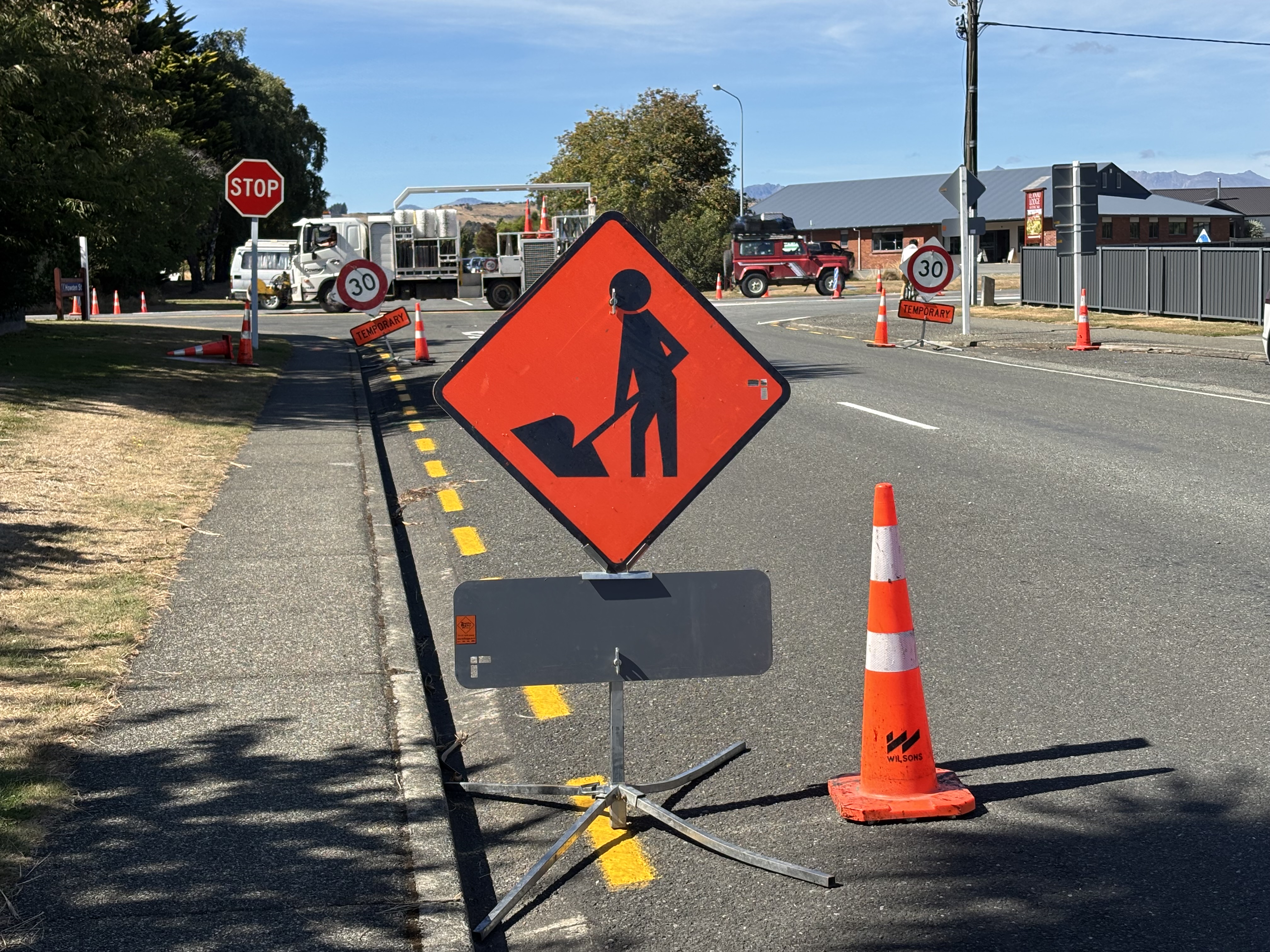
A series of roadworks to improve Southland state highways is due to kick off early in the new year, and people are being told to expect minor delays in their travel. Work to reconstruct sections of highway, including excavation, fill, resurfacing and line marking – and associated traffic management – is scheduled to start on Monday 5 January 2026 at the following sites: State Highway 90/Waikaka Valley Highway, between Waikaka Road and Cunningham Road – work scheduled from Monday 5 January to Tuesday 31 March, 6am to 8pm daily on weekdays – traffic lights/30km/h temporary speed restriction at worksite; expect delays of 5-10 minutes.State Highway 96/Winton-Wreys Bush Highway, at Heddon Bush Road – Monday 5 January to Saturday 31 January, 6am to 8pm daily on weekdays – traffic lights/30km/h temporary speed restriction at worksite; expect delays of 5-10 minutes.State Highway 96/Winton-Hedgehope Highway at Zwies Road, Browns – Monday 5 January to Saturday 31 January, 6am to 8pm daily on weekdays – traffic lights/30km/h temporary speed restriction at worksite; expect delays of 5-10 minutes.State Highway 94/Te Anau-Milford Highway, near Sinclair Road – work scheduled from Monday 5 January to Saturday 31 January, 6am to 8pm daily on weekdays – traffic lights/30km/h temporary speed restriction at worksite; expect delays of 5-10 minutes.  This work is subject to scheduling change in the event of poor weather or other unforeseen circumstances. We will aim to notify people about any changes through our channels. Stay up to date at our Journey Planner site. We thank people in advance for their patience and understanding as this work is carried out to ensure a safe and resilient highway network for Southland road users.

Improving Care and Recovery: Wakari Hospital Ward 10A Upgrade

16 December 2025, 10:12 PM

Health New Zealand is pleased to announce a significant step forward in improving inpatient mental health facilities in Otago-Southland with the signing of a contract for the refurbishment of Ward 10A at Wakari Hospital. Ward 10A supports people over the age of 18 who have an intellectual disability (tāngata whaikaha) and require assessment, care, and treatment in a secure hospital environment. The planned refurbishment will deliver a safe and therapeutic environment that supports quality of life, rehabilitation, and access to care for tāngata whaiora (people seeking wellness). Health New Zealand Southern Group Director of Operations Craig Ashton says he’s proud to see this work commencing. “This investment will improve conditions for tāngata whaiora and our hardworking staff, and ensure our facilities remain fit-for-purpose over the next five to ten years. “We are committed to strengthening mental health services across the Southern district. This project is an important step in ensuring people receive care in environments that promote recovery and dignity.” The scope of work to be completed in Ward 10A will require the ward to be closed during construction. To ensure tāngata whaikaha can continue to access services during this time, improvement works will be completed in another ward at Wakari, Ward 9A. This will enable tāngata whaikaha to move into 9A temporarily. These works will also enhance the environment for current tāngata whaiora on Ward 9A and are expected to be completed by June 2026.  The Ward 10A refurbishment is planned to commence in mid‑2026 and take up to 12 months. Naylor Love Dunedin will complete the work, bringing local experience and health-sector capability to deliver improvements that are practical, durable, and focused on people. This refurbishment forms part of Health New Zealand’s wider planning for the future configuration of mental health services across the motu, ensuring facilities and models of care better meet current and future needs.

Power restored through nationwide teamwork, from far north to deep south 

16 December 2025, 10:05 PM

In October, a severe windstorm tore through the South Island. A coordinated response between lines companies — from the far north to the deep south — highlighted the electricity distribution industry’s commitment to helping communities during one of the year’s most damaging weather events.  In PowerNet’s region alone — which serves power to the very bottom of the South Island — about 50,000 customers lost power. Numbers dropped quickly as restoration began, but some households remained without electricity for two weeks, showing just how severe the storm was. Trees on lines storm event 2025. Photo: Supplied.As crews got to work, support didn’t just come from local teams. Field staff, equipment and specialist expertise flew in from across Aotearoa — from TOP Energy in the far north to neighbouring contracting service providers, like Unison Contracting who work on the Aurora Energy network.  Electricity Networks Aotearoa Chief Executive, Tracey Kai, says the October storms clearly demonstrated the strength of the sector. “When a major storm hits, lines companies don’t think in geographic boundaries. They think about what communities need and how they can support colleagues to restore power quickly and safely,” says Kai.  In Southland and Otago, where states of emergency were declared, PowerNet activated its emergency response quickly and received offers of support from lines companies throughout the country. Crews rolled in within days, and those without power were reconnected much faster than any one network could manage alone. PowerNet Chief Executive, Paul Blue, says welcoming additional crews was straightforward. “In many cases, we’d worked with these crews before, because it’s not just during emergency responses that we keep in touch and collaborate, but during our day-to-day business, too,” says Blue.  Unison Contracting Services Interim GM, Contracted Network Services, Mark Lawrie, says they were proud to support neighbouring networks during the recent storm. “Our Dunedin crews joined other networks on the ground, restoring power to communities across Southland and Otago, while a small team was deployed to Mid Canterbury after attending the Annual Connections Competition,” says Lawrie. “This highlights the strong collaboration within our industry of working together to enable networks to restore power and reconnect communities when severe weather strikes.”    Of course, it’s not just field crews needed in a crisis. TOP Energy, which delivers power to the far north, sent reinforcements for PowerNet’s system control room, where operators review the network, assess damage, direct fault crews and prioritise areas of greatest need. Trees on Lines Storm event. Photo: Supplied.TOP Energy Chief Executive, Russell Shaw, says at the end of the day, every lines company in New Zealand is trying to do the same thing, and that is keep the lights on for the communities we serve. That shared purpose is why people are so quick to jump in and help when we put the call out.  “Those offers of help don’t come out of nowhere. They’re built on long-standing relationships across the industry and a lot of quiet work in the background and picking up the phone when someone else has been through a similar event,” says Shaw.   WEL Networks Chief Executive Garth Dibley says severe weather events remind us that the electricity industry is built on collaboration, not competition. “When the call came through, our team didn’t hesitate. Our Annual Connection line mechanic team were proud to join MainPower in North Canterbury to help restore thousands of connections as quickly and safely as possible. Working side by side with other lines companies reinforces the strength of our shared commitment to keeping communities connected. “It wasn’t just boots on the ground – our Network Operations HV Planner also supported PowerNet’s control room during the emergency response. Providing technical expertise and planning assistance ensured crews could work efficiently and safely in challenging conditions. At WEL, we believe that when the lights go out, we all step up together. That spirit of teamwork is what keeps Aotearoa powered through even the toughest storms.”  While the storm was unusually severe, the cause of many outages was unsurprising. PowerNet estimates around 95% of its outages were caused by falling trees. The same pattern emerged in North Canterbury. After the windstorm, MainPower lost 8,000 connections, with around 90% of outages caused by trees and vegetation. Much of this damage came from ‘fall zone’ trees — which are those outside the areas where lines companies have legal authority to trim or remove them. MainPower received support from crews at WEL, Waipā and Unison networks to restore these 8,000 connections as quickly and safely as possible.  Kai says ENA and lines companies have been calling for changes to outdated tree legislation for more than a decade. “Yes, during a storm lines companies come together to get power restored as quickly as possible. But outdated tree laws make it harder to manage the risks — which ultimately makes power less reliable and more expensive for customers. “We’re often asked for examples of how lines companies work together. Major outage events show this in the field — but the collaboration happens behind the scenes every day as well,” says Kai.  Across the motu, lines company staff share what’s working, swap resources and processes, and support each other on common challenges. From regulatory specialists and pricing teams through to HR managers and those working to reduce energy hardship, the sector is constantly working together to deliver better outcomes for customers. 

A permit for trapping feral cats may get much easier to obtain after a U-turn by DOC

16 December 2025, 9:04 PM

Permits for trapping feral cats on conservation land may become easier to obtain.At present, individuals need to adapt a possum fur trapping permit and contact local Department of Conservation (DOC) offices for permission to trap.Gaining permission can take weeks, and requires filling out paper forms and supplying maps with trapping areas marked.In contrast, hunting permits can be obtained by completing an online form on the DOC website, and approval is automatic. A 12-month permit is emailed within 15 minutes of the form being completed online.Since RNZ reported hunter Victor Tindale's struggle to trap cats in Fiordland, DOC's stance on the matter has changed.Initially, DOC told RNZ it was satisfied with the current system of adapting the possum permit.Tindale said he had now received a letter from DOC following his request to make the system simpler, saying the permit system is being investigated.The letter states: "As part of our regulatory modernisation programme, DOC is seeking to improve efficiency and usability of the permissions system. This includes exploring the integration of trapping authorisations and online hunting permits."The hunter - who trapped five cats, two stoats, a ferret and 18 possums on a recent trip to Fiordland - thinks many hunters would be happy to do some trapping on hunting trips to help out the environment.He's "rapt" at the positive response from DOC and hopes it results in a consistent nationwide approach for online trapping permits, as he had experienced different attitudes from different regions.Being able to help native bush out with some trapping during hunting trips, "welcomes more of us as part of a team, without barriers which put us off".The idea should be well promoted on the DOC permit site to encourage involvement, he said."Good hunters care about this sort of stuff and good hunters make great trappers."Feral cats captured by a thermal imaging camera in Fiordland National Park. Photo: RNZ / Cole Eastham-Farrelly.New Zealand Deerstalkers Association Taupō president Alan Bullick said simplifying the permit system for trapping would be a good move.Hunters can get vilified as rednecks because they use guns, Bullick said, but "most hunters are ardent conservationists"."They want the bush to thrive. They want the [feral] cats gone."Members have told him they've seen feral cats while out hunting and would like to take traps into conservation land to help limit the damage they cause."Some people shoot them with a high-powered rifle when they see them, but that also destroys their chances of getting a deer that day."Bullick said DOC needs to include clear instructions for safe trap setting in any new permit system to avoid by-catch, such as kiwi or weka.He's confident hunters who make the effort to take traps with them would be capable of following instructions related to setting traps high enough to avoid by-catch.DOC's letter to Tindale said trapping permits will include conditions related to animal welfare, non-target species and public safety.Tindale is a keen hunter and outdoorsman, eager to protect conservation land from damage caused by pests. Photo: RNZ / Cole Eastham-Farrelly.The letter said the recent addition of feral cats - wild cats which live without human interaction - to Predator Free 2050's target species list, "will likely trigger more interest in making it easier for the public to access trapping permits where feral cats are being targeted".The inclusion of feral cats in Predator Free 2050's list of target species was promised in a 2023 election debate, and announced after RNZ's reporting on the issue.Tindale said the current beech mast event, which was expected to be the biggest in seven years, meant it was the perfect time for hunters to lend a hand. The increased seeds from the trees is expected to swell predator numbers.DOC director of regulatory transformation Joanna Clifford said phase one of the modernisation programme is due to be completed by the end of June 2026.Work to integrate permits into an online system will start after that. In the meantime, people could still apply for trapping permits by adapting the possum trapping permit.Published by Permission

AI use 'inevitable part' of working with council

16 December 2025, 8:51 PM

A new policy to help staff with proper use of artificial intelligence is in the pipeline for Invercargill City Council.On Monday, the council's finance and policy committee gave the green light to an Artificial Intelligence (AI) Use Policy, meaning it will now pass to full council for a final decision.A report prepared for the meeting showed AI was a “rapidly developing area of technology” that could help the council while also presenting risks.Council information management manager Rebecca Clark acknowledged AI was already a routine part of working life.“And we see this with new releases of software coming through that council already uses, having AI features," she said.“So really it is an inevitable part of working with council these days.”The draft policy had been developed to provide a framework for safe and secure use at the council, the report said.It revealed approved use of AI had been limited to specific cases, and staff were instructed not to use any private, sensitive or confidential information with generative AI tools.Early discussions about AI had mainly focused on privacy and data security, but increased use across New Zealand councils had brought attention to accuracy and reliability, the report said.Principles included in the policy were transparency, accountability, fairness and equity, privacy and security, lawfulness and ethics, and continuous improvement.The policy would be reviewed in one year and again every six years.Earlier this month, a Carterton District Council committee adopted a policy warning users to exercise caution when using AI-generated content.LDR is local body journalism co-funded by RNZ and NZ On Air

Volunteer Returns from Bathurst a Winner

16 December 2025, 8:40 PM

Southland Sports Car Club volunteer, Chanel Muir, has returned from Australia with some silverware after the Bathurst Supercar race in Australia recently.Both Chanel and fellow volunteer Renee Brown travelled to Bathurst to volunteer at the Great Race for the third time this year and while the duo has become increasingly familiar with the environment there was one big unexpected turn for Chanel at the conclusion of the event.She received the impressive “Gold Award for a Race Official for Bathurst”, an Australian Motorsport and Coates Volunteer Award. Organisers select the recipient due to a variety of factors. “They said it was because of my cheery disposition every morning and because I did everything that was asked of me, even if it was not in my wheelhouse. The incident that stood out for those choosing the award winner was an incident where a lady took a tumble in the camping ground and injured herself, I handled the situation and cared for her. I am an Ambulance Officer so I tend to run towards these types of situations,” says Chanel.Chanel has previously been a casual and volunteer Ambulance Officer but has been full-time since her return from Bathurst.“The award was made at a Supercars meal for all the volunteers on the final evening of the race weekend and the drivers and one of the teams served our meals and thanked us. I had not a clue about the award until I was called out. It was very unexpected but I appreciated being recognised because everyone puts in the hard yards.”“Only two other kiwis have won it before and every other year it has been taken home by an Australian. A lot of the other volunteers took the time to come and offer their congratulations and talk about New Zealand motorsport and ask when Renee and I would be coming to other events.”Chanel Muir. Photo: SuppliedChanel said in previous years she had seen very little of the race but this year in the wet and with the way it works in her role with 1 hour on, 1 hour off, she saw the opening laps from the edge of pit lane. “It was one of best races ever!”“Working as part of the pitlane fire crew it is like a family with the same people all three years Renee and I have been coming over. There was a newcomer as part of the team this year. Initially they were unsure and nervous but as the weekend unfolded, they loved it.”“This year they were really stretched for volunteers at the race so they mixed experience with inexperience. It shows that no matter how big or prestigious an event is it is hard to find volunteers and we had to cover extra garages. I was in the Supaglass garage and Renee was in the Bendix garage (the two Matt Stone Racing entries). The garages were welcoming and on our third visit as we learn and understand more, we are able to insert ourselves more.”Away from their roles Chanel says it was “much more like a big family this year. We had a big Chinese meal with plenty of Aussie and kiwi banter. There was a trivia night at the RSL where we recreated a photo with Mark Beretta. He was keen and with no hesitation said, “let’s do it”. It popped up on his insta page.”Looking ahead to next year Chanel hopes to get to Bathurst and the Gold Coast race immediately after it if her work allows it. I would like to do the New Zealand round of Supercars at Ruapuna in Christchurch too!After many years of volunteering locally at Teretonga Park in Invercargill that experience has opened up some great opportunities for Chanel.Anyone keen to volunteer at Teretonga Park can contact the circuit office on 03 213 0522 during office hours or email [email protected].

Hawthorndale Care Village honours four visionary Southlanders

16 December 2025, 8:00 AM

Hawthorndale Care Village is honouring four remarkable Southlanders whose vision and belief helped turn one of Aotearoa’s most pioneering dementia care ideas into reality. This announcement was made at the Hawthorndale Care Village Charitable Trust Annual General Meeting on Monday, 08 December, where the Trust also confirmed the appointment of trustee Mike Wyeth as the new Chair. Sarah Hannan, Paul Harrington, Paddy O Brien and Fergus More are concluding their service on the Hawthorndale Care Village Charitable Trust Board. Their departure reflects the Trust’s planned shift into a new phase. In the early years, Hawthorndale required a large governance group to guide complex planning, construction and significant community fundraising. Now that the Village is built, fully operational and welcoming residents, the Trust has transitioned to a smaller governance structure aligned with an operational environment. These four trustees leave with deep gratitude from the Trust and from Southland. Their service has shaped the foundation on which the Village stands today. Paddy O Brien, Sarah Hannan and Fergus More also contributed a combined twenty-seven years to the Calvary Board, the original aged care facility, before their work with Hawthorndale. Their longstanding commitment to older Southlanders deserves recognition. Paul Harrington, who was not on the Calvary Board, has been a dedicated Hawthorndale trustee providing governance support during the most complex decisions. These trustees were some of the early champions who rallied Southland around an ambitious vision. They helped raise the funds required to build a world-class aged and dementia care village. Photo: Supplied.They inspired belief long before there was a building to see. They stewarded complex planning and built the momentum required to create a bold new model of care for people living with dementia. Outgoing Chair Frank O Boyle says the contribution of the departing trustees cannot be overstated. “Sarah, Paul, Paddy and Fergus were the heartbeat of this vision. Paddy and Sarah, as members of the project working group, helped drive the vision from concept through to reality. They fundraised, knocked on doors, rallied support, and kept going even when people said it would be too hard. Together, they changed minds and brought Southland with them. Hawthorndale would not exist without their courage and their belief in what was possible. They have created a legacy for families who will rely on the Hawthorndale Care Village for generations. Hawthorndale Care Village is now a fully functioning community inspired by the internationally acclaimed De Hogeweyk dementia village in the Netherlands. Photo: Supplied.Aged care residents live in small households supported by permanent staff who enable meaningful routines and promote wellbeing. This model was new to Aotearoa and now stands as a testament to what is possible when a region unites behind a bold vision. A strong and capable board for the operational future At the AGM the Trust announced the appointment of longstanding trustee Mike Wyeth as Chair. Frank O Boyle says Mike is the right leader for the next stage. “Mike has a clear understanding of the responsibility we have to steward Hawthorndale for future generations. The Village is now operational and entering a period of strengthening and growth. Mike’s steady leadership will guide that work. The Trust is in excellent hands.” The Trust has also welcomed Southland business leader Carla Forbes to the Board. Forbes is the founder of Naked Creative and is known for her strategic leadership, her commitment to community, and her ability to bring people together around shared purpose. Carla Forbes says she is honoured to help guide the future of a project built by Southlanders for Southlanders. Photo: Supplied.“Hawthorndale is an inspiring example of what happens when a community refuses to accept the status quo and instead chooses innovation, compassion, and possibility. I am humbled to join a board that is deeply committed to maintaining the integrity of this model and ensuring it continues to enrich the lives of families across our region. Hawthorndale is something Southland should be incredibly proud of, and I am excited to support its next chapter.” The current trustees bring extensive leadership, strategic thinking, and a strong commitment to community-centred care. The board is made up of Chair Mike Wyeth, Helen Young, Scott O’Donnell, Frank O’Boyle, and Carla Forbes. Together they offer deep experience in governance, strategy, organisational leadership, and stakeholder engagement. Southland built Hawthorndale. The Village stands as a testament to what belief, generosity, and determination can achieve. The Trust invites Southlanders to acknowledge the extraordinary contribution of Sarah Hannan, Paddy O Brien, Paul Harrington and Fergus More and to stand with Hawthorndale as it moves confidently into its operational future. For more information about the Hawthorndale Care Village model of care, visit www.thehawthorndale.co.nz

Police urge caution on Southland beaches

15 December 2025, 11:32 PM

As the weather warms up and Southlanders begin flocking to the beach, Police are reminding people of an important fact – beaches are roads and need to be treated as such. Senior Sergeant Scott MacKenzie, Southland Area Road Policing Manager, says while it is legal to drive on Oreti Beach, you still need to adhere to the road rules. “The beach has a speed limit of 30k/h – there is no excuse to be over this limit. “The days are getting warmer and with school holidays it can be expected that a lot of families with small children and animals will be heading to the beach to enjoy the sun. “Anyone driving on the beach needs to be mindful of this, and stay focused on your surroundings,” he says. The risks of injury or worse, to yourself or others, are just the same as on traditional roads. Senior Sergeant MacKenzie also reminds beach goers that any form of antisocial road-user behaviour will not be tolerated. “Some people seem to think that road rules don’t apply to you when on the beach – this is not the case. “Antisocial driving behaviour is unacceptable, on and off the beach, and we encourage the community to report the driving behaviour immediately. “It is best to make a report while the incident is occurring to allow our staff the opportunity to respond immediately and hopefully disrupt any offenders in the act. “Please take note of as much detail as possible, such as registration number of the vehicle, any identifying features of the vehicle and its driver, or even take a video of the driving behaviour if safe to do so,” he says. You can report information to us by calling 111 if it is happening now, or through 105 for non-emergencies. Alternatively, you can report information anonymously through Crime Stoppers on 0800 555 111.

Local legal legend: Kevin Phillips - the boy from Gore

15 December 2025, 8:18 PM

As a young Gore lawyer he tried the patience of legendary Southland judge Joe Anderson with his colourful criminal defences and courthouse antics, but retired southern District Court judge Kevin Phillips, 76, scored some amazing victories during his 50-plus-year legal career.As for the ones he lost, well, they made for some great media headlines and had the desired effect, catapulting his early legal practice to a new high.Born in Darfield – the middle of five kids, the family moved to Dunedin, where his dad was the assistant secretary for the Otago Hospital Board.At five, Kevin negotiated Railway platforms and crossings, making his way up Stuart Street to Christian Brothers School.“My new entrant year they were fully booked so five of us boys had to go to St Dominics with the girls.”They used this as their argument to get into a St Dominic’s reunion years later with 80 or 90 women.After a move to Balclutha, they shifted to Gore where Kevin went to Gore High.A successful lawyer for 33 years and judge for 18, Kevin missed School Certificate by one mark for not applying himself, passing the second year only to not be one of just five accredited UE by the strict Gore High School rector.He passed eventually and had admired legendary Gore lawyers like Tom Brydone and Ronald Bannerman, who made his mark in the town as a WWI hero flying fighter planes, so headed to Otago Uni to study law.Little Kevin, second right, with Mum Madge, Dad G.J. and two of his four siblings Ian and Susan - mid-1950s. Photo: SuppliedAquinas Hall and Castle Street flatting made for fun times, Kevin then heading to Groote Eylandt off Australia’s Northern Territory to drive construction site trucks for a summer before finishing his final year.He began 14 years as a lawyer in Gore in 1972 with Bannerman Brydone and Folster.“A new young lawyer, I found myself before Joe Anderson, the new, young judge.”He was thrown in the deep end when asked to represent a debtor.“Joe came in giving me very bad vibes and I got called for the judgment debtor just after another guy from our firm had announced he acted for the judgment creditor – a big no no,” Kevin recalls.“Joe exploded. It was my first appearance in court and a total disaster. I was 23.”Then there was the time Judge Anderson got a whiff of Kevin’s cigarette smoke in the old Gore courtroom.“The registrar couldn’t do much as there were lignite fires at either end of the courtroom and if the wind went the wrong way it filled with smoke,” he grins.Kevin and a female Gore registrar got in more strife when they ran a pyramid scheme over six months which made them a lot of money.Kevin, second left, with his Queenstown partners, John Troon, left, Alan Macalister and Graeme Todd in one of their much-anticipated annual Christmas skits. Photo: SuppliedThey then ran a pool system on court day, all counsel putting in $1.“She’d pick a word out in the morning tearoom and the first person to fit it in their submissions in court won the pool.”However, Stuart Lilee had to pay up when he bet Kevin that he couldn’t get ‘the naked truth’ and ‘the bare facts’ into his submission while representing a guy who’d streaked through the Wyndham Hotel Public Bar, but he did.The client, on a dare to raise $50 for the Gore Squash Club, was charged with indecent exposure.“We were both ordered into Judge Anderson’s chambers where we were told what he thought of people making a mockery of the law,” Kevin says.Despite all this Joe and Kevin became very close friends over the years.An original founder of the Gore Squash Club with Peter MacKenzie and others, the club courts were built from scratch with help from Gore Construction.“We’d play Southland Competition tournaments travelling as far as Tuatapere on Wednesday nights.”Kevin was the club president during the 1970s.Kevin, right, reminiscing with his old Macalister Todd Phillips partners, Alan Macalister, left, and Graeme Todd. Photo: SuppliedBetting was obviously rife in Gore, Kevin also on the Gore Racing Club committee for some years, racing several horses over the years.During a foray into politics, he unsuccessfully stood against Derek Angus for the Wallace National Party nomination.“So, I joined Bob Jones’ NZ Party.”Friends turned up to support a Garston meeting, concerned nobody would come.“They couldn’t fit into the hall. I had really good meetings. But I got a bit of flak from the old farmers in National territory who thought I was a radical left winger.”In 1981 Kevin headed to Queenstown hoping to open a wine bar.Unfortunately, impending licensing law changes were delayed, and he was forced to open a legal practice instead.“I used space in Dardy Wallace’s winter ski shop, covering up the ski planing table and using it as a desk,” Kevin recalls.“I had no clients, nothing to do, and was used to being busy. Alan Macalister (lawyer) gave me some council work, but I needed headlines.”Kevin's final sitting as a fulltime resident Dunedin judge in 2018 (prior to becoming an acting warranted judge around NZ for five years). Photo: SuppliedHe got those defending a guy charged with possessing magic mushrooms (psilocybin), who claimed he was of Native American extraction, and they were required for a sacred tribal ritual.“He said they went to where the rivers began, and they sat on a rock after taking psilocybin and the Manitou would come down and give them instructions for the year,” Kevin says.“So, I went to the Dunedin Library to research this and that’s exactly what they did,” he says.“I came back with all the information, and the Police couldn’t believe I was defending this guy,” Kevin grins.“Judge Anderson listened to my submissions for 15 minutes then said crossly, ‘I’m sick and tired of listening to this rubbish. Your client was using a Class A drug!’ But I got big headlines and my practice took off like a rocket.”Soon after he was offered a partnership in Macalister Todd where he worked for 21 years on some groundbreaking cases.“We were on a really good high, then the sharemarket crashed in 1987 and we went to nothing, living off our credit cards and borrowings.”Then in 1991 a Queenstown realtor needed their law firm to act for Asian clients buying a property.“They ended up buying half of downtown Queenstown. That reinvigorated our practice.”Former southern judge Kevin Phillips. Photo: SuppliedKevin even flew to London to represent them after an argument over a pipeline with Pakistan State Oil.“These were big companies and it went to arbitration in London, so I went over to act for them in Fleet Street – the boy from Gore.”There were the 15 Timaru Road Knights gang members who caused a riot in Queenstown Mall, Kevin assigned to represent all 15 at the Invercargill trial.“These Road Knights were all lined up behind me on benches, like at the rugby,” he recalls.“Crown solicitor Alistair Garland had employed a new, very young looking, bespeckled prosecutor with white, blonde hair, which prompted the Road Knights behind me to stand and cheer, ‘The Milky Bar Kid!’ Ronny Mansfield (KC) went on to be NZ’s leading criminal defence barrister.”Acting for the QLDC, its Airport Corporation and District Waterways Authority, Kevin drew up NZ’s first ever waterways bylaws.He also covered the council’s back when a huge slip threatened above Frankton Road, post 1999 floods.“If it wasn’t for the council CEO (Duncan Field) those floods would’ve been a bloody disaster,” he says.The transition to judge in 2006, commuting to Invercargill weekly, was a big one, mostly for wife Su (Chilton) and kids Georgia and Elliot, Kevin says.Kevin, left, with his family Georgia, Su and Elliot. Photo: SuppliedHe says marrying Southland-raised Su in 1991 was his “only unappealed decision”.Fresh from judge’s initiation, Kevin was dobbed in at the last minute to preside over a jury trial when the rostered judge found he had a conflict.“I’d been to Invercargill District Court but never behind the bench. I was scared shitless and no one told me there was a step up to the chair, so I tripped and disappeared behind the bench with the jury and public watching! Talk about embarrassing.”His circuit included Gore where Kevin recognised a few faces, including the grandson of a guy he’d acted for.“It was generational.”Now retired in Dunedin, he’d rather not be.Because of the rules Kevin had to retire in 2023, after applying for five more years as an acting warranted judge around the country.“I liked what I did. I wish I was still working.”Sue Fea is a senior journalist with more than 40-years experience covering police, social and general news in the southern regions.


1-20 of 6497
The Southland App
The Southland App
Advocate Communications

Get it on the Apple StoreGet it on the Google Play Store